He battled high-risk leukaemia at age 7. Now he's a doctor helping to treat cancer patients
Dr Jason Chng knows firsthand the fear, uncertainty and exhaustion that can come with serious illness. Those memories continue to guide the way he practises medicine today.
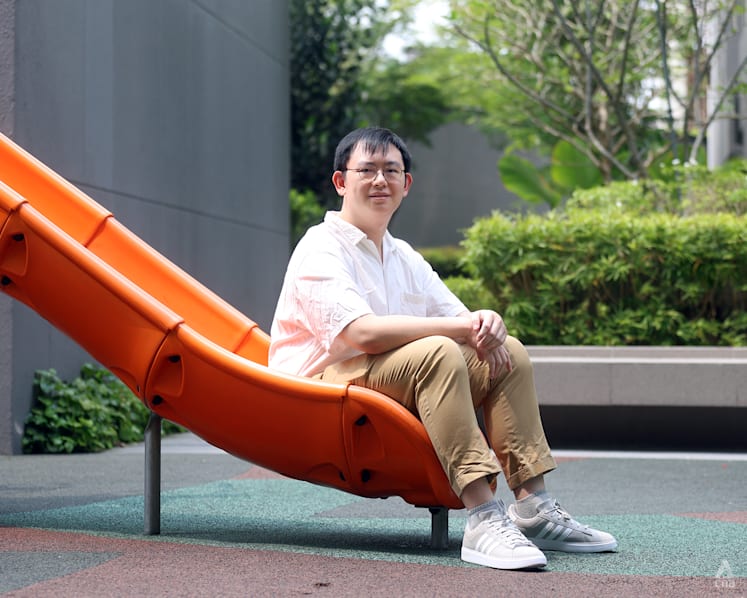
Dr Jason Chng, a childhood cancer survivor who is now a third-year medical resident in Anatomical Pathology in a Singapore hospital, pictured on Sep 7, 2026. (Photo: CNA/Ooi Boon Keong)

This audio is generated by an AI tool.

In 2011, 15-year-old Jason Chng told his mother he wanted to be a doctor. While any other parent might have beamed with pride, she was fearful and hesitant to support his dream.
Given her son's earlier struggle with a critical illness, she worried about his desire to pursue a career notorious for long hours and high stress.
As we spoke in his living room earlier this month – Childhood Cancer Awareness Month – Dr Chng, now 30 and a third-year resident at Singapore General Hospital, was precise and detailed about the leukaemia diagnosis that upended his childhood and his family's life.
At just seven years old, he had been given a 50 per cent chance of survival. Tests revealed that he had 140 times the normal amount of white blood cells, putting his cancer in the "high risk" category.





Recounting the experience now as a medical professional, he spoke calmly and openly. Nevertheless, there was a palpable emotional undercurrent to his words – and no wonder, considering the ordeal he had survived at a tender age.
For most of his childhood, his parents had done their best to shield him from this grim diagnosis. Despite their efforts, there was no shielding a seven-year-old boy from the effects of a gruelling treatment regime.
He underwent chemotherapy, sedated bone marrow tests, and suffered recurrent infections.
Decades later, the discomfort remained vivid in Dr Chng's mind as he recounted treatments such as intrathecal injections – where medication is directly injected into the cerebrospinal fluid surrounding the spinal cord.
Another particularly disconcerting memory for him: a surgery he underwent for a Port-a-Cath, a device that allowed chemotherapy to be delivered directly into his veins.
"Persistent nausea, frequent vomiting and lumbar punctures became my routine," he said.
THE DEVASTATION OF A DIAGNOSIS
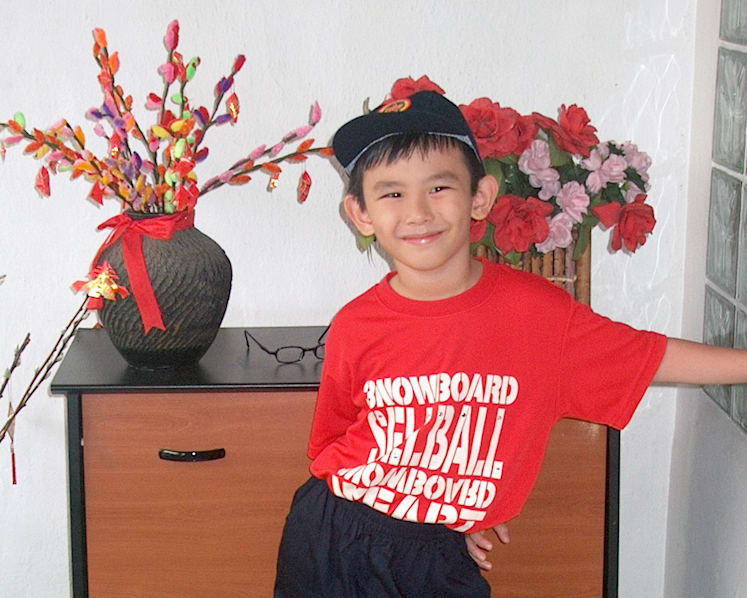
Before his cancer diagnosis, Dr Chng remembered being a "very active" student who was excited about playing with schoolmates at recess and attending lessons.
But his family soon noticed that he bruised particularly easily. He also began intermittently feeling discomfort in his chest.
"I would call out at assembly, let my teachers know that I'm not feeling well. There were a few instances where the teachers would call my parents and I was brought back (home)."
His mother, Madam Teo Wei Wei, 58, who was also present during the interview, had observed his appetite deteriorating. She took him to traditional Chinese therapeutic massage sessions, but grew worried when bruises quickly formed on his skin.
Her own parents had noticed that their grandson was growing thin and pale, and suspected that he might be anaemic.
"I took a half-day leave from my work and brought him to the hospital for a blood test, but the result … kept delaying," said Mdm Teo.
By the time a doctor called on them, Mdm Teo had exceeded her half-day's leave. Her anxieties only multiplied when she heard the long-awaited results: something was not right about her son's blood count.

That same day, she and her husband took young Jason to see a specialist to do a bone marrow test. White patches showed up in his lungs – leukaemic cells from his bloodstream or bone marrow that were invading his lung tissues.
Mdm Teo was devastated by the news: "We didn't expect it could be something so bad. The whole world was upside down, we couldn't believe it was real.
"I was still hoping that I would wake up from my dream."
At the time, the youngster thought he just had an "ordinary sort of illness" – something minor where he could see a doctor, take some medicine and come out better.
"The next moment, I'm sedated, so I was very confused at what's happening. And then I was told that they needed to give me a haircut because my hair was long. And then I was shaved bald," Dr Chng recalled.
"When I looked at the mirror, I just started to cry."
THE EMOTIONAL ROLLER COASTER OF CRITICAL ILLNESS
Undergoing treatment for such a serious illness meant having to be pulled out of school in his Primary 2 year and once doing exams from his hospital bed. For a time, he had to live under extra precautions, such as being warded alone in a special room. Anyone around him had to wear masks.
Looking back, Dr Chng reckoned he was likely neutropenic at the time – having low levels of infection-fighting white blood cells called neutrophils – and thus very susceptible to infectious diseases.
Over the next several months, he became a frequent visitor at the National University Hospital's (NUH) paediatric wards 46 and 47 – not something he relished as a boy.
He recalls thinking: "Why can't I go out and play? Why am I having to be subjected to this sort of treatment?"
Mdm Teo's voice grew heavy as she described the "emotional roller coaster" of her son's childhood.
"The first feeling was guilt. I think every parent would feel that way because if you take care of a kid with such a serious illness. (You think:) 'Could I be the one who caused it?'"
Her distress was worsened by others insinuating that the seeds of her son's leukaemia could have been planted in her pregnancy, during which she recalled having worked long hours and not eating well.
"I didn't cry in front of (Jason). But every night, I cried myself to sleep."
Why can't I go out and play? Why am I having to be subjected to this sort of treatment?
Thankfully, the couple had just bought insurance for Jason and his younger brother, though its payout was quickly used up for Jason's medical bills, especially in his first year of treatment. They soon started racking up expenses for the organic food, supplements and immune booster jabs for their older son.
"There were times he was critically low in count, and he had to be in isolation," said Mdm Teo. "That was the hardest time, because a single virus or bacterium could kill him."
Despite this, Dr Chng counts himself as lucky.
"Some families we met during my treatment faced devastating losses, and some children did not survive," he said. "My parents' quiet courage was my anchor."
STAYING UPBEAT AND CURIOUS
Dr Chng recalls feeling bored and upset about having to frequent the hospital so often due to his extensive treatment needs.
He gratefully credited the Children's Cancer Foundation (CCF) with restoring a "sense of normalcy" to his hospital-dominated childhood. The foundation ran an outlet at the hospital stocked with board games, game consoles and books, which he had borrowed heavily while warded.
Make-A-Wish Singapore also reached out offering to grant him a wish. Still young and "quite naive" at the time, he just wanted an escape from the routine of endless medical treatments. He asked for a desktop computer and, to his great joy, received one.
"It definitely made the whole process a lot more bearable and palatable for a child," he said.
He cherished the device so much that, though the computer parts are no longer working, the original desktop frame still sits intact at his parents' place today.
By Primary 3, the treatment had proven effective. Young Jason went into remission and was allowed back to school, transferring to a primary school nearer to his home.
Ahead of returning to school, he found himself worrying about being ostracised. What did other kids his age really know of cancer? Would they see him as too "different"?
The CCF, he recalled, made an appearance during a school assembly to brief his new schoolmates about cancer and how they could support him.
"When I first went back to class, I remember there were a lot of other students who supported me, always checking in whether I'm okay, helping me to carry my bags or my books around," said Dr Chng, the memory bringing a warm smile to his face.
Such an ordeal might put many others off from unnecessary discussions about sickness and disease. But for the inquisitive Dr Chng, his experience with cancer only deepened the interest he'd already had in understanding how the human body works.
He lapped up visits to the Singapore Science Centre and treasured playing with anatomy resources including a human model his father bought him with removable organs and a flip chart on the different bodily systems.
"Now I was more curious to know: 'Why is it that I had this illness? What actually went wrong?'"
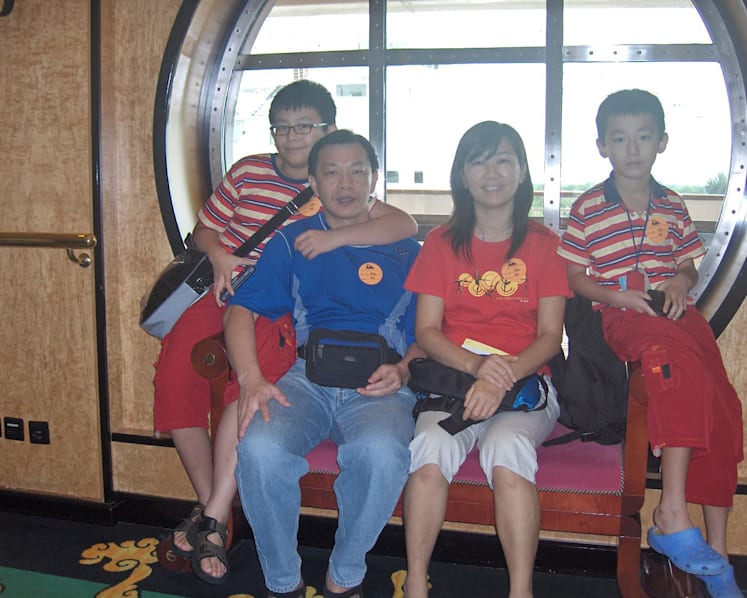
He went on to study biology in secondary school and junior college, where he even entered biomedical challenges. At 17, he clinched an internship with NUH's paediatric oncology department.
For this internship, he asked to shadow the doctor who had treated him as a child – Emeritus Professor Quah Thuan Chong.
Dr Chng quickly became a "role model" intern, not just as a promising doctor-to-be but also as living proof of what young patients could hope for.
"When I was sitting in (Prof Quah’s) clinic, he would joke to some of the patients: 'Don't worry, chemotherapy will make you better and … very strong. It'll make you very smart like Jason'," said Dr Chng.
The soft, grounded way Prof Quah spoke with his young patients and parents – like "a kind, very gentle grandpa" – stayed with Dr Chng, motivating him to do his best later on when starting medical school.
"Although there were times when I felt it was very hard (and) the knowledge was overwhelming, I just knew that I wouldn't trade it for any other thing."
It must have been surreal, I remarked, to have spent years as a child patient at NUH only to return later as an aspiring student of medicine.
To Dr Chng, it was simply "very cool" and heartwarming to potentially inspire other children journeying with cancer and learn more about how doctors worked together to treat them.
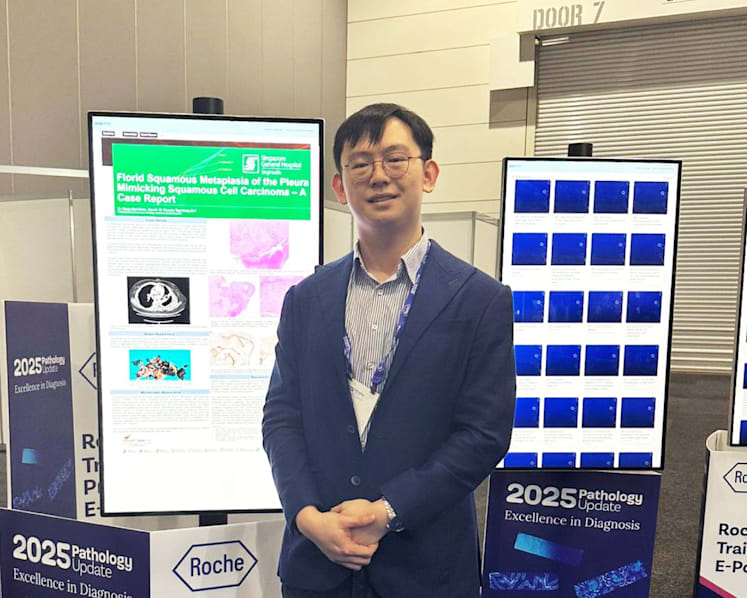
Despite the notoriously demanding rigour of medical school, Dr Chng said his personal experience was a constant reminder not to view patients as a sum of their symptoms.
"A lot of times when we are busy, we start to think of patients by their locators, like which bed they are in, or it's the patient with this condition. There are still times that I might fall into this (pattern)."
Dr Chng has strong memories of family and family friends being very involved and rallying around him during his own battle with cancer, even donating platelets to help in his treatment.
These first-hand experiences, he said, continue to shape the way he now approaches medicine as a practitioner.
"I understand the fear of the unknown, the weight of uncertainty, and the relief that even small acts of kindness can bring."
He strives to understand why patients might feel unhappy about the treatment process and empathise with the fatigue they and their families may grapple with throughout the complex journey of recovery.
"It's not something you can just shake off and say that they don't have that mental strength."
In that case, I wondered, has his past critical illness turned out to be something of an asset in his adult career?
Here, Dr Chng paused.
"It's something I feel very grateful for. It's not an experience I want to go through again, but it's something that I feel has made me a lot more empathetic (towards) situations that cancer patients are going through.
"It's not something to be taken lightly."
BECOMING A DOCTOR
At one point in our interview, Mdm Teo emerged from a bedroom with a surprise – Dr Chng's six-month-old daughter, Clarisse.
The baby was down with a mild flu and home for the day instead of at infant care, being cared for by her grandmother and mother, Ms Tiew Li Ying Vanessa, who was working from home as a project manager in the healthcare industry. Dr Chng picked her up when she began to fuss, cuddling her close.
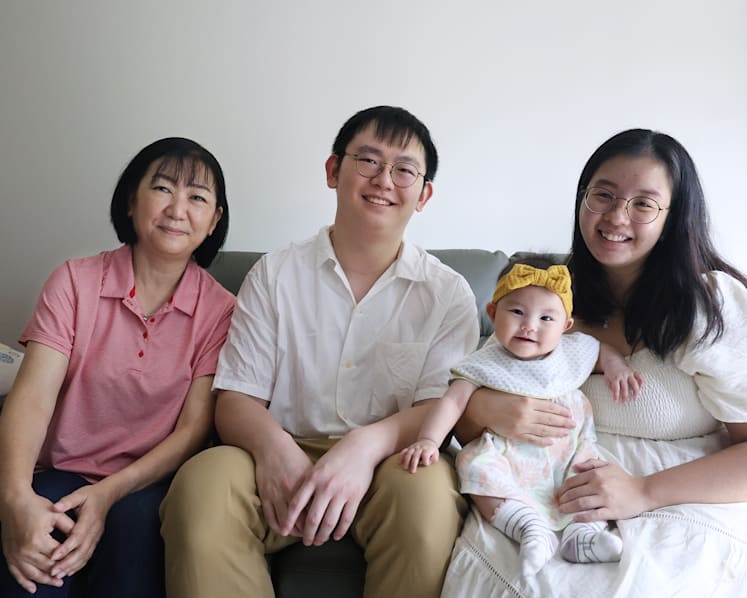
As calm as he had been in describing his own severe health struggles, Dr Chng – who had always yearned to be a father – now ruefully admitted to being prone to anxiety about his young daughter's welfare.
"There are times that I might feel like: 'Oh, is it that she's not really developing well? But I realise, it's part of the process."
His concern partly stems from his professional unfamiliarity with paediatrics, notwithstanding that internship at NUH.
"I still have colleagues who are in paediatrics, and they will assure me: 'Everything is okay. Don't be so crazy'," he laughed.
Now, as a third-year resident in anatomical pathology, most of Dr Chng's workdays are spent examining tissues under a microscope to help other doctors make accurate diagnoses – a critical step in informing a patient's assigned doctors how best to manage their care.
His work currently includes analysing gene mutations in cancer cases, which can provide information that guides personalised therapy or indicates a patient's prognosis.
For Dr Chng, being in the medical profession is also a front-row seat to the "quite big strides" that have been made in cancer management since he was a patient himself.
Cancer is not an experience I want to go through again, but it's something that I feel has made me a lot more empathetic (towards) situations that cancer patients are going through.
He spoke about the intricacies of anatomical pathology with the same delightful fervour he showed later while playing with baby Clarisse, fresh off her morning nap.
As we watched father and daughter bond, I asked Dr Chng's mother if this scene was something she'd ever imagined for her son.
"Honestly, I didn't really hope so far," she said. "To me, every day he's healthy is a blessing."
In the past, she would have preferred her son to have a comfortable life and career rather than immerse himself in the acute stresses of medicine.
"I feel pain whenever he has to work long hours and work over the weekend, even public holidays."
She's no longer as resistant to the idea of Dr Chng being a doctor, understanding that he can help patients through the physical, mental and emotional journey of critical illness that he once underwent. At the same time, she hopes simply that her son looks after his own health.
As for Dr Chng, it's not lost on him that he's in a "unique position". He personally does not know of any other doctors who survived cancer as a child and later joined the medical profession.
But he hopes that sharing his experience might bring comfort and clarity to others dealing with a cancer diagnosis – and to their caregivers, too.
"No one wants to have a serious illness like this," said Dr Chng.
"Don't ostracise people with such illnesses. Embrace them. Everyone's out there to try to do their best and contribute to society the best way we can."