Balancing hawker favourites with heart-healthy choices
In a city where meals are fitted around busy schedules, managing cholesterol often comes down to combining familiar flavours with small, practical dietary adjustments.
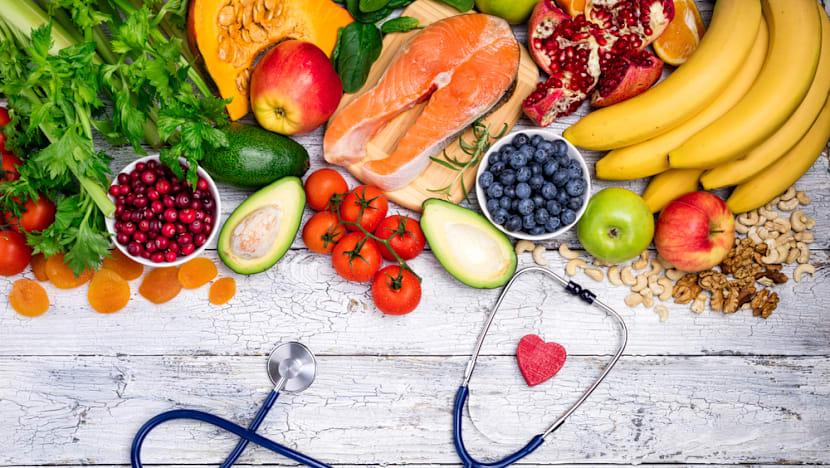
Mindful dietary changes can help keep cholesterol in check. (Photos: F&N Foods, Shutterstock)

This audio is generated by an AI tool.


Brought to you by

From nasi lemak to roti prata, bak chor mee to chicken chop, Singapore’s food culture is defined by variety and accessibility. Meals are often chosen around busy schedules, with convenience shaping how people eat. Over time, these habits can influence long-term health.
“While hawker fare is a regular part of many diets, it is often high in fats that contribute to cholesterol accumulation, if not managed,” said Dr William Kristanto, a cardiology specialist at Farrer Park Hospital’s The Cardiac Centre.
HOW CHOLESTEROL IMPACTS HEALTH

Cholesterol is produced mainly by the liver, but it is also obtained from foods like meat, egg yolks and dairy products. “Good” cholesterol, known as high-density lipoprotein, helps transport excess cholesterol from the body’s tissues to the liver for removal. “Bad” cholesterol, or low-density lipoprotein (LDL), circulates in the bloodstream and can accumulate in blood vessels.
Dr Kristanto cautioned that high LDL is not seen only in older adults, noting that it increasingly affects people across different age groups.
He explained that problems arise when the body is unable to process excess LDL. “Excess LDL remains in the bloodstream and is eventually deposited in the blood vessels – a process called atherosclerosis,” he said. Over time, these deposits narrow the vessels and can lead to serious events such as strokes or heart attacks, which may be fatal.
When atherosclerosis affects the coronary arteries, it is known as coronary artery disease, the most common underlying cause of heart disease. Research projects that, in Singapore, heart attack rates could rise from 480 cases per 100,000 people in 2025 to 1,400 cases by 2050.
THE POWER OF PLANT STANOLS
A key development in cholesterol management has been the use of plant stanol ester. Studies by the National Lipid Association and the British Dietetic Association have shown that a daily intake of 1.5g to 3g can reduce LDL cholesterol by about 7.5 per cent to 12 per cent within two to three weeks.
Plant stanols occur naturally in small amounts in foods such as vegetables, fruits and vegetable oils. Research has highlighted their cholesterol-lowering effects, with plant stanols recognised as a major nutritional advance for their role in reducing LDL levels.
However, naturally occurring plant stanols are present in quantities too low to have a meaningful impact on cholesterol levels through diet alone. Esterification – a process that binds plant stanols to fatty acids, improving their stability and absorption – has made it possible to deliver effective amounts in enriched foods and beverages. This is what enables products such as Magnolia Cholest Care to provide 2g of plant stanols per day with just two servings.
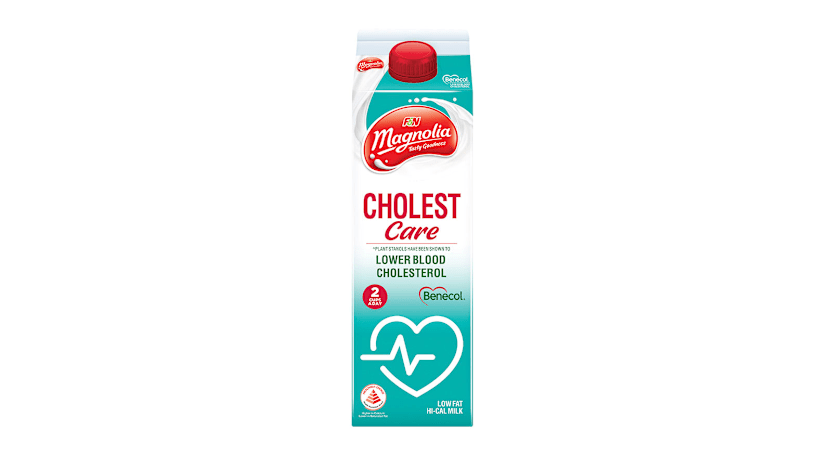
Magnolia Cholest Care contains plant stanols from Benecol, a global functional food brand developed by Finland’s Raisio Group. The stanols partially block the absorption of cholesterol in the digestive tract.
Compared with plant sterols, a related cholesterol-lowering compound, plant stanols are less readily absorbed into the bloodstream. This allows them to remain longer in the digestive system, where they continue to reduce cholesterol absorption before being excreted.
“You can think of these compounds as a milder, food-based approach to cholesterol management,” says Dr Kristanto. “They can be useful for otherwise healthy individuals who want to manage their LDL levels and reduce long-term risk, without starting clinical medication.”
A HEALTHY SUBSTITUTE THAT DOESN’T COMPROMISE ON FLAVOUR

Nutri-Grade B and halal-certified, Magnolia Cholest Care fits easily into a balanced diet without compromising on taste. Made with fresh milk, the preservative-free beverage contains no added sugars or trans fats, and is low in saturated fat.
Magnolia Cholest Care can be consumed safely by individuals taking cholesterol-lowering statin medication. While plant stanols work by reducing cholesterol absorption in the digestive tract, statins inhibit cholesterol production in the liver. Studies suggest that using both together can lead to greater reductions in LDL levels.
Besides lifestyle changes such as quitting smoking and staying physically active, making more mindful dietary choices is an important step in managing cholesterol. This does not mean eliminating hawker food entirely. Small adjustments – such as opting for brown rice – can make a difference.
At the supermarket, the Healthier Choice Symbol can serve as a useful guide when selecting packaged foods such as snacks, cereals, sauces and beverages, including Magnolia Cholest Care.
“Magnolia Cholest Care works well as a substitute for regular milk in most recipes,” said Dr Kristanto. “It can be used in smoothies, creamy soups or even local desserts that traditionally call for dairy.”
Taken as part of a broader approach to diet and lifestyle, such substitutions offer a way to manage cholesterol while keeping familiar flavours on the table.
Magnolia Cholest Care retails at S$3.95 in major supermarkets, hypermarkets and online via F&N Life. Subscribers to the Magnolia Cholest Care 3 Weeks Plan will receive a voucher to check their cholesterol levels. Terms and conditions apply.
Magnolia Cholest Care is not intended to diagnose, treat, cure or prevent any chronic illnesses. Results may vary between individuals. Functional foods should always be consumed as part of a balanced diet and healthy lifestyle. It may not be nutritionally appropriate for pregnant, breast-feeding women and children under five years old. Consult your healthcare professional before consuming the milk if you have an existing cholesterol-lowering medication.