







The call that changes everything: What to do when screening results aren’t clear
Being called back after a mammogram can be stressful, but prompt follow-up care can bring clarity, as one patient’s experience at Solis Breast Care and Surgery Centre shows.
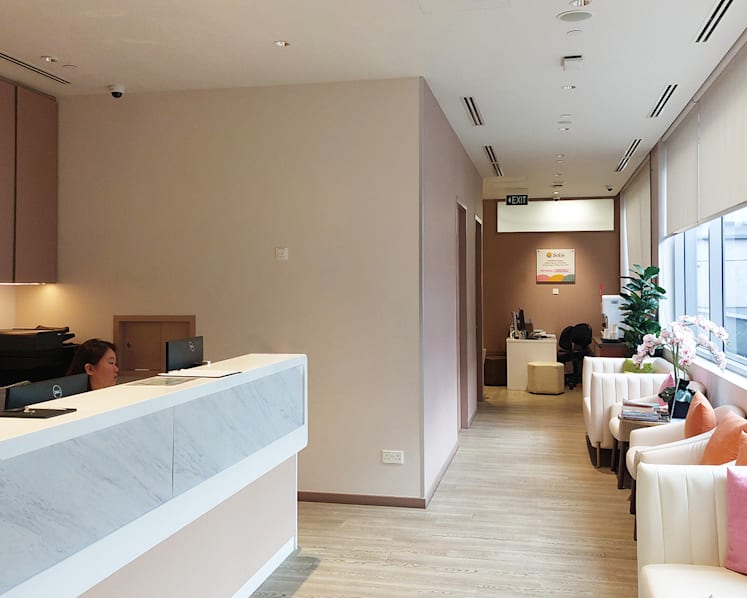
From assessment and diagnosis to surgery and aftercare, Solis offers a personalised experience for every patient. (Photos: Solis Breast Care and Surgery Centre)

This audio is generated by an AI tool.
PRESENTED BY

A week before her birthday in 2025, 56-year-old human resources professional Cheryl Tan felt pain in her left breast. There was no lump, but she decided to go for a mammogram and ultrasound for peace of mind.
The mammogram revealed nothing out of the ordinary. However, the ultrasound detected a lesion, which meant further checks were needed.
“I was pretty calm and matter-of-fact about it,” Ms Tan shared. “Cancer runs in my family – both my parents died from it. What concerned me was how to break the news to my family.”
Keen to find out whether the lesion was malignant, she shifted into problem-solving mode, speaking to her insurer and looking into panel specialists. “I needed to know what I was up against and what my options were,” she said.
TAKING THE FIRST STEP TOWARDS CLARITY
Ms Tan’s research led her to Dr Tan Yah Yuen, a senior consultant and breast surgeon at Solis Breast Care and Surgery Centre. She was drawn not only to Dr Tan’s experience, but also to the idea of a one-stop centre where women can undergo further assessment at Luma Women’s Imaging Centre, followed by diagnosis and surgery if needed.
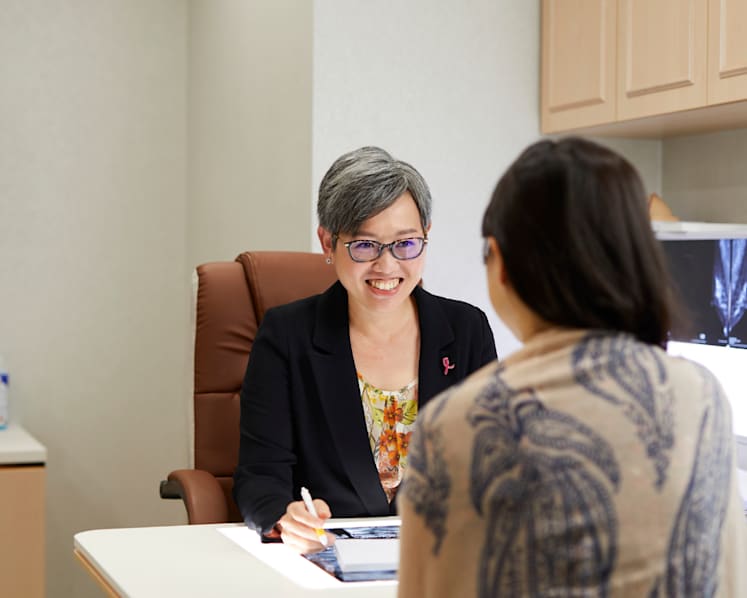
After Dr Tan performed a breast biopsy for Ms Tan at Luma, she explained that it showed atypical ductal hyperplasia (ADH), an overgrowth of abnormal cells in the breast ducts. While not cancer, ADH may increase the risk of developing breast cancer.
“Dr Tan was kind, patient and supportive, even when my husband and I peppered her with questions,” Ms Tan said.
According to Dr Tan, recalls are not uncommon in breast cancer screenings. “Patients should not panic but seek further evaluation promptly with a breast specialist,” she advised. She added that while abnormal findings may point to early cancer, they are more often linked to benign conditions, such as fibrocystic change – non-cancerous changes in breast tissue, like cysts.
Even so, Dr Tan said patients should consider further evaluation within two to three weeks. “Detecting and treating cancer early can make a big difference to the extent of treatment required and long-term outcomes.”
NAVIGATING FOLLOW-UP CARE
Further evaluation may include a 3D mammogram, spot compression, magnification views or an ultrasound. In Ms Tan’s case, Dr Tan recommended a second biopsy guided by magnetic resonance imaging (MRI) to assess surrounding tissue more accurately.
“Because of the ADH, an MRI was performed to evaluate the rest of the breasts. The scan showed an abnormality that had not been picked up on mammogram or ultrasound. From there, the patient underwent an MRI-guided biopsy of the affected area.”
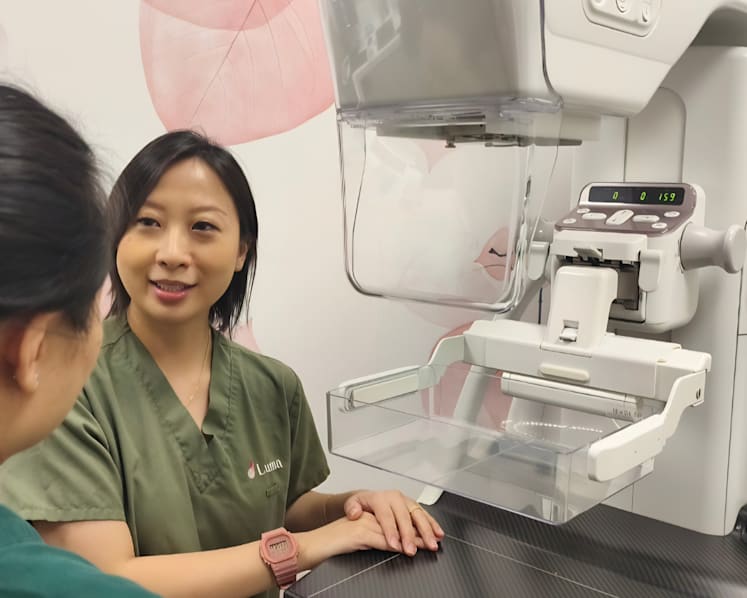
Dr Tan added: “At Luma, all mammograms – whether routine screenings or follow-up scans – are performed using 3D mammography. It offers a clearer view of dense breast tissue – common among Asian women, especially those who are pre-menopausal. It may also be less uncomfortable due to lower compression force.”
Ms Tan said she appreciated the attention to patient comfort at Solis and Luma. “The service touch points, processes and set-up are all thoughtfully managed.”
She also received her results the next day. “Because of our integrated breast assessment centre, recall results can be obtained as early as the same or next working day,” explained Dr Tan.
MOVING AHEAD WITH REASSURANCE
The second biopsy detected ductal carcinoma in situ (DCIS) – an early, non-invasive form of breast cancer, where the cancerous cells are confined to the milk ducts. DCIS accounts for about 26 per cent of female breast cancer patients in Singapore, and is generally highly treatable, often with surgery and, in some cases, radiotherapy.
“When cancer is diagnosed, treatment strategies vary depending on the subtype or biological profile,” said Dr Tan. “Some patients may require surgery first while others may need chemotherapy before surgery. Patients who need chemotherapy are referred to a medical oncologist.”
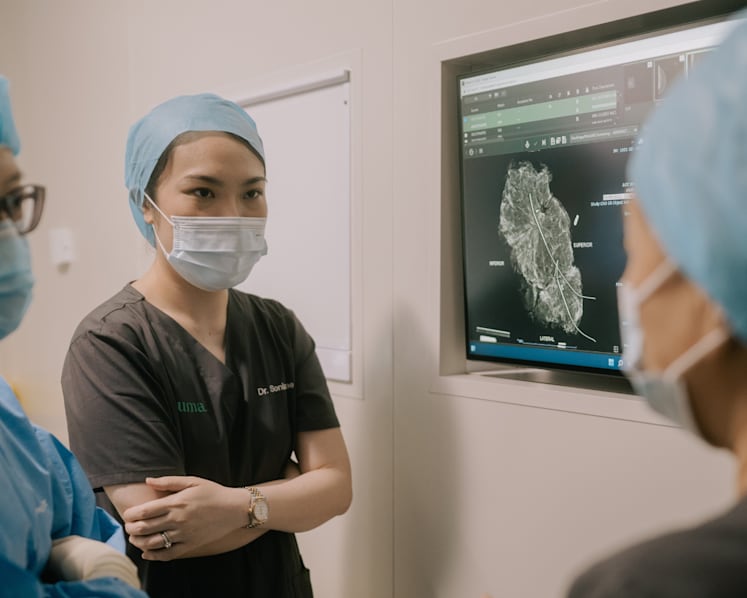
Throughout her tests and diagnosis, detailed discussions with the doctor helped steady Ms Tan and her husband. “It kept us focused on moving forward and enabled us to make informed decisions on treatment options,” she said.
She was also relieved not to travel between multiple facilities. “Going through screenings, waiting for results and discussing treatment options were stressful enough. Having everything in one place gave us some consistency at a time when it felt like our world had been turned upside down.”
Ms Tan has since completed her treatment. According to Dr Tan, her prognosis is excellent as the cancer was diagnosed at a very early stage.
Reflecting on the process, Ms Tan said it is important to see screenings as part of a journey towards greater clarity. “Rather than treating it as a one-off process to get over and done with, it helps to understand that initial screenings can inform further tests so that treatments can be more targeted and effective.”
If you have been recalled or have concerns, do not wait – seek a specialist assessment early. For more information on the services provided by Solis, visit the Solis website.




