India turns to AI to improve healthcare access
In the second part of a series on India's artificial intelligence push, CNA looks at how hospitals are using AI to detect eye diseases and analyse medical scans, while doctors stress the technology remains a tool, not a replacement.
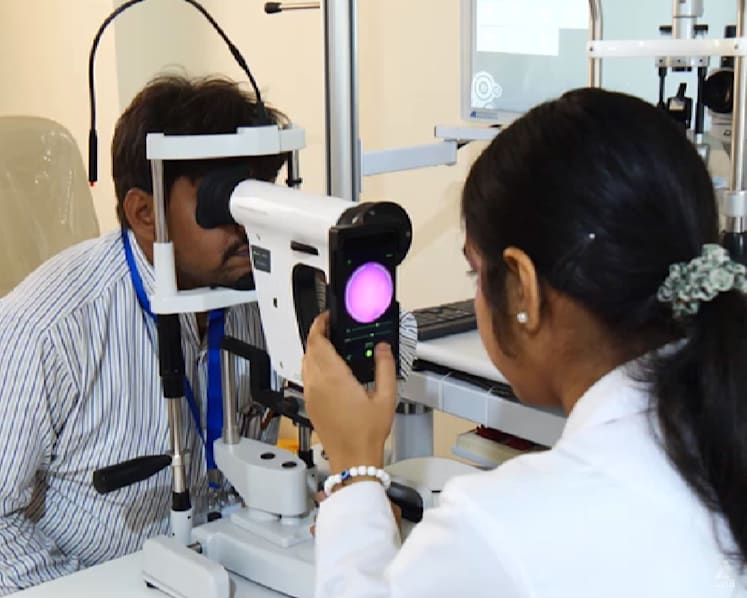
A healthcare worker uses a smartphone-based retinal imaging device to screen a patient at the Shantilal Shanghvi Eye Institute in Mumbai.

This audio is generated by an AI tool.


MUMBAI: At the Shantilal Shanghvi Eye Institute in Mumbai, an eye scan using a smartphone could help save a patient's sight.
The hospital has incorporated artificial intelligence into its community outreach programme to identify patients from nearby slums who need specialist eye care.
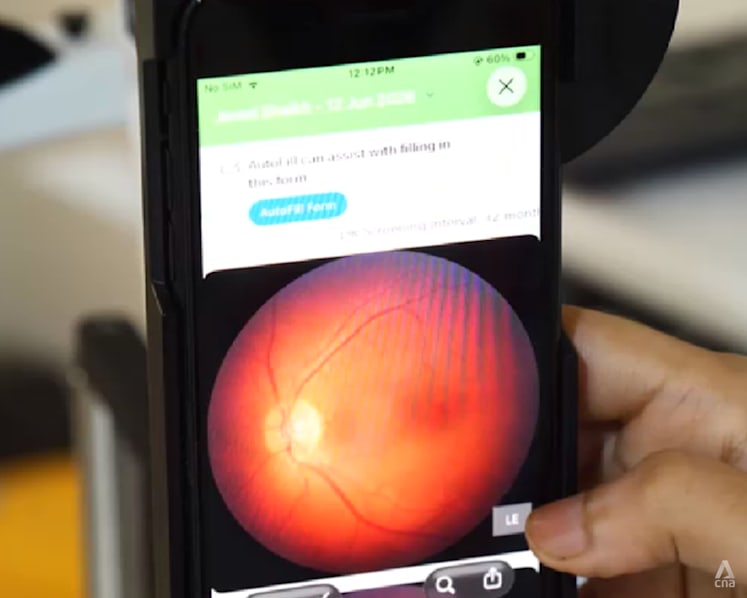
Within seconds, an image of a patient's retina is analysed and the technology detects possible early signs of conditions such as glaucoma and diabetic retinopathy.
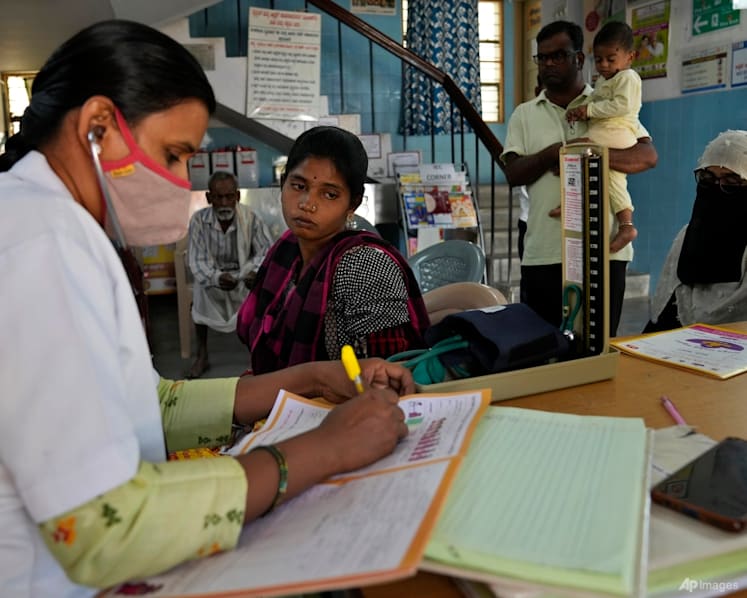
It is one example of how India is using AI to improve access to healthcare, particularly in places where specialists are harder to reach.
LESS SPECIALIST TRAINING REQUIRED
The AI eye screening tool, developed by Bengaluru-based medical device company Remidio, enables healthcare workers with less specialist training to carry out the initial assessment.
"The game-changer in terms of AI is we have been able to task shift the screening process to less-trained people, who can use the AI to triage people who require the ophthalmologist's opinion," said Shantilal Shanghvi Eye Institute’s head of public health Radhika Krishnan.
"That way, we are able to reach a much larger population who could be triaged regularly and referred for treatment or further evaluation."





For labourer Mohammad Javed Shaikh, this has made eye screening less time-consuming.
"In the past, I've been to government hospitals where we would spend the whole day. It prevented us from going to work," he said.
Krishnan added that the technology is not only more efficient but also cost-effective.
According to Remidio, each screening device costs about US$3,700, while an annual software subscription for unlimited scans on a smartphone is US$1,500.
BOOSTING PRODUCTIVITY IN RADIOLOGY
Beyond community eye screening, AI is also being adopted in radiology.
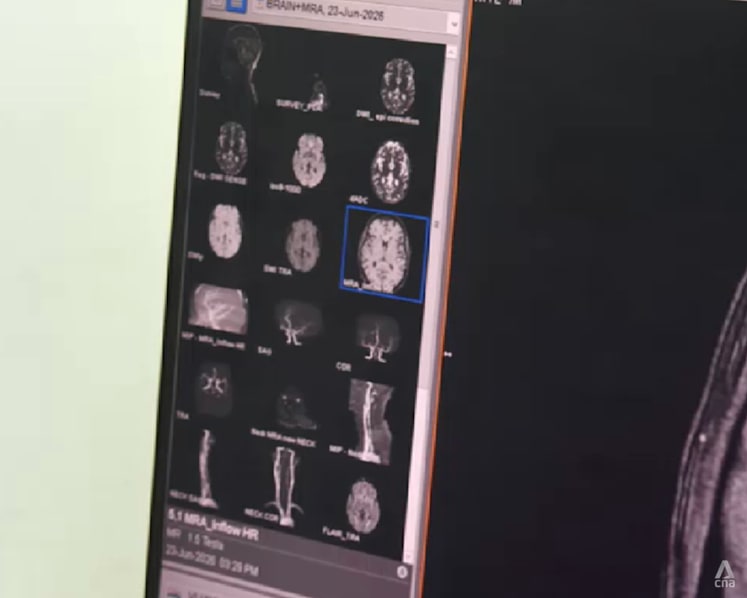
At TrueCheck Diagnostics in Mumbai, it has been used for more than a year to help radiologists interpret MRI scans, X-rays and other medical images.
The scans are processed through a platform developed by diagnostics technology provider 5C Network.
The Bengaluru-based firm said its AI has been trained on billions of medical images. The system produces a draft report, which is then reviewed and signed off by a radiologist.
The company said it built the platform because of India's shortage of radiologists – its research indicates there is only one radiologist for every 100,000 people in India.
TrueCheck said the technology has improved productivity, but cautioned that AI cannot replace doctors.
"To be honest, I have to really check each word in every case before I sign them off because AI can be really perfect but at times it can go haywire," said Roopesh Deshmukh, the clinic’s director and consultant radiologist.
TRUST REMAINS A MAJOR HURDLE
Companies developing these AI tools believe they can help bridge gaps in healthcare access, especially in rural areas with fewer doctors and specialists.
The challenge now is how quickly such technology can be adopted across the country.
One of the biggest barriers is trust among healthcare providers.
"Initially, there has to be trust by the provider themselves that this is a good AI to use (and) this will give us good results," said Krishnan from the Shantilal Shanghvi Eye Institute.
"That's why we have to make sure the technology that we use has been validated (and) published."