China's AI IPO wave fuels retail frenzy as investors anticipate more listings
A wave of artificial intelligence listings is attracting renewed investor interest, as Chinese AI firms seek fresh capital to fund growth despite many still operating at a loss.
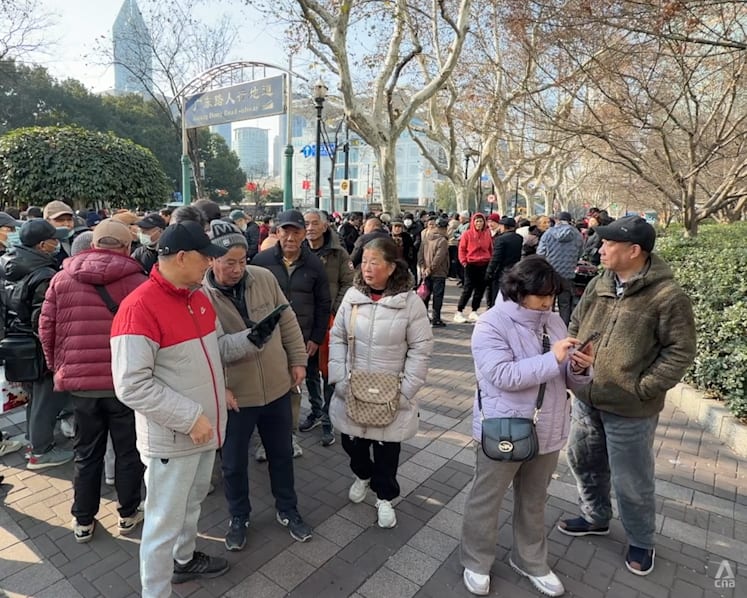
Retail investors gather every weekend on Shanghai's Guangdong Road to exchange investment tips. (Photo: CNA/Emil Wan)

This audio is generated by an AI tool.


SHANGHAI: Every weekend, hundreds of retail investors gather on Shanghai’s Guangdong Road to exchange investment tips.
The informal "stock salon" has been a fixture for three decades, taking place near some of China's pioneering brokerage offices along the stretch.
These days, much of the discussion centres on artificial intelligence.
“There’s no real earnings to back up all that buzz,” warned one regular at the street salon. “Without solid profit, if you buy in at the market peak right before prices crash, you could lose money.”






For another investor, his confidence in AI investments comes from China's push for technological advancement.
“The government has been supporting the sector, and the premier has also spoken about encouraging foreign investment into the market,” he said.
“The backers (of AI companies) are optimistic, so why shouldn't I be?"
DEMAND FOR FRESH CAPITAL
Following several sluggish years in China's financial markets, many AI-related firms are listing on mainland and Hong Kong bourses.
Many of them are heavily oversubscribed.
Last year, listings of MetaX Integrated Circuits and Moore Threads were close to 3,000 times oversubscribed in their retail portions.
In the AI infrastructure market, memory chipmaker ChangXin Memory Technologies (CXMT) made its Shanghai debut on Monday (Jul 27). Its shares surged 466 per cent on the first day of trading, making it the mainland’s most valuable listed company.
More high-profile listings from AI-related firms are expected, including large language model (LLM) startups.
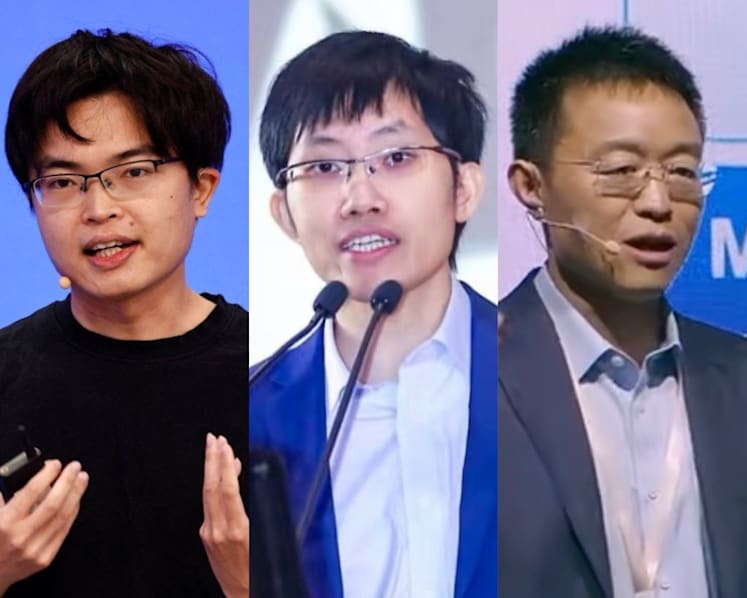
Among China's six leading AI LLM startups, known as the country's "AI tigers", two are pursuing secondary listings on Shanghai's STAR Market, while most others have IPO plans.
Beijing-based Zhipu AI announced in June that it plans to raise US$2.2 billion through a secondary listing in Shanghai, four months after going public in Hong Kong.
MiniMax Group has also said it is exploring a dual listing, following its US$619 million IPO in Hong Kong in January.
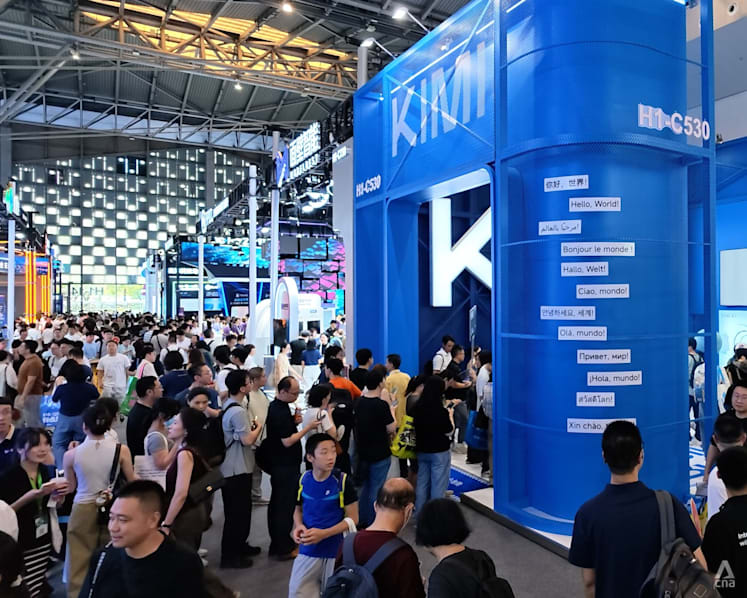
Moonshot AI, the developer of the Kimi K3 model that has upended the sector, is said to be exploring a Hong Kong listing, according to media reports.
"WALLET SIZE IS TO BE TESTED"
Despite being unprofitable, Chinese AI firms are pushing ahead with listings because of attractive valuations.
The companies "need more capital because it is a super competitive environment. They need to drive the project with a much quicker speed,” said Joseph Chan, associate director at the centre for innovation and entrepreneurship at the University of Hong Kong.
Listings can also attract talent by allowing employees to monetise share options sooner, he added.
Regulators have also been supporting the listings.
In June, the Shanghai Stock Exchange clarified certain listing rules, outlining how AI large-model companies can use a framework intended for firms with strategic technologies but are not yet profitable.
The wave of Chinese AI IPO activity has raised concerns over whether investor enthusiasm has become disconnected from fundamentals.
Marco Sun, chief financial markets analyst at MUFG (China), highlighted that oversubscriptions are only limited to a handful of listings in the broader equity market.
“If there's a bubble, maybe it's only down the road. Right now, it is only inflating, (it's) not a bubble yet,” he said.
“The rules and also the wallet size is to be tested."