India mulls tougher punishment for exam paper leaks after protests
The legislative push follows weeks of protests over exam paper leaks and other irregularities, which culminated in the resignation of Education Minister Dharmendra Pradhan last week.
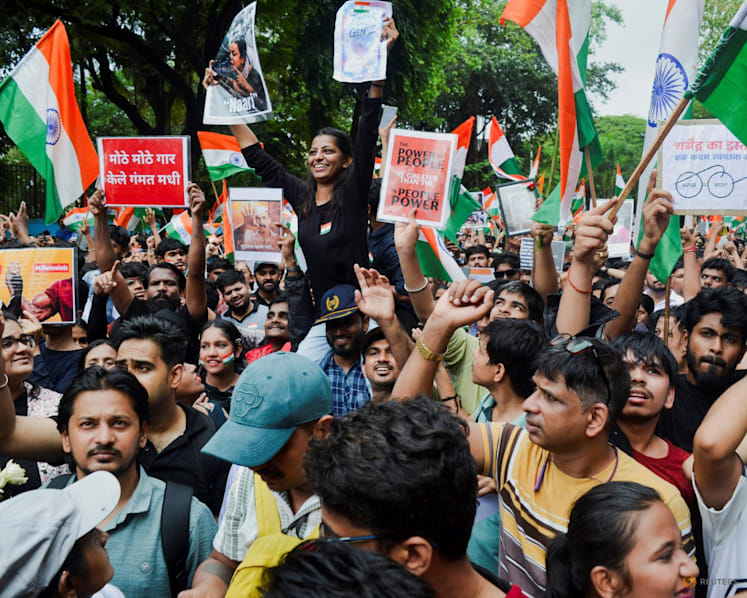
Cockroach Janta Party (CJP) supporters chant slogans, hold placards and wave Indian flags as they celebrate the resignation of Education Minister Dharmendra Pradhan over the National Eligibility cum Entrance Test (NEET) examination paper leaks, following a protest in Mumbai, India, on Jul 26, 2026. (File photo: Reuters/Indranil Aditya)
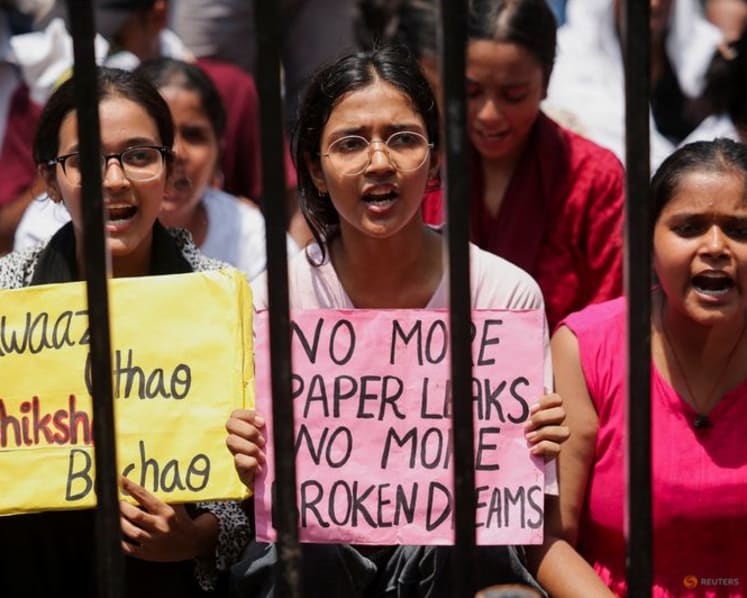
NEW DELHI: India's government proposed on Tuesday (Jul 28) longer jail terms and heftier fines for examination paper leaks, seeking to restore confidence after youth-led protests focused on education reforms rocked the country.
Under the proposed legal change submitted to parliament, the maximum prison term for those involved in paper leaks would be doubled to 10 years, while fines could exceed US$1 million and court proceedings would be fast-tracked.
The legislative push follows weeks of protests over exam paper leaks and other irregularities, which culminated in the resignation of Education Minister Dharmendra Pradhan last week.
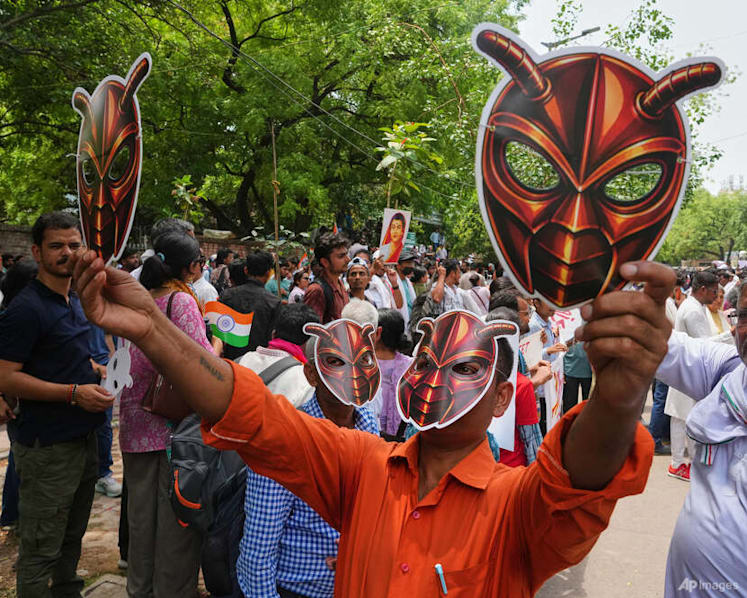
The protests, spearheaded by the online Cockroach Janta Party (CJP) movement, drew massive support from young students across the country and presented a major challenge to Prime Minister Narendra Modi's government.





The proposed amendments reaffirm "this government's deep commitment to safeguard the welfare of the students and the youth of this country", senior minister Jitendra Singh told the lower house of parliament.
The changes seek to make the legislation "more stringent and to ensure speedy justice", Singh said, "so that the credibility of all these exams gets enhanced and gets reinstated".
During the heated debate in the lower house of parliament, the opposition accused the government of involvement in repeated paper leaks and failure to effectively apply the existing law to curb it.
"We refuse to let the government convert its involvement into a certificate of innocence" by passing the amendments, opposition lawmaker Abhishek Banerjee said.
The parliament reconvened last week for its monsoon session, with the first few days repeatedly disrupted by opposition lawmakers seeking accountability over a police crackdown on the student-led protests.
On Tuesday, the Supreme Court ordered the release of all detained protesters who are under the age of 18 and have no prior criminal record.
The CJP said the court's interim order still allows authorities to proceed with cases and investigations against some protesters.
This "stands in direct contradiction to the solemn assurance and guarantee extended by the Government of India to the youth of this nation", the group said in a statement.
The CJP warned that it "will have no option but to resume its nationwide protest" if the government failed to uphold its commitment not to try anyone over the protests.
Examination paper leaks have long plagued India's highly competitive education system.
The intense pressure to succeed has fuelled a vast network of coaching centres and created opportunities for criminal groups to profit by selling leaked question papers.
Despite repeated government crackdowns, paper leaks have remained a recurring problem in both national and state-level examinations.
Demonstrations in New Delhi turned violent on Jul 20 when huge crowds attempted to march towards parliament from the Jantar Mantar protest site.
Police fired tear gas and used batons to disperse the protest, triggering clashes and a wave of detentions.