analysis Asia
Negeri Sembilan polls: As BN-PN rides Malay-Muslim support to win big, what's next for them and Malaysian politics?
Analysts say the supermajority win by Barisan Nasional and Perikatan Nasional in Negeri Sembilan could prompt the two former rivals to deepen their partnership.
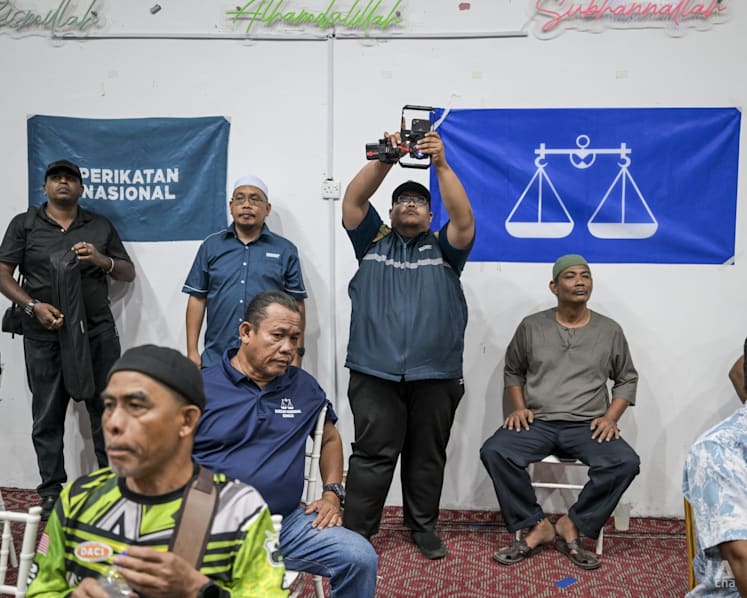
Perikatan Nasional (PN) and Barisan Nasional (BN) flags displayed together at a rally in Seremban, Negeri Sembilan, on Jul 29, 2026. (Photo: CNA/Fadza Ishak)

This audio is generated by an AI tool.


SEREMBAN: The Negeri Sembilan state election results reflect a changing electoral landscape showing clear support by Malay-Muslim voters for a formal cooperation between the Barisan Nasional (BN) and Perikatan Nasional (PN) coalitions, analysts say.
The observers add that this will likely prompt BN and PN to deepen their working relationship.
The recently concluded election in Negeri Sembilan saw the alliance between BN and PN winning 25 of the 36 state assembly seats, securing a comfortable two-thirds majority. This supermajority will allow them to amend the state constitution.
The two coalitions comfortably swept the Malay-majority seats by commanding margins, prompting analysts to predict that replicating this cooperation in the general elections may even pave the way for a victory.
Malaysia’s 16th general elections (GE16) must be held by February 2028.
At the same time, analysts note that Prime Minister Anwar Ibrahim’s Pakatan Harapan (PH) coalition will face mounting pressure following the election outcome in Negeri Sembilan, and similar setbacks in earlier state polls in Johor and Sabah.
PH won 11 seats, down from 17 in the last election in 2023, as it ceded control of the state.
Hisommudin Bakar, executive director of research firm Ilham Centre, told CNA that while achieving full consolidation between BN and PN would not be easy moving forward, the message from voters was “unmistakable”.
“I believe they will move on forward and come to a compromise based on the desires of Malay voters who have made their message clear,” he told CNA.
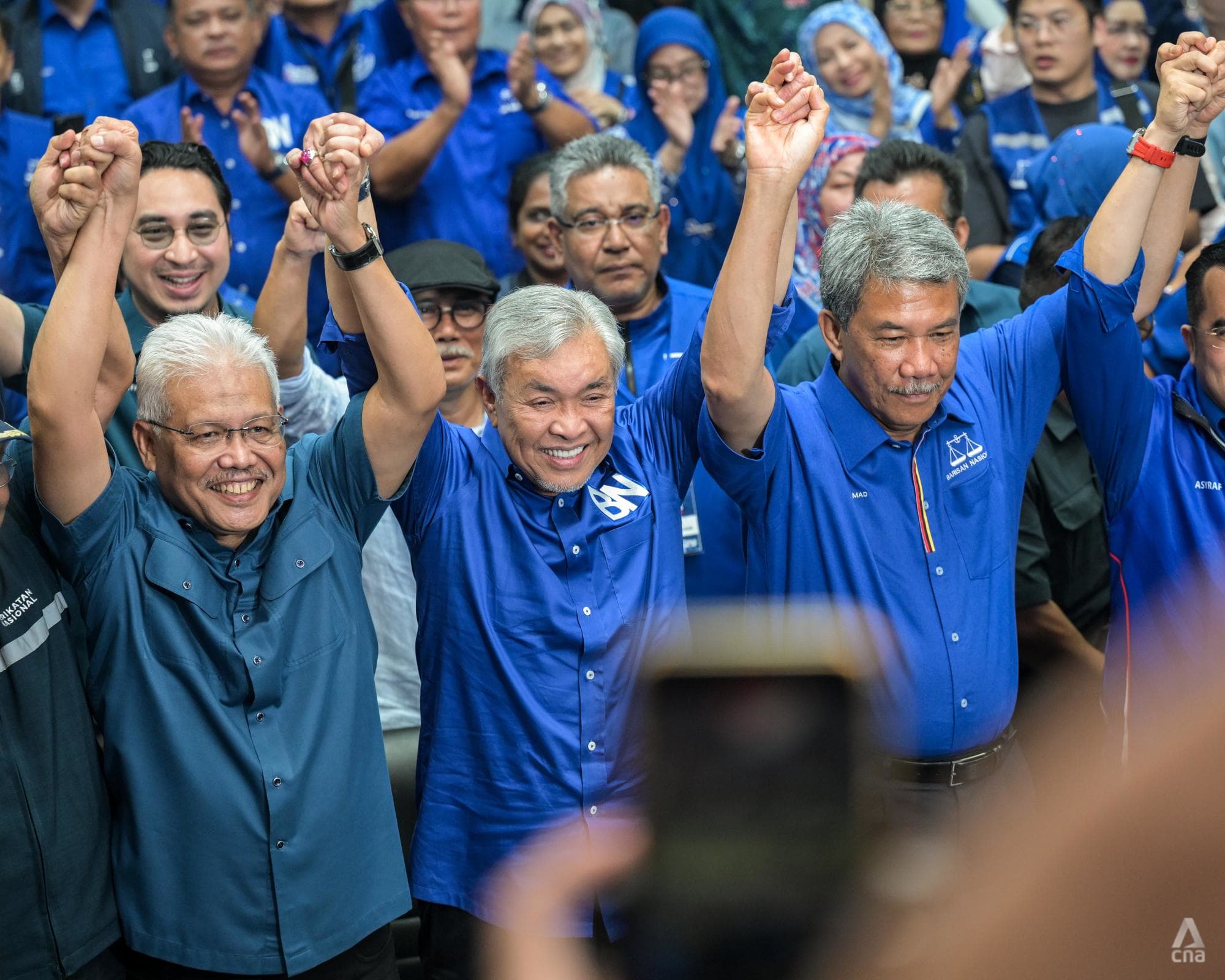
The Negeri Sembilan state election served as the first electoral experiment between BN and PN, with the former’s chairman Ahmad Zahid Hamidi suggesting that the partnership could potentially extend to the Melaka state election due by early 2027.
Previously, PH had collaborated with BN in Negeri Sembilan in 2023 after both coalitions formed the federal unity government following a hung parliament in the wake of the 2022 general elections.
PN meanwhile is the federal opposition bloc.





PN-BN PARTNERSHIP FOR GE16?
Analysts say that a strategic electoral pact between BN and PN could heavily reshape Malaysia's political landscape.
Independent political analyst Zaharuddin Sani Sabri told CNA that BN’s current partnership with PH has exposed ideological and factional strains within the United Malays National Organisation (UMNO), with many grassroots members uneasy about cooperating with PH’s multiracial platform. UMNO is a BN lynchpin party.
He said that PN is a more “natural ideological partner” for BN, appealing to conservative Malay-Muslim sentiments, while easing internal tensions and restoring the latter’s relevance within this segment.
Within the PN, Parti Islam Se-Malaysia (PAS) serves as its main component party. UMNO and PAS are the biggest Malay-based parties in Malaysia.
“Whether under the banners of BN or PN, Malay-majority constituencies are increasingly converging around parties perceived to prioritise ethnic security, religious identity and economic protection. This is no longer simply about ideology. It is about political ownership,” said Zaharuddin.
He added that Malaysia’s fractured political landscape, electoral arithmetic, and historical precedent all point toward the rationality of their cooperation into GE16.
“Their relationship is transactional, but transactions often outlast ideological marriages when the stakes are existential,” he said.
Malaysia's parliament consists of 222 seats. A simple majority of 112 seats is needed to form a government.
According to the Ilham Centre, out of the 165 parliamentary seats in Peninsular Malaysia, 93 have a Malay population exceeding 70 per cent, 45 have a Malay population between 50 per cent and 70 per cent while 14 are Chinese-majority seats, and the remaining 13 being mixed seats.
Hisommudin said that a simulation by his research firm of a potential BN-PN pact could see the two win 122 seats in Peninsular Malaysia alone, on the assumption that their supporters would vote for each other’s candidates. Meanwhile, PH is forecast to only win 43 seats if it were to contest on its own.
In Peninsular Malaysia at the 15th general elections, BN and PN won 94 seats, while PH won 71 seats, with all three coalitions having fielded candidates in those contests.
While questions would inevitably arise over who should secure the prime ministerial position if the pact won, Hisommudin believes that PN, particularly PAS, was prepared to cede that position to BN.
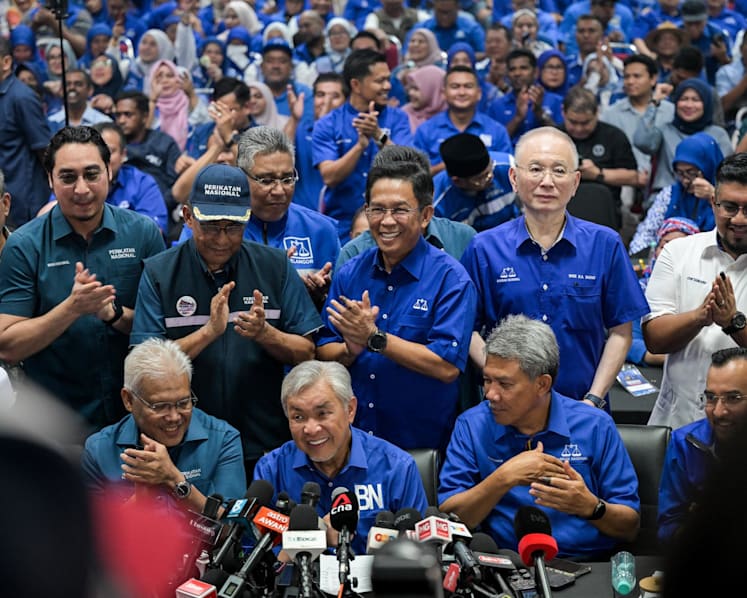
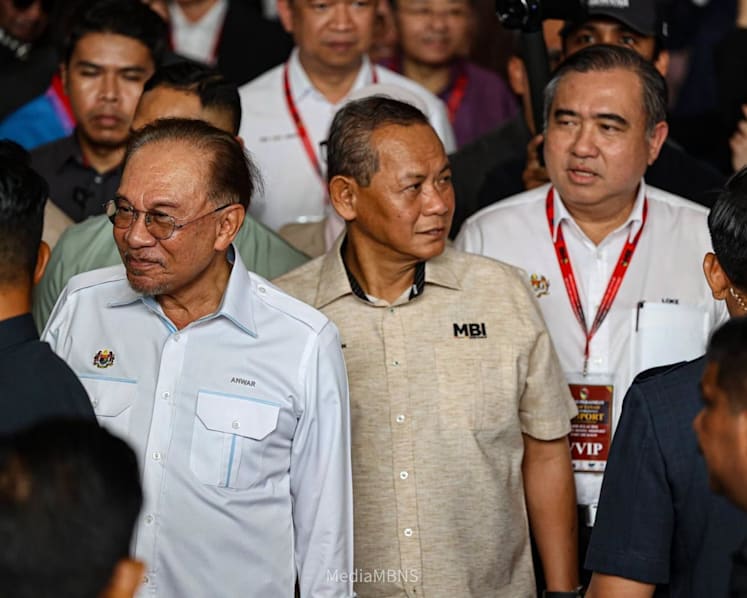
Similarly, political scientist Syaza Shukri of the International Islamic University Malaysia (IIUM) told CNA that moving forward, she believed that BN and PN would have more serious discussions to deepen their working relationship.
“So it won’t be smooth sailing but the data is showing that it works. UMNO needs to figure out its priority, whether to win seats with PN or to be the dominant Malay party,” she said, adding that there is still resistance within UMNO especially - and also its coalition partner Malaysian Chinese Association - on a pact with PN.
Syaza said that while the recent electoral outcome resembles a "blue wave" due to the results in the southern states, the nationwide picture ultimately remains a mix of blue and green waves.
“BN is still not that powerful in contrast to PN, especially among the Malays …,” she said.
The "green wave" is linked to rising Malay-Muslim conservatism, primarily driven by PAS while the blue wave term is heavily identified with BN, whose official color and logo symbol feature deep royal blue. PN uses a different shade of blue.
PAS currently holds a stronghold in the northern and east-coast states of Peninsular Malaysia, while BN’s support is currently anchored in the southern states of the peninsular.
Political analyst Sivamurugan Pandian of Universiti Sains Malaysia (USM) said that the results from Negeri Sembilan give BN and PN a strong incentive to continue cooperating, saying that it demonstrated that vote-splitting can be reduced when their electoral interests converge.
“But the partnership remains vulnerable to questions of leadership, seat allocation and whether this is merely an electoral understanding or something more permanent. The next test is whether they can translate electoral cooperation into a sustainable political arrangement,” he said.
During the Johor polls, BN and PN maintained a loose, unwritten arrangement. PN contested only 33 of the 56 seats, with PAS leaders openly instructing their base to back BN candidates in the constituencies where PN was absent.
The two coalitions subsequently entered into a more formal pact in Negeri Sembilan, agreeing not to run against each other while actively campaigning and urging their respective bases to cross-vote.
Both BN and PH had gone up against one another in Johor and Negeri Sembilan even as they are partners in Anwar's federal unity government.
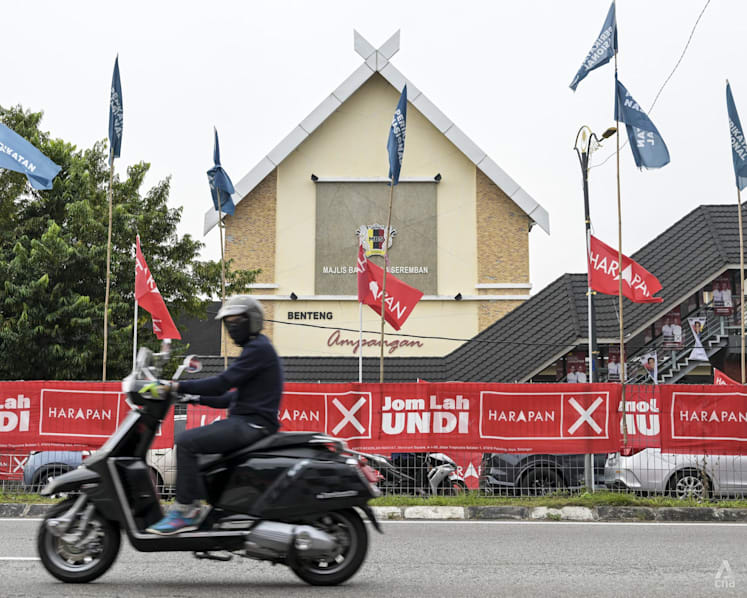
WHAT NEXT FOR PH?
Analysts agreed that the results are yet another blow to Anwar and PH, saying that it would be difficult for them moving forward.
Sivamurugan said that losing Negeri Sembilan after Johor means PH needs to reassess its Malay support, while avoiding further alienation of its Chinese and Indian base.
“The priority should be renewal rather than recrimination: listen to voters, strengthen grassroots engagement and demonstrate delivery rather than simply defending the coalition’s record,” he said.
Sivamurugan stressed that the Democratic Action Party’s (DAP) congress on Aug 16 comes at a sensitive moment, particularly after its secretary-general Anthony Loke suffered a defeat in the Chennah state seat in Negeri Sembilan he had previously held for three terms. DAP is a PH component party.
Delegates are set to vote on whether party officeholders - including five full Cabinet ministers and six deputy ministers - should relinquish their positions although the party would maintain parliamentary support for the unity government.
In the November 2025 Sabah state election, it lost all eight seats it contested – a far cry from the 2020 Sabah election, when it secured six seats out of seven contested, some of them with super majorities.
In the Johor state election last month, DAP won six out of the 17 seats it contested, down from the 10 seats won in 2022.
Syaza believes that at its special congress, DAP would likely choose to leave Anwar’s Cabinet, saying that the party needs to reconnect with its grassroots base and address their expectations.
With 40 parliamentary seats in Malaysia’s 222-member lower house, DAP supplies the most seats to PH, which also comprises Anwar’s Parti Keadilan Rakyat (PKR) and Parti Amanah Negara.
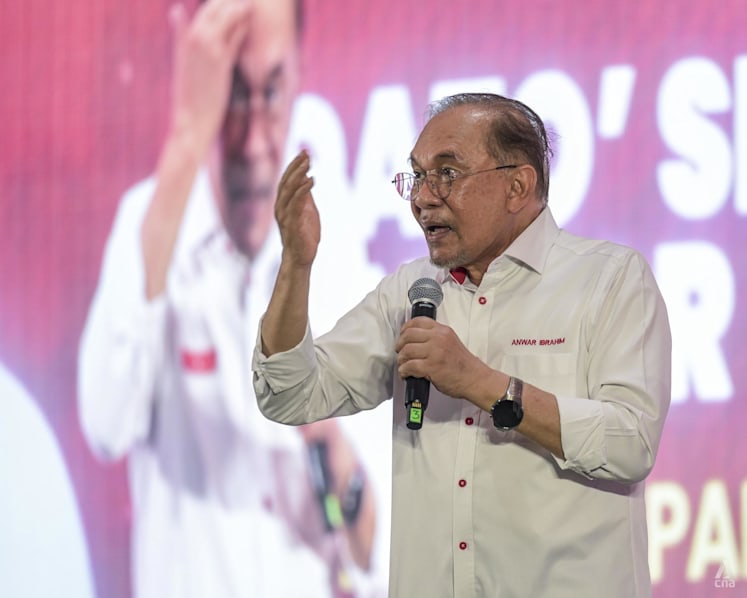
As for PKR, Syaza said that calls for change from the grassroots have grown louder but she is unsure that it has been heard by party leaders.
“Generally I think the picture is pretty clear that it is going to be very difficult for PH and Anwar going forward. But that is democracy. PH has now been in power and people can judge it and they’re saying PH has not been up to par,” she said.
After its defeat in Negeri Sembilan, top leaders from PH had blamed the use of racial rhetoric and identity politics by their opponents during the campaign. They also lamented that voters failed to heed the coalition's track record of good governance and economic delivery.
Syaza, however, said that the results signal that voters were not convinced that PH and Anwar are doing the best for the country.
“I’m not saying the government has failed, but it is the perception that matters and I don’t think they can overcome this narrative anytime soon,” she said.
In a statement on Aug 3, former DAP parliamentarian Ong Kian Ming said PH and Anwar should focus on delivering the political and institutional reforms which were promised while in opposition.
These reforms include an equal constituency allocation to all parliamentarians that PH had championed while in opposition, among others. Currently, these funds are generally disbursed at the discretion of the sitting federal or state governments.
Ong added that Anwar should move away from the “short-term tactics” which failed to deliver PH the votes in Johor and in Negeri Sembilan.
These, Ong claimed, include issues related to a royal commission of inquiry into the government-owned Islamic financial institution Tabung Haji, as well as turning the issue of the deportation of Rohingyas into political capital.
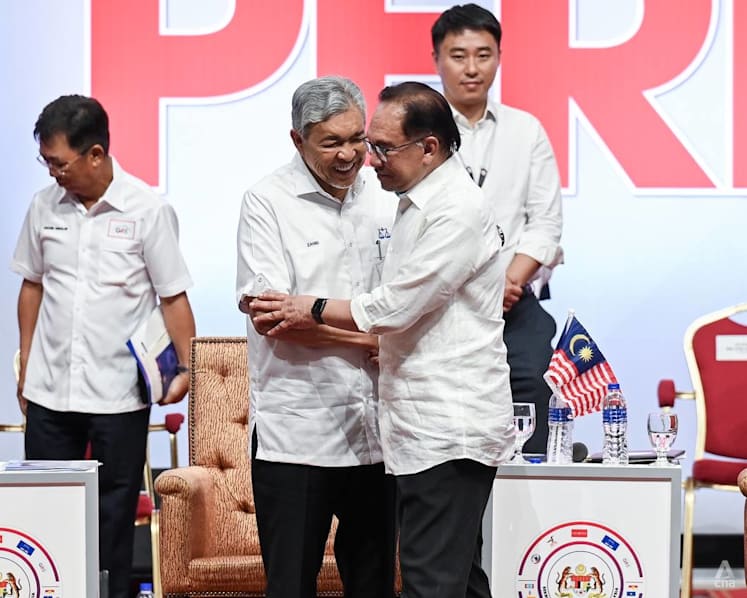
SNAP ELECTIONS TO BE HELD?
For now, most analysts do not believe that a snap general election will be called yet.
Sivamurugan said that while the unity government is politically weakened, it is not immediately threatened.
He added that the recent results at the state level do not automatically translate into a federal change because the parliamentary arithmetic is different.
“I would not expect a snap general election simply because of this result. In fact, the result gives the government more reason to avoid an early election and concentrate on restoring confidence,” he said.
Meanwhile, Syaza noted that the unity government still appears intact because UMNO wants to tread carefully while it remains part of the administration.
“Going for a snap election may not be a priority since UMNO is already in government now,” she said.
She said that UMNO especially would be cautious to push for early elections, such as it had done in 2022 where it thought it could win but ended up losing badly.
“It didn't play out that way. That’s why I think they’re being cautious now,” she said.
Zahid had previously reiterated BN’s commitment to supporting the unity government until the end of Anwar’s term.
But Hisomuddin believed that there would be pressure on the top leadership by those within BN to reassess its relationship with the current unity government.
This would be apparent in the upcoming UMNO general assembly that will be held from Aug 14 to 16, he noted.
“The premise of UMNO’s pact with PN was to defeat PH, with DAP the main punching bag,” he said, adding that the consensus built when the unity government that was first formed no longer existed following the attacks on one another by both PH and BN.
Hisommudin believes a general election could be triggered if Anwar fails to manage shifting political dynamics after BN receives clear signals from its voter base.
“If Anwar feels that he has lost power within the unity government and if this feeling grows stronger, he could be forced to call for elections this year, especially if there is a lot of political drama,” he said.