





CNA Explains: What is treason as defined under Indonesia law?
The term treason under Indonesian law has resurfaced amid allegations that former police chief Listyo Sigit Prabowo wiretapped President Prabowo Subianto.

This audio is generated by an AI tool.


JAKARTA: The term treason has resurfaced in Indonesia after the government said the alleged wiretapping of President Prabowo Subianto could constitute the offence.
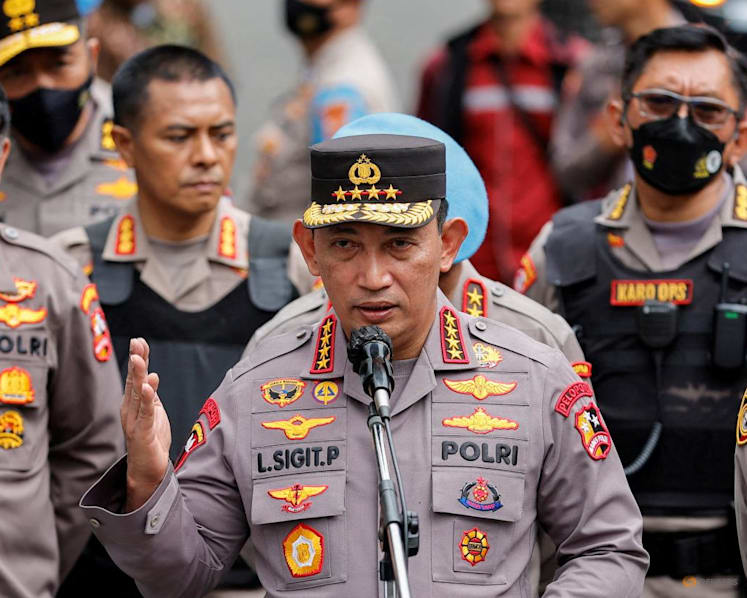
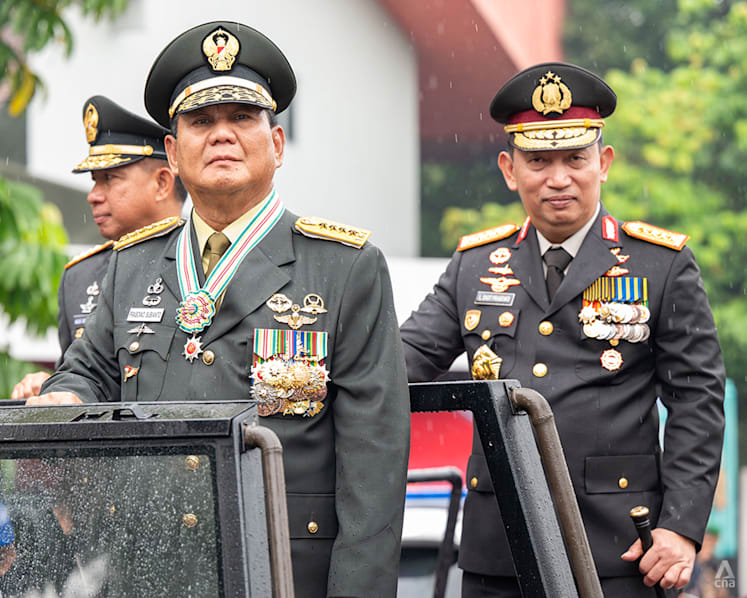
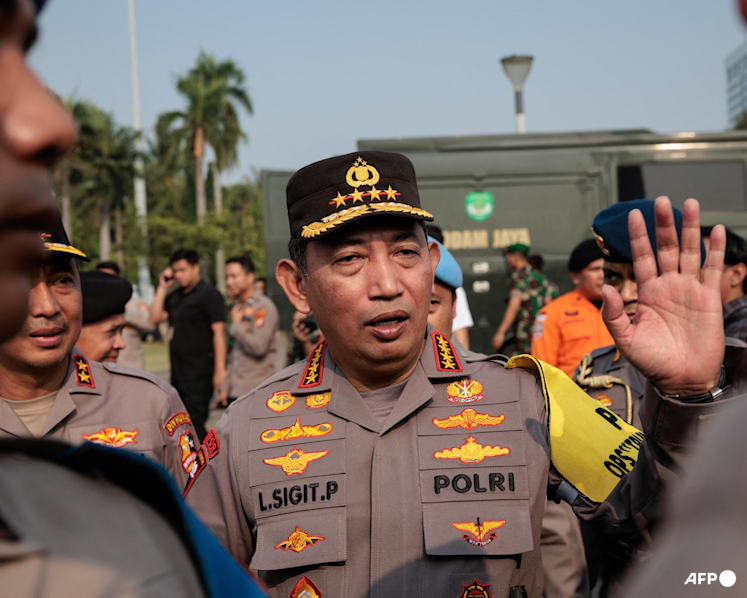
The case involves former National Police chief Listyo Sigit Prabowo, who has been named a suspect alongside two other senior police officers over the alleged surveillance of the president and several prominent figures.
"We can consider this an act that potentially amounts to treason," State Secretary Prasetyo Hadi said at the Presidential Palace in Jakarta on Wednesday (Nov 4).
Prasetyo said the alleged actions could threaten national interests and the president's safety. However, the government acknowledged that the motive behind the suspected wiretapping remains unclear as investigations are ongoing.





So what constitutes treason under Indonesian law? What forms can it take, and how severe are the penalties?
WHAT CONSTITUTES TREASON UNDER INDONESIA'S CRIMINAL CODE?
Eva Achjani Zulfa, a law professor at the University of Indonesia, said treason can involve an attempt to kill or harm the president or vice-president.
"The key element is the perpetrator's intention to render the president unable to carry out their duties and functions," Eva told CNA Indonesia.
"If that intention can be proven, the act can be classified as treason."
Under Indonesia's former Criminal Code (KUHP), Article 104 governed treason against the president or vice-president, while Article 87 stipulated that treason occurs when an intention is demonstrated by the start of an attempt to carry it out.
Under the new Criminal Code, which took effect on Jan 2, 2026, treason against the president or vice-president is covered by Article 191 of Law No 1 of 2023.
The provision carries the death penalty for anyone who commits treason with the intent to kill, life imprisonment if the offence deprives the president or vice-president of their liberty, or a maximum of 20 years in prison if either is rendered unable to govern.
University of Indonesia's Eva said that intent is a crucial element in determining whether an act constitutes treason.
"The element of intent in treason is the intention to render the president unable to perform their duties. This element must be proven," she said.
One case involving treason against a president occurred in 2019, when Hermawan Susanto threatened to behead then-president Joko Widodo during a demonstration outside the Elections Supervisory Agency (Bawaslu) office in Jakarta.
In March 2020, the Central Jakarta District Court found Hermawan guilty of treason and sentenced him to 10 months and five days in prison. He was released immediately, having already served that period in detention.
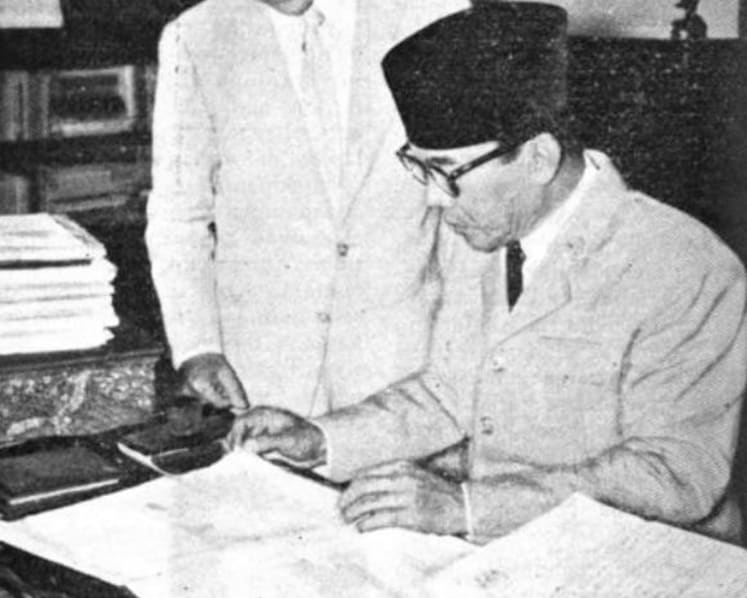
Indonesia has also seen several attempts to assassinate its presidents. One was the Cikini incident on Nov 30, 1957, when assailants threw grenades at then-president Sukarno in Jakarta. Sukarno survived, but 10 people were killed.
On Mar 9, 1960, Air Force pilot Daniel Maukar fired on the presidential palace in Jakarta from a MiG-17 fighter jet. Sukarno survived the attack.
Sukarno was targeted again on May 14, 1962, when a man named Bachrum opened fire as the president attended Eid al-Adha prayers at the presidential palace complex. The shots missed Sukarno but wounded several people, including parliamentary speaker Zainul Arifin.
All three incidents were cited as examples of treason by criminal law expert Andi Hamzah during a Constitutional Court hearing in August 2017.
BEYOND THREATS AGAINST THE PRESIDENT
Abdul Fickar Hadjar, a legal expert at Trisakti University, explained that treason is not limited to attempts to harm the president or vice-president.
Under the Criminal Code, treason encompasses not only "attempts to seize power from the head of state or government", but also efforts to separate territory from the state, Abdul said.
"Treason occurs when someone seeks to separate a territory from the authority of the Republic of Indonesia, for example when a region declares independence," he said.
One such case occurred in 2007, when a group of Cakalele dancers unfurled the flag of the self-proclaimed Republic of South Maluku (RMS) in front of then-president Susilo Bambang Yudhoyono in Ambon. One participant, Abraham Saiya, was sentenced to 15 years in prison for treason.
In another case in 2019, six Papuan activists raised the Morning Star flag during a demonstration in Jakarta. They were convicted of treason in 2020 and sentenced to between eight and nine months in prison.
"The DI/TII (Darul Islam/Indonesian Islamic Army) rebellion is one example of treason aimed at breaking away from the Republic of Indonesia," Abdul said, referring to the movement led by Sekarmadji Maridjan Kartosuwirjo, who proclaimed the establishment of an Islamic State of Indonesia in West Java in 1949. Kartosuwirjo was sentenced to death for rebellion and executed on Sep 5, 1962.
SEIZING POWER THROUGH UNLAWFUL MEANS
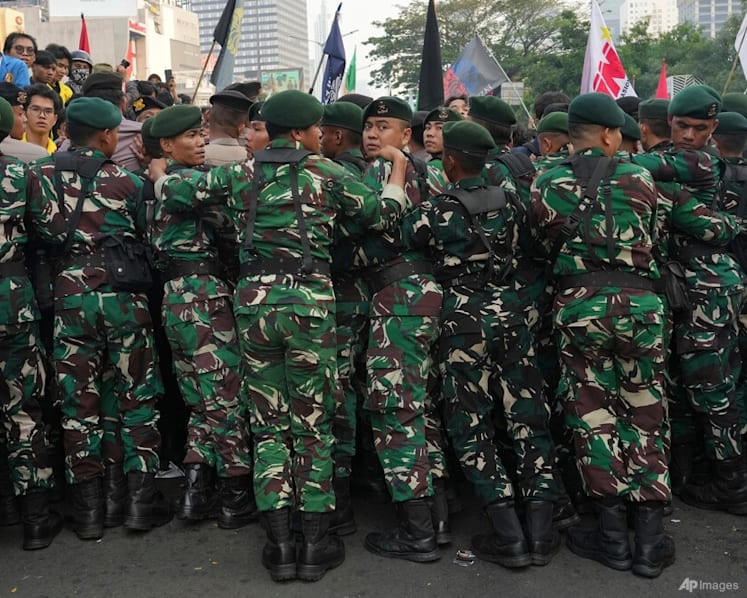
Another form of treason involves attempts to overthrow the government through unlawful means, as stipulated in Article 193 of Indonesia's new Criminal Code.
According to Trisakti University's Abdul, this includes attempts to seize power outside established legal mechanisms.
One example is the Jul 3, 1946 incident, regarded as one of the first attempted acts of treason since Indonesia's independence.
A group of military officers and opposition figures tried to force Sukarno to dissolve then prime minister Sutan Sjahrir's Cabinet and form a new government.
The attempt failed, and several figures were subsequently tried for treason under Article 107 of the old Criminal Code. In 1948, the Supreme Military Court found several defendants, including Major General Soedarsono and Muhammad Yamin, guilty of attempting to overthrow the legitimate government.
Another example is the 1958 Revolutionary Government of the Republic of Indonesia (PRRI) rebellion, when groups opposed to Sukarno's administration established a rival government in West Sumatra.
However, not every attempt to change a government constitutes treason. Abdul said the distinction lies in how power is transferred.
"Changing a government through elections is a legitimate process. By contrast, seizing power outside legal mechanisms can be classified as treason if the elements of the offence are met," he said.