JB-Singapore RTS Link: First look at Bukit Chagar station, and Malaysia’s 25-minute target for commuters
CNA goes behind the scenes at Johor Bahru’s Bukit Chagar RTS Link station, where high-tech body scanners, an operations command centre and direct links to nearby malls are taking shape ahead of the rail service’s expected launch in January 2027.
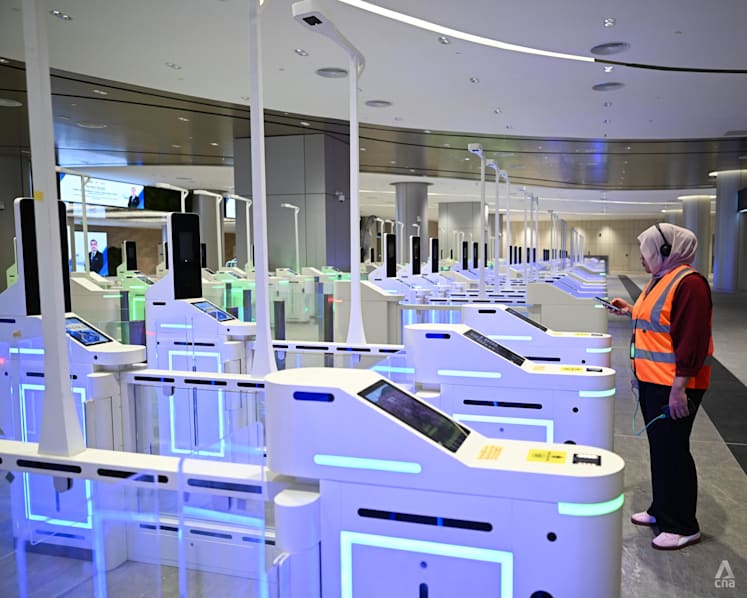
A journalist checks out the Malaysian immigration e-gates at the Bukit Chagar RTS Link station on Aug 17, 2026. (Photo: CNA/Zamzahuri Abas)

This audio is generated by an AI tool.


JOHOR BAHRU: Johor Bahru-Singapore Rapid Transit System (RTS) Link passengers could take just 25 minutes to go from entering Bukit Chagar station to boarding their train, under a target set by Malaysian authorities.
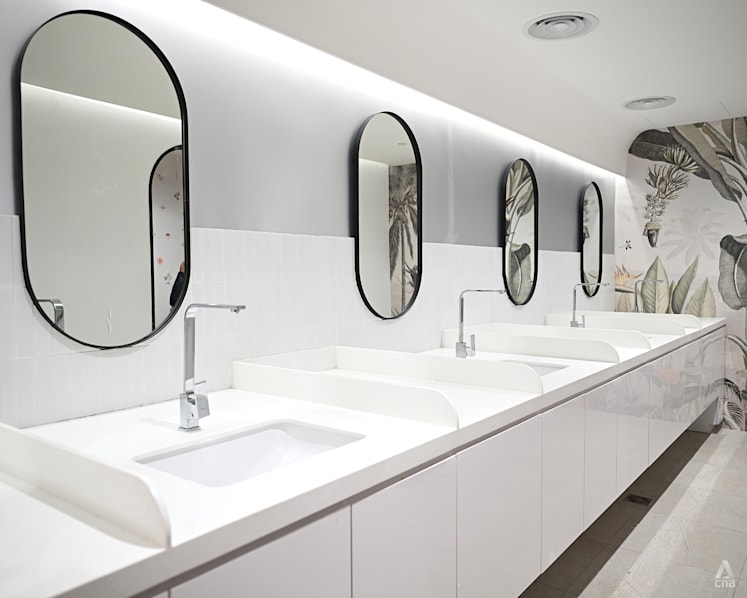
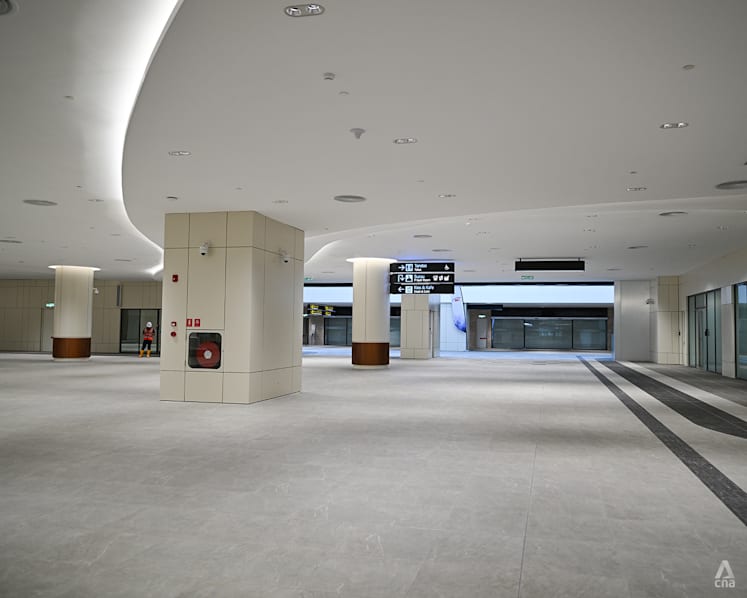
The station in Johor Bahru, billed as one of Malaysia’s most modern, will feature spacious air-conditioned concourses, high-tech security screening and immigration systems, as well as amenities such as large toilets and a nursery for travellers with young children.
On Monday (Aug 17), CNA and other media outlets were given a behind-the-scenes tour of the station by Malaysia’s Mass Rapid Transit Corporation (MRT Corp) and RTS Operations (RTSO).
Mass Rapid Transit Corporation (MRT Corp) is the official developer and owner of the civil infrastructure for the Malaysian section of the Johor Bahru–Singapore RTS Link.
RTSO is the Singapore and Malaysia joint-venture company that will operate the cross-border rail service.





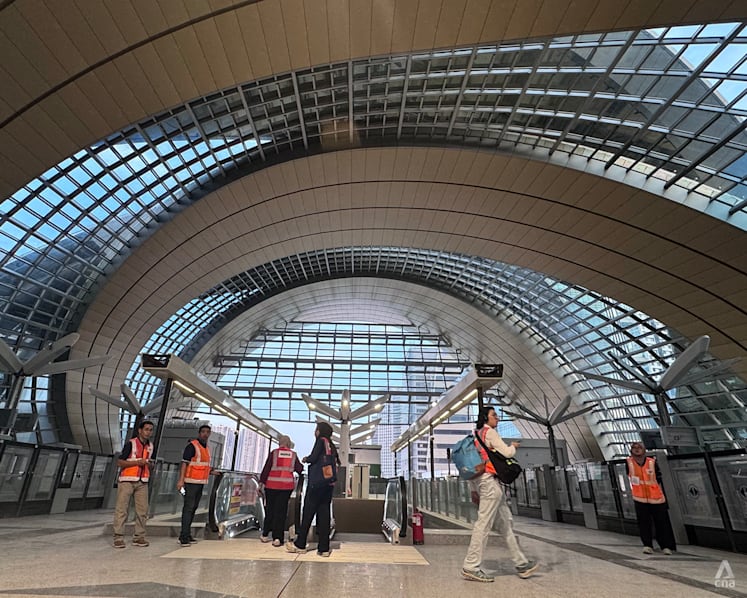
MRT Corp’s RTS Link project director Zulkifli Mohamed told CNA that the aim is for passengers to complete the required checks at Bukit Chagar and reach the train platform within 25 minutes.
“We are targeting this – this means taking five minutes each to clear ticketing, security, immigration clearances for both countries, and travelling up to the train platform,” he said.
When asked if this duration seems long for a five-minute train journey, Zulkifli said: “We are trying hard to improve it, if everything is streamlined, perhaps they can clear in 20 minutes.”
The 4km JB-Singapore RTS Link is expected to begin service by early 2027.
It aims to ease traffic congestion on the Causeway – one of the world's busiest border crossings – by ferrying up to 10,000 passengers an hour each way on a journey that takes about five minutes.
MODERN BODY SCANNERS, E-GATES
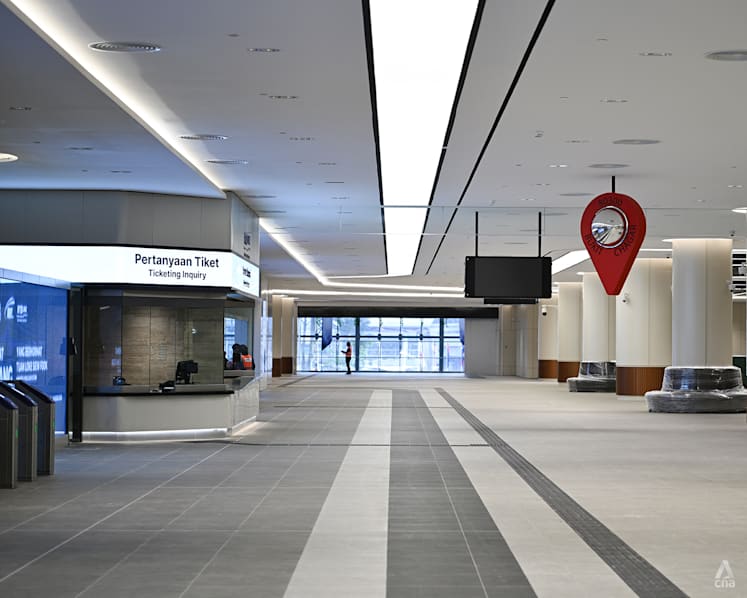
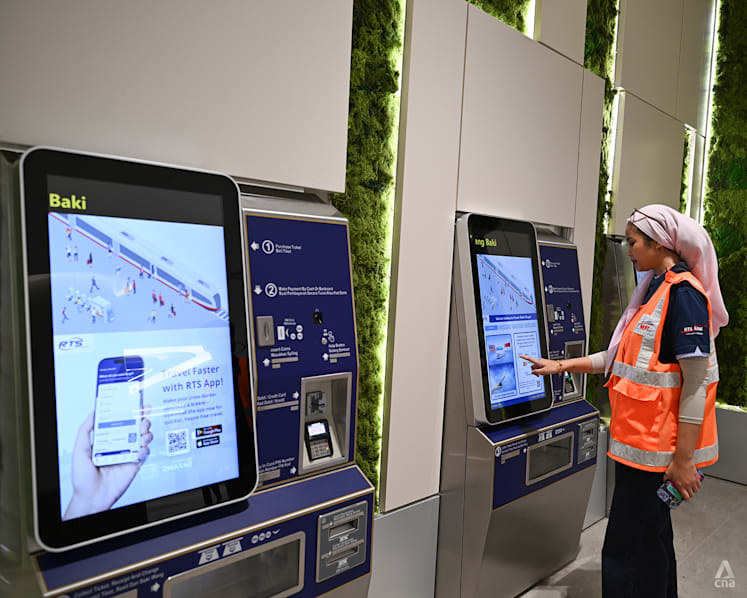
Passengers will start their journeys from the station’s concourse on the ground floor, where they can buy tickets from a machine, before scanning them through a gantry.
Passengers will then take an escalator to the first floor - where they will undergo security clearances.
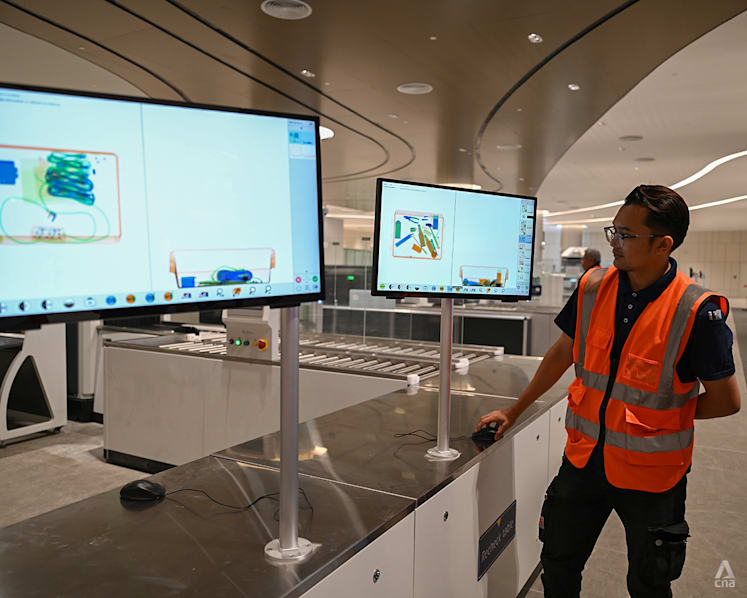
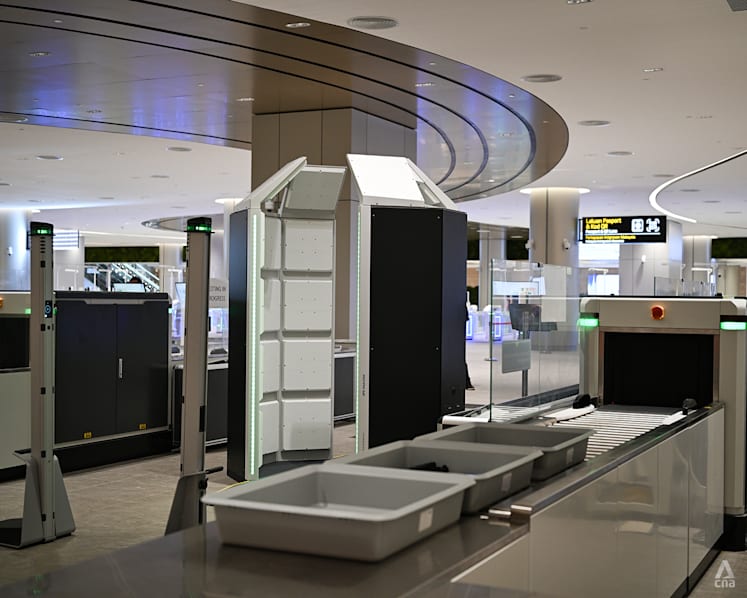
Zulkifli told reporters that the station will have 18 luggage scanners and nine body scanners.
The body scanners, made by German firm Rohde & Schwarz, use ultra-low-power millimetre-wave technology and artificial intelligence to detect concealed metallic and non-metallic objects.
Within seconds, the scanners can flag suspicious objects and pinpoint their location on a screen for security officers.
After security screening, passengers will proceed to Malaysian immigration, where there will be about two dozen electronic gates as well as several manual counters.
The e-gates will allow passengers using the MyNIISe app to clear immigration in as little as seven seconds.
Passengers will then head to the second floor to clear Singapore immigration before proceeding to the third and final level, where they can board trains bound for Woodlands North.
The station will also have a joint monitoring room where officers from Malaysia and Singapore can work together to respond to security incidents.
RTSO chief executive officer Ahmad Marzuki Ariffin also introduced the media to the operations control centre, which will be used to monitor train services and respond to disruptions.
“This is one of the few projects with two operations control centres (for officials from both countries) to resolve issues in quick time,” he said, adding that the other centre would be located at Woodlands North in Singapore.
Passengers leaving Bukit Chagar station will be able to use a 409m pedestrian linkway connecting them to nearby malls.
From JB Sentral, commuters can connect to Malaysia’s Electric Train Service (ETS), which serves destinations such as Kuala Lumpur and Penang.
MRT Corp’s Zulkifli told CNA that the linkway is designed to disperse passenger traffic and provide convenient connections to other modes of transport.
“Passengers can use this to access ‘park and ride’ services as well as other rail services,” he said.
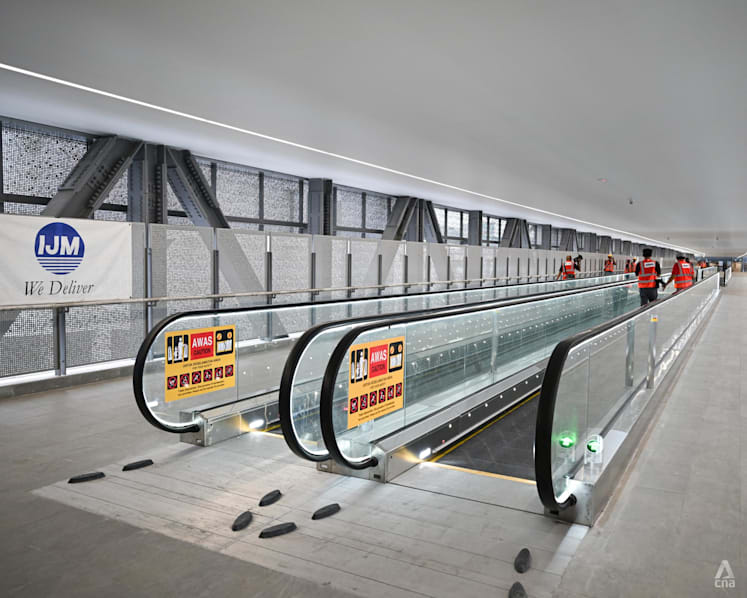
He added that part of the linkway connecting passengers to malls such as KOMTAR JBCC and Johor Bahru City Square, as well as JB Sentral, will be ready before the train service is expected to be launched in January 2027.
“The linkway will be able to disperse 10,000 passengers at any one time,” he added.