Presented by

BUILDING GROWTH FROM WITHIN:
WHY WORKFORCE
TRANSFORMATION MATTERS
Content share and bookmark
By investing in skills, job redesign and career health, companies are strengthening productivity, retention and long-term resilience.
Across the world, businesses are navigating rapid change. Digitalisation, disruptive technologies, rising operating costs, geopolitical uncertainty and shifting employee expectations continue to reshape how organisations operate. In response, more are prioritising workforce transformation – not as a short-term fix, but as a long-term strategy.
Beyond upgrading skills and systems, effective workforce transformation is also about strengthening career health. This involves helping employees map clear growth pathways and understand how their aspirations align with evolving business needs. When done well, organisations are better positioned to retain talent, enhance productivity and build the foundations for sustainable growth.


MEETING CHANGES IN THE RETAIL SECTOR
These broad trends are reshaping Singapore’s retail landscape, too. Heightened competition from e-commerce and cross-border shopping, ongoing manpower constraints and evolving consumer expectations have prompted retailers to rethink how they operate and how they attract, develop and retain talent.
To support this workforce transformation, the Jobs-Skills Integrator for Retail Industry (JSIT-R) provides structured pathways and funding support to help businesses redesign job roles, reskill and upskill employees, and build long-term workforce capabilities.





ENVISIONING CAREER HEALTH AS A BUSINESS PRIORITY
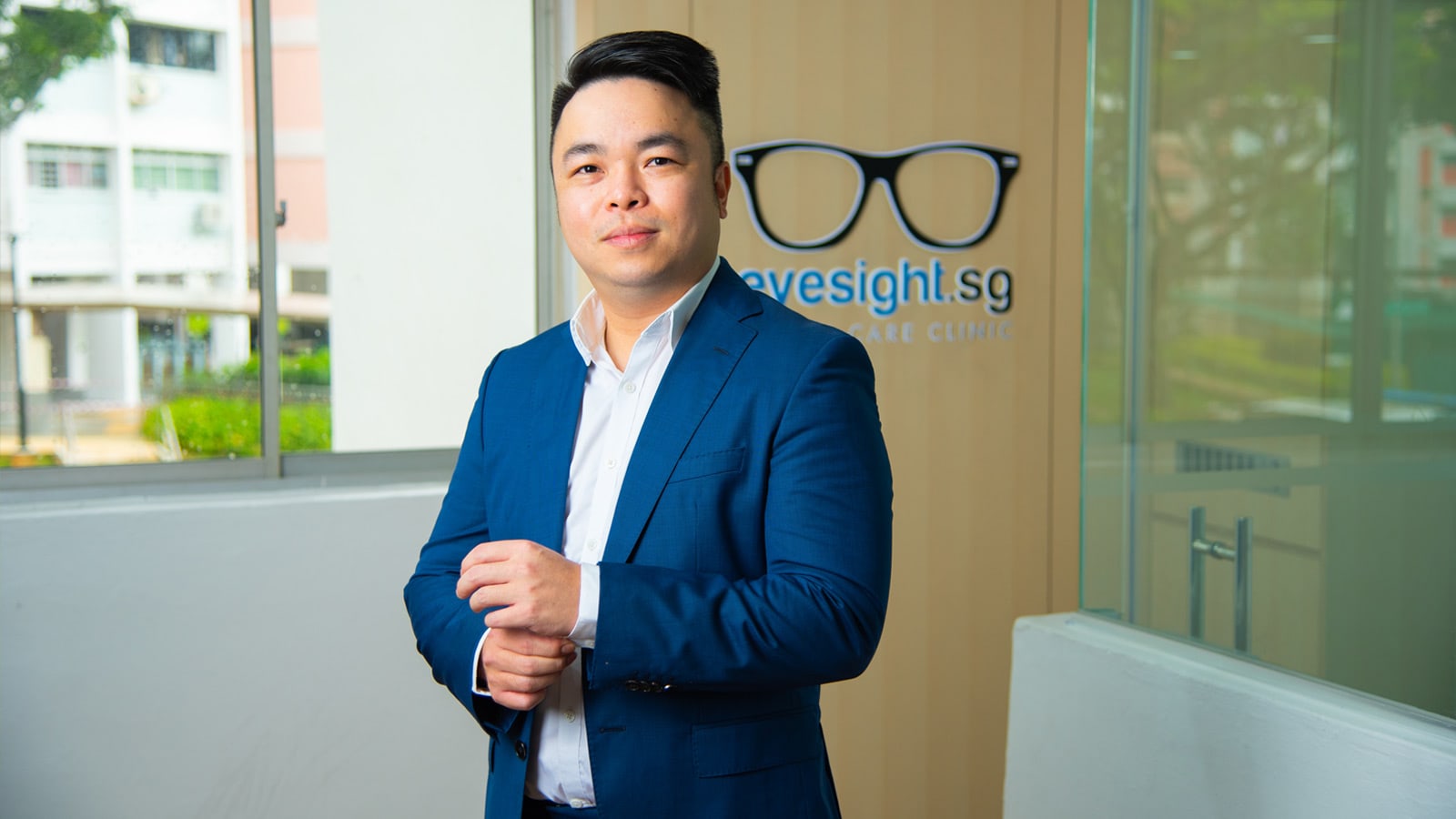
For local optometry chain Eyesight.sg, changing consumer behaviour and upcoming developments such as the Johor Bahru-Singapore Rapid Transit System underscored the need to strengthen both business and workforce capabilities.
Founder and CEO Ken Tong Wei Jian said workforce transformation has become a core pillar of the company’s growth strategy. Business and workforce transformation, he noted, should not be viewed in isolation. “Through reskilling, our staff can continue to add value, and our business can increase topline and productivity.”
Eyesight.sg introduced advanced diagnostic tools powered by technologies such as artificial intelligence, augmented reality and virtual reality, enabling more accurate and customised optical solutions. To fully leverage these technologies, job roles were redesigned and employees trained to take on expanded responsibilities, prompting the company to take part in initiatives under JSIT-R.
Through JSIT-R, Eyesight.sg received advisory support for job redesign, paving the way for participation in Workforce Singapore’s Career Conversion Programme (CCP). Through the CCP, identified roles underwent structured on-the-job upskilling and reskilling, strengthening employee capabilities and preparing them for new responsibilities. This enabled the company to integrate new diagnostic tools while maintaining empathy and care in customer interactions.
Beyond improving operations, the transformation also led to a shift in mindsets. “Employees now see new technology as a pathway to career progression and deeper contribution,” said Mr Tong.
As part of the process, managers attended the Structured Career Planning Workshop, where they were equipped with practical tools and structured approaches to prepare for more meaningful future-focused career conversations with employees. This was followed by consultant-guided Structured Career Conversations, which helped align individual career aspirations with business objectives, identify employee growth potential and establish clearer career pathways, supporting talent retention.
Ms Han Xueting, whose role has evolved from optometrist to an optical technology service leader, said structured career conversations have benefited her professional development. “I have been with Eyesight.sg for over eight years, and I find that participating in these conversations provides clarity on how I can develop my career within the company.”
These structured conversations revealed insights that might otherwise have been missed in traditional appraisals, including early signs of disengagement, untapped potential and misaligned expectations. One employee, for instance, expressed interest in broader responsibilities — something Mr Tong had not anticipated. “I thought he was happy with stability because he had just got married, but he might have resigned within a year or two because work was becoming mundane,” he said.
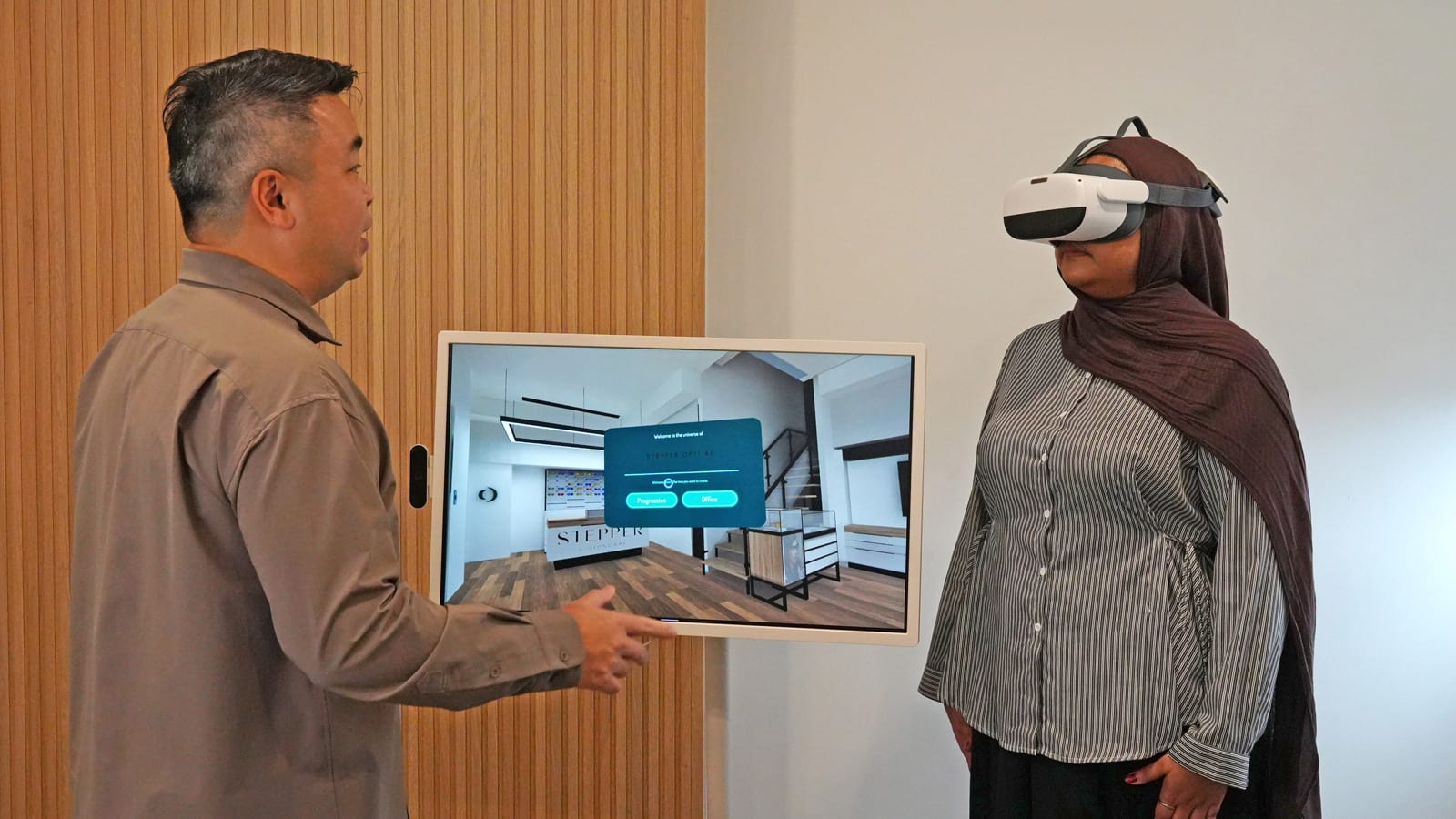
Mr Tong, the immediate past president of the Singapore Optometric Association, believes that workforce transformation can also help address wider industry challenges, such as talent attrition. “With the right skills and competencies, an upskilled optometrist can provide vision care at the community level rather than focus primarily on prescribing glasses,” he said.
While transformation can be daunting for small and medium-sized enterprises (SMEs) with lean manpower, Mr Tong emphasised that the investment yields tangible returns. Since implementing the JSIT-R initiatives in 2025, Eyesight.sg has seen improvements in productivity, staff retention and sales, supported by stronger expertise and enhanced service quality.
SME leaders, he added, need to remain curious and open to unfamiliar areas, whether that involves adopting new technologies or engaging in deeper conversations with employees. “You need to build your people so that they can help build your business,” he said.
STRUCTURED CAREER CONVERSATIONS
Consultant-led sessions align employees' career aspirations with business goals.
PHASE 1: PREPARATION (2 WEEKS*)
- Define key job roles and responsibilities
- Redesign job roles to support business priorities
Who should attend: employers, HR or line managers who have completed the Structured Career Planning Workshop
PHASE 2: ENGAGE (1-2 DAYS*)
- Map skills gaps for career growth
- Identify training needs for reskilling or upskilling
- Align career development paths with business objectives
Who should attend: employers, HR or line managers who have completed the Structured Career Planning Workshop; employees
PHASE 3: IMPLEMENT (1 MONTH*)
- Match growth skills to redesigned job roles
- Facilitate Career Conversion Programme applications
Who should attend: employers, HR or line managers who have completed the Structured Career Planning Workshop; employees
* Estimated durations may vary depending on the organisation
TRANSFORMING PATHWAYS FOR BUSINESS SUCCESS
Across its 17 stores in Singapore, Don Don Donki, operated by Pan Pacific Retail Management (Singapore), is known for its lively atmosphere and the personal touch its staff bring to merchandising and customer interactions. The company has long emphasised adaptability and on-the-job learning, empowering employees to make operational and display decisions at ground level.
To further strengthen its workforce, Don Don Donki sought a more structured, skills-based approach to create clearer and more measurable progression pathways. “The introduction of self-checkout kiosks created opportunities for the workforce to focus on higher-value work such as customer engagement, product expertise and inventory management,” said Mr Joe Kwan, human resource manager. “These areas align with priorities highlighted in Workforce Singapore’s Retail Job Transformation Map.”

To support this shift, Don Don Donki undertook the JSIT-R Job Redesign (LITE) Diagnostics initiative to redesign the roles of cashiers and retail sales associates. Together, these roles make up about 30 per cent of its frontline workforce.
With guidance from the Job Redesign Advisory, cashiers began transitioning into roles centred on customer interaction, product knowledge and operational support. Retail sales associates were also trained to support both manual and self-checkout systems, improving versatility and efficiency. “Our goal is to unlock greater efficiencies and accelerate skills development across the retail team,” said Mr Kwan.
The Structured Career Planning Workshop was another key milestone. It equipped managers with practical tools to conduct clearer, more empathetic and constructive career conversations, strengthening both appraisal processes and manager-staff relationships. “These structured conversations have given us deeper insight into employee priorities, supporting potential identification, succession planning and design of career pathways,” said Mr Kwan.
With clearer progression pathways in place, employees gain a better understanding of their current responsibilities and how their skills can evolve into future roles within the organisation. "The focus is on building skills, not just experience. With structured career pathways and on-the-job training, employees are given clear opportunities to grow from day one. This approach transforms career and culture at Don Don Donki," said Mr Samuel Hoon, food merchandising manager.
In recognition of these efforts, Don Don Donki received the SkillsFuture Employer Awards 2025 (Silver), affirming its commitment to lifelong learning and workforce transformation.

Looking ahead, the company plans to apply more learnings from the Structured Career Planning Workshop to uplift managerial standards and equip leaders to serve as coaches. This, Mr Kwan said, will enable more meaningful conversations that align employee aspirations with organisational goals.
“Business success depends on supervisors and managers who are equipped to facilitate change and nurture a growth-minded workforce,” he said. “When employees see meaning and growth through transformation, their confidence strengthens — and so does the business.”
UNLOCK BUSINESS GROWTH WITH JSIT-R
The two featured organisations are Singapore National Employers Federation member companies and illustrate how workforce transformation can be meaningfully applied on the ground. Building on these examples, workforce transformation is essential for businesses seeking to remain competitive and resilient, while enabling employees to build long-term career health and purpose.
JSIT-R offers practical, tailored support in areas such as job redesign, reskilling and upskilling, and structured career conversations. Through these initiatives, companies can future-proof their operations while empowering employees to grow alongside the organisation.