




Anthropic quietly pitches its own AI safety Bill to US lawmakers
The Bill would reportedly let the government block a model's release or use only if it poses a foreseeable, imminent risk of more than US$1 billion in damages, or of killing or seriously injuring more than 50 people.
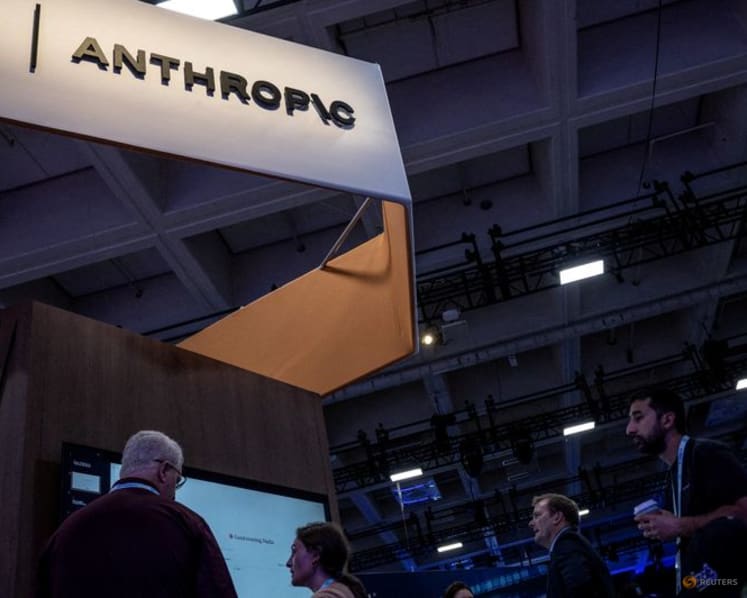
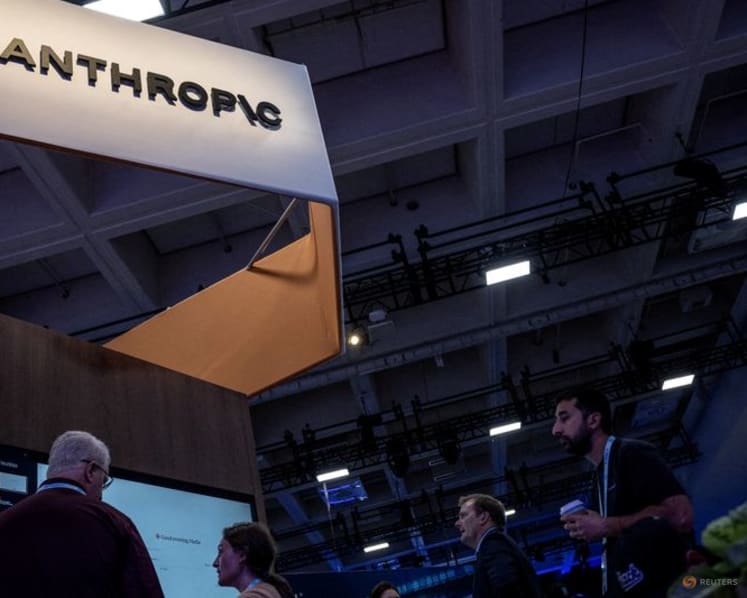
People visit an Anthropic booth at Moscone Center during the Dreamforce 2026 technology summit in San Francisco, California, US, Sep 17, 2026. (Photo: Reuters/Carlos Barria)
SAN FRANCISCO: Anthropic representatives have quietly pitched Capitol Hill lawmakers on a draft Bill to regulate frontier AI safety and security, Politico reported on Friday (Oct 16), citing three people with knowledge of the efforts.
The Bill would let the government block a model's release or use only if it poses a foreseeable, imminent risk of more than US$1 billion in damages, or of killing or seriously injuring more than 50 people, according to the report.
The risk must stem from the creation or release of a biological weapon, the model evading its developer’s controls or a cyberattack, Politico reported.
An Anthropic spokesperson told Reuters the Bill represents proposals outlined in Anthropic's "Advanced AI Framework" released earlier this year.





The Bill would grant the government the "ability to block or deter dangerous deployments of the most powerful models", and also requires developers to test frontier AI models, be transparent about findings, and get them independently evaluated, the spokesperson said.
The Department of Commerce did not immediately respond to a Reuters request for comment.
Under the Bill, independent evaluators, which would register with the Commerce Department, would be tasked with periodically evaluating the lab and its frontier models, according to the report.
The labs could pay these evaluators, provided the payment is not tied to the evaluation's outcome, the report said.
If the evaluators determine there is “imminent enumerated risk” for a company’s frontier models, they must report it to Commerce within 72 hours of completing their assessment, Politico reported.
While the Commerce Department could request a judge to halt a model after determining risk, the language explicitly prohibits any other US government department, agency, or officer from suspending development, deployment, or internal use, according to the report.
A federal judge for the District Court for the District of Columbia could order the suspension of a model, the report said.
SECURITY A HOT TOPIC
AI policy in the United States under President Donald Trump has relied primarily on voluntary industry pledges and executive orders intended to sustain an AI boom that tech leaders say is driving the country's economy.
Congress, politically divided and heavily lobbied by Big Tech, has yet to pass a federal AI law, and is out of session until after next month's midterm elections.
Security became a hot topic after recent revelations of security incidents caused by AI agents -- autonomous software that operates without constant human supervision -- that escaped the control of their developers.
Anthropic, which was banned from the Pentagon by the Trump administration in February, was forced by Washington in June to suspend its most advanced models for nearly three weeks.
Anthropic CEO Dario Amodei called on the industry last month to slow down development, fearing that a group of AI agents could take control of "the entire internet" within six to 12 months.
Trump has dismissed the numerous calls to slow down the technology as "negative forces."
The proposed legislation would also override certain state laws, such as those in force in California.
Anthropic wrote in June that "absent a strong federal law, states should retain full authority to legislate."
Charlie Bullock of the Institute for Law & AI think tank praised the proposal as "pretty reasonable," and "more than other frontier labs have done."
But he said on X he considers it "weaker" than the FRONTIER Act, a competing Bill introduced in the House of Representatives this summer.