





BOJ declares victory in hitting price target, signals near-term hikes
TOKYO, Oct 30 : The Bank of Japan kept interest rates steady on Friday, but declared victory in a nearly 14-year battle to hit its price target and signalled vigilance against inflation risks, suggesting the next rate hike could be as soon as December.
With underlying inflation having roughly hit the BOJ's 2 per cent target, the central bank must focus on anchoring it around that level, it said, suggesting that its policy has entered a new, more hawkish phase open to hiking rates once every few months.
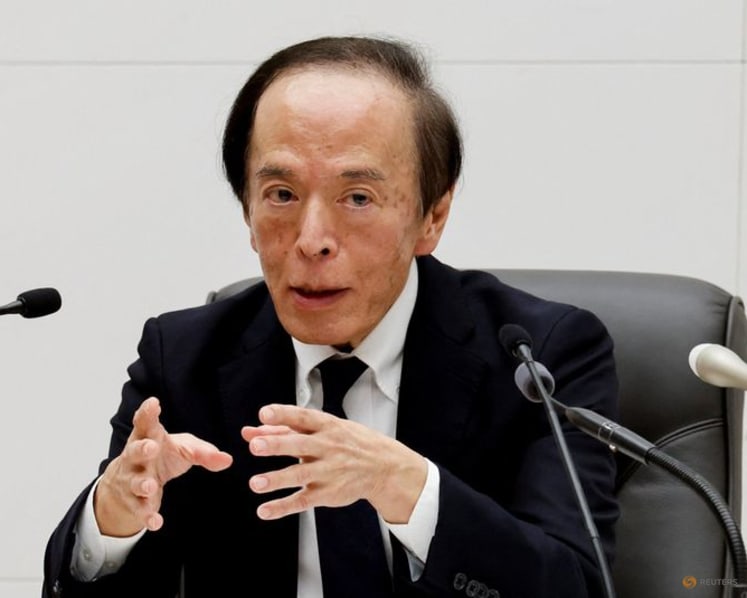
While refraining from pre-committing to a set pace of rate hikes, Governor Kazuo Ueda said the BOJ will debate rates at each meeting - including the next one in December - mindful that its policy has entered the new phase focused on inflation risks.
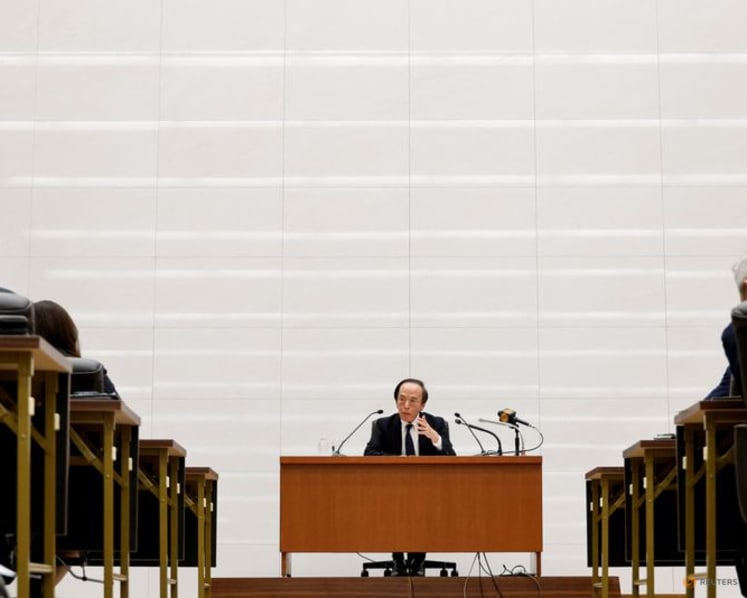
"It's important to anchor underlying inflation around our target. That doesn't mean we will just sit and wait. We will adjust monetary policy as appropriate so that underlying inflation becomes anchored around 2 per cent," he told a news briefing.





The broad shift in outlook aligns the BOJ with its US and European counterparts eyeing near-term rate hikes to battle inflationary risks from the AI boom and the Iran war-induced energy shock.
At the two-day meeting ending on Friday, the BOJ maintained its policy rate at 1.25 per cent in a widely expected move, forgoing back-to-back hikes to spend more time scrutinising the effects of past rate hikes on lending conditions.
Hawkish board member Hajime Takata dissented to the decision to hold rates, instead proposing unsuccessfully a hike to 1.5 per cent.
In a surprise move that marks a further shift away from ultra-loose policy, the BOJ said it would accelerate its sales of exchange-traded funds from January to 860 billion yen ($5.5 billion) per year from 330 billion yen currently.
"We saw the need to scrutinise a bit more economic and price risks, as well as financial conditions," Ueda said, when asked why the BOJ decided to keep rates steady.
"But underlying inflation has reached levels consistent with our price target. Financial conditions remain accommodative. There are various upside risks. We must therefore be vigilant to the risk of inflation overshooting our target," he said, keeping alive expectations of a December hike.
In a quarterly outlook report, the BOJ revised up its core consumer inflation forecast for the fiscal year ending March 2028 to 2.6 per cent from 2.4 per cent projected three months ago. It upgraded its estimate for so-called "core core" inflation, which strips away the effect of fuel costs, for the next two fiscal years.
The central bank also said long-term inflation expectations were "moving around 2 per cent," signalling its conviction sustained price and wage gains were becoming more embedded in the public's mindset.
In the previous report released in July, the BOJ had said underlying inflation was nearing its 2 per cent target as long-term inflation expectations heightened gradually.
"Although its inflation forecasts remain broadly consistent with the 2 per cent target, the BOJ seems increasingly conscious of the possibility that inflation could overshoot," said Kazutaka Maeda, senior economist at Meiji Yasuda Research Institute.
"Rather than sticking to the previously assumed six-month interval between hikes, it may now be contemplating increases every three months, making the December meeting a credible opportunity for the next rate hike," he said.
TURNING POINT
Declaring victory on the 2 per cent inflation target marks a turning point for the BOJ, which has spent most of its history battling low or negative price growth since gaining legal independence from the government in 1998.
Under former governor Haruhiko Kuroda, the BOJ deployed massive monetary stimulus in 2013 to pull Japan out of deflation and fire up inflation to the 2 per cent target.
Even after ending its mix of unorthodox easing steps in 2024, the BOJ has trodden cautiously in raising rates on the view underlying inflation - or price moves excluding one-off factors and driven by domestic demand - remained below target.
With stubbornly high energy costs and rising import prices from a weak yen adding to inflationary pressures, the BOJ raised rates in September after delivering a hike in June - a shorter interval than the roughly twice-a-year hikes in 2024 and 2025.
Most analysts polled by Reuters expect the BOJ to raise its policy rate to 1.5 per cent in December, followed by further hikes next year. Their terminal rate projection centres around 1.75 per cent to 2 per cent.
Rising prices, however, could weigh on consumption as they prod Japanese households, many of whom have never experienced widespread price gains in their lifetime, to seek discounts.
As its policy rate approaches levels deemed neutral to the economy, the BOJ has also stressed the importance of gauging how past rate hikes would affect domestic financial conditions.
The BOJ said financial conditions remain accommodative, suggesting scope for further rate hikes. But its report said real interest rates were "rising recently, although those for short-term zones remain low." In the July report, it said real rates were "negative mainly in short- to medium-term zones."
"The pace will depend much on upcoming data. We can't decide in advance how many months we will spend each time before raising rates," Ueda said on the timing of future hikes.
"We need to cautiously look at financial conditions as what we see now may not necessarily fully reflect the cumulative impact of past rate moves," he said.
($1 = 157.8500 yen)