A date on the calendar could shape the BOJ's endgame on interest rates
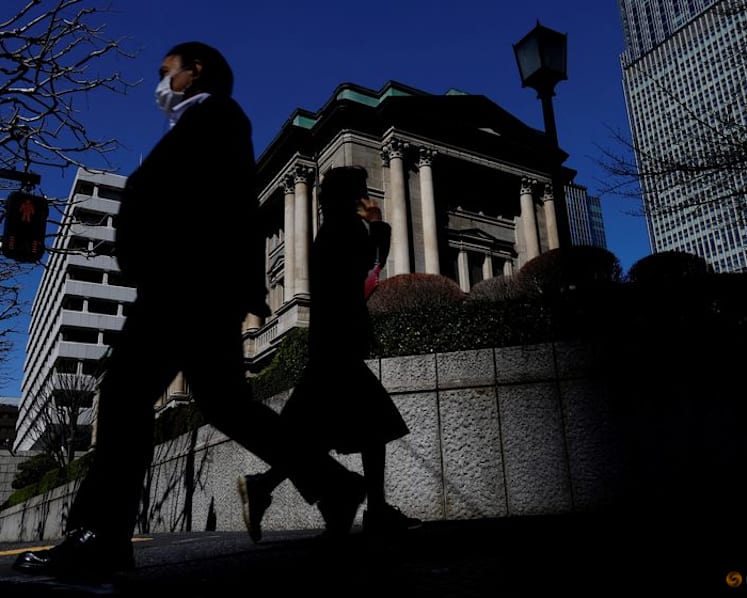
FILE PHOTO: Pedestrians walk past the Bank of Japan building in Tokyo, Japan March 18, 2024. REUTERS/Kim Kyung-Hoon/File Photo
TOKYO, Aug 21 : The Bank of Japan has set next year's July policy meeting just in time for its two hawkish board members to vote before their five-year terms expire, a scheduling quirk that could prove crucial for how high Japanese interest rates may ultimately rise.
Under a calendar of next year's scheduled policy-setting meetings released last month, the BOJ said its board will hold the rate review for July 2027 on the 21st and 22nd.
The date would allow hawkish board members Naoki Tamura and Hajime Takata, known as advocates of faster interest rate hikes, to cast their votes before their terms end on July 23.
The scheduling has drawn notice because it preserves the BOJ's ability to deliver a rate hike before a board reshuffle that could make future tightening harder.





While exceptions exist, the BOJ has typically held its July meetings toward the end of the month. Since 2023, all July policy meetings, including this year's review on July 30-31, have fallen in the final days of the month.
The BOJ does not disclose the reasons behind its decision on when to hold the policy meetings, and the following year's calendar usually attracts little attention.
But the schedule has taken on greater significance as persistent inflation pressures fuel expectations of faster and more frequent rate hikes.
Sources have told Reuters the BOJ is set to raise rates as soon as September and is considering hiking more aggressively thereafter to avoid falling behind the inflation curve. Under the current phase of normalisation, the central bank has hiked rates at a pace of roughly twice a year.
The central bank's increasingly hawkish messaging has lifted bond yields to multi-decade highs, as some investors price in the possibility that the policy rate could eventually rise to 1.75 per cent or 2 per cent, above earlier expectations for a peak near 1.5 per cent.
For rates to reach that level, the BOJ would need to lift its current 1 per cent policy rate three or four more times, raising the stakes around next year's board reshuffle.
Prime Minister Sanae Takaichi, who is viewed as favouring a more accommodative monetary stance, earlier this year filled two vacancies on the nine-member board with proponents of reflationary policies.
One of the new appointees opposed the BOJ's June rate increase, arguing that the risk of a Middle East war hurting output and employment outweighed the risk of an inflation overshoot.
The departure of Tamura and Takata in July gives Takaichi the chance to fill two more seats, potentially tilting the balance of the board in a more dovish direction and complicating the BOJ's efforts to push through further rate hikes.
Having priced in the chance of a September hike, many analysts expect the BOJ to raise rates again by January next year followed by one or two more increases in 2027.
Former BOJ official Nobuyasu Atago said meeting dates are typically set with a range of considerations in mind, including Governor Kazuo Ueda's schedule and the timing of U.S. Federal Reserve meetings, which can have a significant impact on global markets.
"But the BOJ was probably aware, and didn't mind, that timing the July 2027 meeting just before the hawks' departure could draw market speculation about an extra rate hike," said Atago, who has experience working as a staffer for a board member.
"The BOJ might have set that date as an insurance for in case it sees the opportunity to squeeze in a hike."