





Dollar climbs as stock rout spreads to Asian, European markets
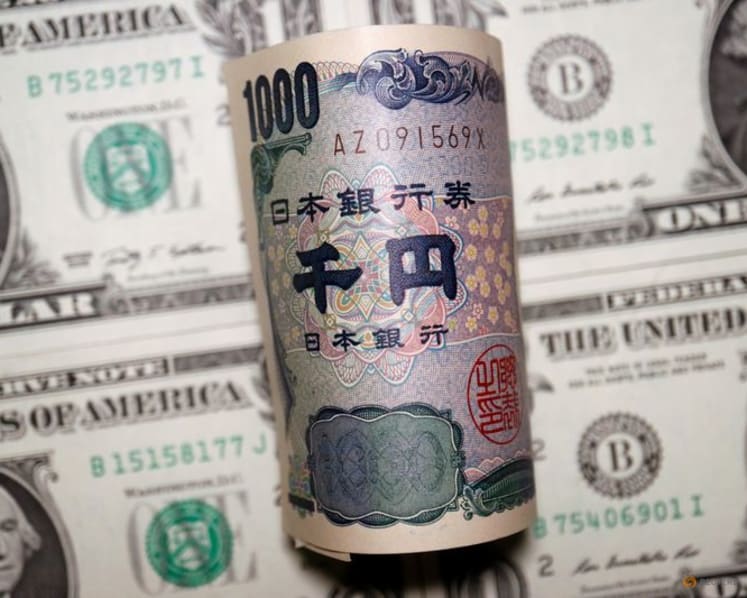
FILE PHOTO: Japanese yen and U.S. dollar banknotes are seen in this illustration picture taken June 16, 2022. REUTERS/Florence Lo/Illustration/File Photo
LONDON, Nov 6 : The US dollar gained against other major currencies on Friday, drawing support from safe-haven demand, as the selloff in AI stocks spread worldwide and markets awaited a US payrolls report.
Asia's tech-heavy markets fell heavily on Friday, and selling broadened in Europe.
On Thursday, US stocks declined by the most since April 2025 as investors anticipated that huge Democratic gains in US midterm elections this week would increase scrutiny of the AI industry and limit data centre construction.
But while the dollar weakened in a previous tech stock selloff in October, that was not the case on Friday. Analysts said the market slide instead was pushing investors into US Treasuries and short-dated securities.





"It seems that global investors are more than happy to leave their cash in dollars for the time being. In other words, we are seeing a rotation into cash and not out of the dollar," said Chris Turner, global head of markets at ING.
"Helping that story is the return to more familiar correlations, where US Treasuries are now performing their safe haven role."
A rebound in US stock futures, even as Asian and European markets kept falling, also appeared to support the dollar.
As Asian stocks came under pressure on Friday, the dollar rose 0.4 per cent against the yen to 158.3 and 0.2 per cent against the Swiss franc to 0.8179, after the safe-haven Japanese and Swiss currencies rallied on Thursday.
Against the dollar, the euro was last down 0.4 per cent at $1.1174 and sterling shed a similar amount to $1.3402.
The overnight flight to safety drove the 2-year US Treasury yield, which is sensitive to interest rate expectations, down about 10 basis points to its lowest since September 10. The 10-year yield fell nearly 6 bps, steepening the yield curve.
Treasury yields edged higher in early European trading on Friday, adding to the dollar's strength. The 10-year yield rose 3 bps to 4.86 per cent and the 2-year yield gained 2 bps to 4.49 per cent.
The worst performers in developed currency markets were the Australian and New Zealand dollars, which traders regard as geared to global growth and equity markets.
The Aussie fell 0.76 per cent to 0.6875 and the kiwi shed 0.8 per cent to 0.5546.
NON-FARM PAYROLLS
Next on the agenda will be Friday's US non-farm payrolls report, from which investors will try to gauge the Federal Reserve's interest rate path. Data on Thursday offered an upbeat prelude as weekly initial jobless claims fell by 6,000 to a seasonally adjusted 189,000, matching a 57-year low recorded in July and below the 196,000 estimate in a Reuters poll of economists.
"A decent jobs number today will confirm the Fed's understanding that the US jobs market is solid and could provide some support to short-dated rates and the dollar," said Turner.
Fed expectations this week have also been shaped by the tech selloff, which has contributed to a tightening of financial conditions and could mean the Fed has less to do to keep inflation in check, analysts said.
Fed funds futures scaled back the probability of a 25-basis-point interest rate hike in December to around 65 per cent from more than 80 per cent on Wednesday.