Exclusive-Vietnam considering first sovereign dollar bond sale since 2014, sources say
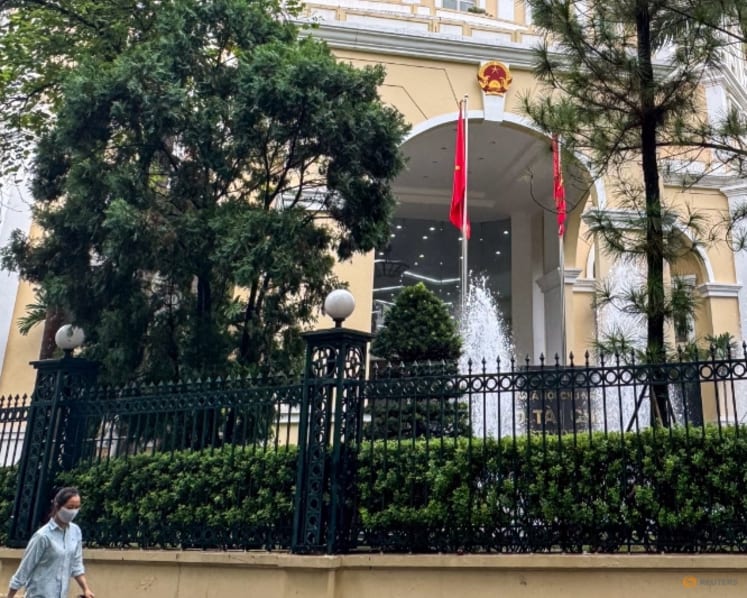
A woman walks outside Vietnam's Finance Ministry in Hanoi, Vietnam, September 15, 2026. Picture taken with a mobile phone. REUTERS/Nguyen Phuong
HANOI, Sept 15 : Vietnam's finance ministry is considering its first sovereign dollar bond sale in more than a decade and is in talks with investment banks about possible terms, four people familiar with the discussions said.
Vietnam, which is pursuing annual economic growth of at least 10 per cent through 2030, would use the proceeds to fund infrastructure spending and other projects, according to two of the people.
Such a move would also relieve pressure on Vietnamese banks which have so far been the main source of lending for domestic investment, one of them added.
A dollar bond sale would further underscore the Communist-ruled country's increasing receptiveness to foreign financing, after the central bank this year raised the ceiling for private-sector foreign borrowing and the government agreed to take some foreign development loans.





One foreign investment bank has recommended issuing a $1 billion 10-year dollar bond, according to a banker who attended a meeting with the finance ministry.
Another foreign lender has suggested a 10-year bond with an issuance size of between $500 million and $1 billion and a coupon of around 7 per cent, according to a second source briefed on the recommendation.
The finance ministry has not yet made a final decision on whether to go ahead with the sale as it is evaluating the costs of borrowing at a time of rising global yields amid high oil prices and inflation, two Vietnamese officials said.
The ministry did not respond to a Reuters request for comment.
Vietnam has sold government bonds worth over $9 billion in the domestic market so far this year, with an average coupon of 4.2 per cent on 10-year debt. The issuance size is in line with the same period a year earlier, though the average coupon on 10-year debt has climbed from 3.1 per cent.
LAST OFFSHORE BOND IN 2014
Vietnam last issued an offshore sovereign bond in 2014, raising $1 billion via a 10-year dollar bond with a 4.8 per cent coupon. It also tapped international markets in 2010 and 2005.
The Southeast Asian country has a relatively low public debt burden, estimated at around 37 per cent of gross domestic product last year, but has traditionally been reluctant to borrow overseas, maintaining tight controls over its financial system.
But that stance has softened in recent months as the Communist Party, under the leadership of General Secretary To Lam, pursues robust economic growth amid increasing uncertainty over global trade, a key driver for Vietnam's export-dependent economy.
Vietnamese banks have seen credit growth outpace deposit growth since at least 2021, according to the central bank.
Measures taken this year to ease that funding pressure include the State Bank of Vietnam raising the ceiling for private-sector foreign borrowing to $6.1 billion, compared with $5.5 billion in 2025.
As banks rush to secure approval for overseas borrowing plans, the ceiling may be revised higher later this year, according to one official familiar with the matter.
Examples of borrowing overseas include a $1.44 billion offshore loan signed in June by VPBank with foreign lenders.
Other examples of Vietnamese companies tapping foreign financing include the decision by Vingroup, the country's largest conglomerate, to issue a $350 million bond with a 5-year maturity and a 5.75 per cent coupon on the Vienna Stock Exchange in April.
The company is also planning to raise 455 billion won ($338 million) this year by selling three-year bonds to South Korean investors with an 8 per cent coupon, according to a stock exchange filing.
On a government level, Vietnam has also agreed this year to take development loans from Japan and Germany, after deciding not to take advantage of billions of dollars in development financing in recent years.