







Global yields fall after US Treasury boosts debt buybacks
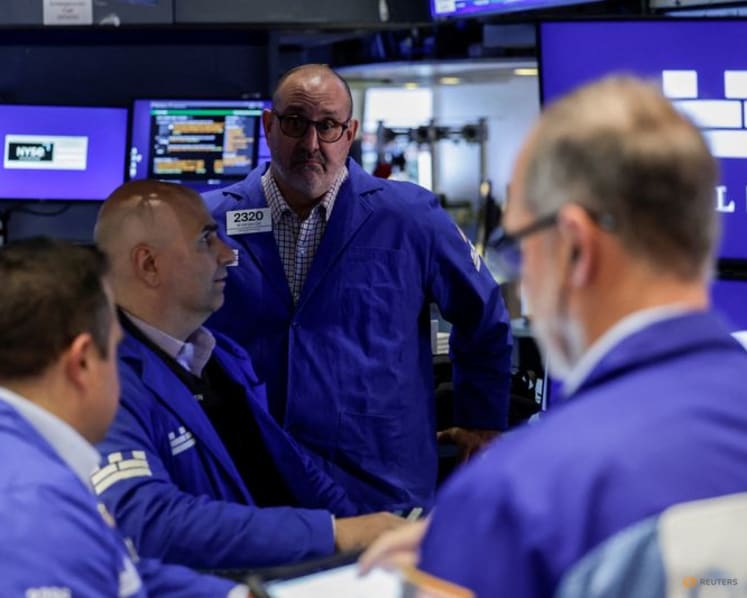
NEW YORK, Aug 19 : Longer-dated global bond yields retreated from multi-decade highs, the dollar tumbled and gold jumped on Wednesday after the U.S. Treasury Department said it would boost liquidity support for longer-dated securities, following a broad selloff fueled by fears over swelling sovereign debt.
The U.S. Treasury Department said it would double the size of liquidity support buyback operations for longer-dated nominal coupon securities to at least $4 billion per operation from $2 billion.
U.S. long-dated government yields fell by as much as 10 basis points, dragging European government bond yields down too. U.S. long bonds had hit their highest in nearly 20 years on Tuesday, at nearly 5.34 per cent, reflecting growing concerns about inflation and high debt.
"It is the first of many possible actions that the Treasury could take to support the long end," said Gennadiy Goldberg, head of U.S. rates strategy at TD Securities. "A more permanent measure would be lowering long-end auction sizes."





The Treasury launched the buybacks in May 2024 to help improve liquidity in the $32 trillion Treasury market. Under the program, it periodically repurchases older, less liquid outstanding bonds using newly auctioned proceeds or cash.
Yields rise when bond prices fall. Because long-end sovereign yields act as a benchmark for the pricing of nearly every other asset class, including mortgage rates, sharp increases in yields pose a broader risk to the economy.
The drop in yields lifted stocks, though they pared gains in late afternoon trading. The Nasdaq Composite ended up 0.16 per cent, the S&P 500 gained 0.21 per cent and the Dow Jones Industrial Average rose 0.22 per cent. MSCI's gauge of stocks across the globe was down 0.05 per cent.
"The risk-on trade is trying to hang on to the lifeline that Treasury Secretary Bessent sent," said Carol Schleif, chief market strategist at BMO Private Wealth.
The retreat in yields weighed heavily on the dollar, even as it sent gold and cryptocurrency prices sharply higher — a divergence that reflects growing unease over the U.S. debt trajectory. Concerns about ballooning government debt typically erode confidence in fiat currencies, driving investors toward gold and other hard assets as a hedge.
The dollar index, which measures the greenback against a basket of currencies including the yen and the euro, fell 0.84 per cent to 98.80, with the euro up 0.88 per cent at $1.1676. Against the Japanese yen, the dollar weakened 0.93 per cent to 158.15.
Spot gold rose 4.05 per cent to $4,508.64 an ounce.
Bitcoin gained 6.06 per cent to $68,470.91 and ether rose 10.13 per cent to $2,106.22.
HOPES FOR PEACE IN IRAN RECEDE
Crude oil prices settled at the highest in nearly four weeks, as investors worried about escalating tensions in the Middle East after the United Arab Emirates decided to suspend all financial and economic transactions with Iran, and as ship traffic through the Strait of Hormuz remained slow.
U.S. crude rose 0.77 per cent to $85.59 a barrel and Brent rose to $91.42 per barrel, up 0.44 per cent on the day.
Long-term borrowing costs from the U.S. to Germany and Japan have soared as investors grow increasingly anxious about ballooning government debt and elevated inflation, pressures compounded by the Iran conflict's impact on oil prices.
German and French long-dated bond yields, which had earlier risen to their highest in 15 and 18 years respectively, traded lower on the day.
"What we've seen in the course of recent days is that the long end of the bond market has obviously been selling off and potentially becoming somewhat problematic for the play through to other asset classes," Jeremy Stretch, head of G10 FX strategy at CIBC, said.
"Clearly, the Treasury Secretary has to be mindful of those risks and has made adjustments. That's why we are seeing U.S. 30-year Treasury yields down sharply and the dollar cheapening."
A rise in Japan's benchmark 10-year bond yield toward 3 per cent, a three-decade high, is also a warning sign for global debt markets that for years have depended on low Japanese rates driving a constant flow of Japanese investment abroad.
Minutes from the Federal Reserve's July meeting released on Wednesday showed that concern about inflation deepened last month, with "several" policymakers ready to raise interest rates and "many" saying a hike in borrowing costs would be needed if inflation does not decline to the U.S. central bank's 2 per cent target.
The central bank left rates on hold last month, but Chairman Kevin Warsh unsettled markets by offering few clues on how policymakers might respond to persistent inflation.
Since the meeting, traders have scaled back bets on a September rate hike, as benign inflation data and a soft July jobs report shifted expectations. Markets now price in a 31 per cent chance of a September hike, rising to 65 per cent by December.





