Dollar eases from seven-week peak as oil prices extend decline
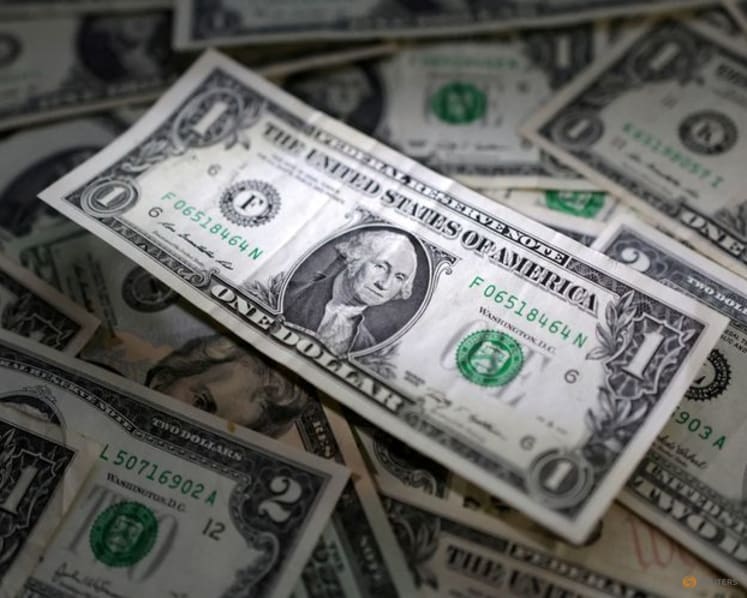
FILE PHOTO: U.S. dollar banknotes are seen in this illustration taken March 10, 2023. REUTERS/Dado Ruvic/Illustration/File Photo
HONG KONG, Sept 17 : The dollar clung to a seven-week high on Thursday after the Federal Reserve raised interest rates and flagged more hikes in the coming months, with traders now zeroing in on how central banks in the UK and Japan will respond to inflation pressures.
The dollar ripped higher alongside US Treasury yields after new central bank chief Kevin Warsh joined a unanimous decision to hike interest rates, while officials validated a hawkish path and projected one more increase in 2026.
"(Warsh) definitely sounded more hawkish than expected, and the fact that he provided guidance on future hikes surprised the markets, causing them to reprice policy higher, which ultimately pushed the dollar higher," said Carol Kong, currency strategist at Commonwealth Bank of Australia.
"Our outlook is for the dollar to appreciate because of our view on the FOMC."





The dollar's strength pushed the euro to $1.1463, near a seven-week low, while sterling was flat at $1.3372 ahead of the Bank of England's meeting later on Thursday.
At 155.98 per dollar, the Japanese yen hovered near a two-week low as markets awaited the Bank of Japan's decision on Friday.
The dollar index, which measures the greenback against a basket of currencies, last traded at 100.3, near its strongest since July 31.
Treasury curves flattened sharply following the Fed's decision, with yields on interest-rate-sensitive two-year notes holding at their highest level since 2024, at 4.7153 per cent. Yields on benchmark 10-year notes fell just below the key 5 per cent level.
"The decision reinforced the Fed's independence credentials...but the Treasury market remains an important drag on confidence," Philip Wee, senior FX strategist at DBS, said in a note.
"We are not convinced that the Fed's hike decision marks the start of a sustained USD uptrend," as it is simply catching up with other major central banks in responding to inflation risks, he said.
Rate futures markets now reflect about a 90 per cent probability of a follow-up quarter-percentage-point Fed rate hike by the end of this year, according to CME Group's FedWatch Tool.
BOE, BOJ UP NEXT
Attention will turn to the Bank of England, expected to keep interest rates on hold later in the day, but investors are watching for any hint that surging energy prices could force it to raise borrowing costs.
Japan's central bank is set to raise interest rates to a 31-year high on Friday and signal its readiness to keep pushing up borrowing costs, joining other major central banks in fighting persistent inflation pressures driven by soaring oil costs.
Markets will also focus on any hints BOJ Governor Kazuo Ueda gives on the timing and pace of any further increase.
That could be a key test for the yen, which jumped to a seven-month high against the dollar last week amid growing conviction in the BOJ's policy-tightening path. Japanese retail investors have maintained stubborn short positions, expecting that the yen's recent gains would be short-lived.
"The yen's rapid rally over the past few weeks has already priced in expectations that the BOJ will raise rates in September, and there is a risk that it could give back some of those gains as it materialises," said Kimmy Tong, global markets and FX strategist at Everbright Securities International.
Elsewhere, the Australian dollar strengthened 0.35 per cent to $0.7111 after the IMF said Australia may need further interest rate rises to tame inflation. The kiwi added 0.2 per cent $0.5725.