







Japan manufacturing extends growth, caps best quarter since Q1 2014, PMI shows
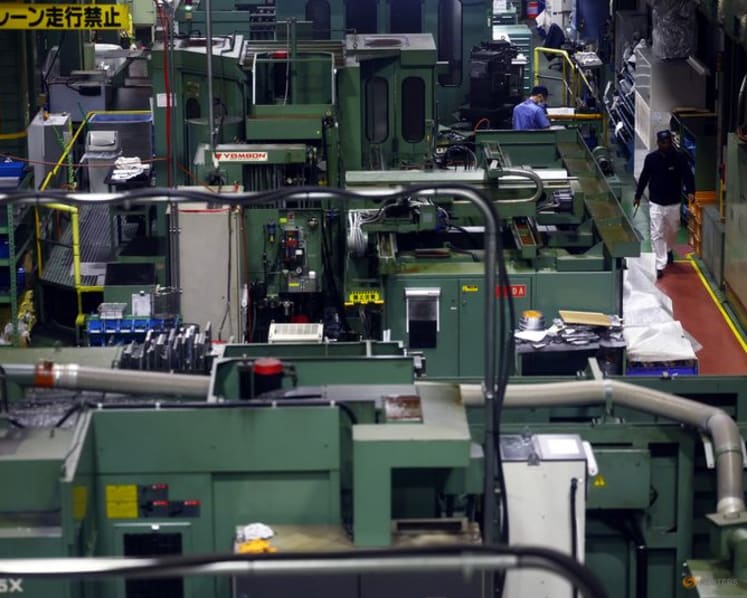
FILE PHOTO: Workers walk between precision-machining machines for automotive parts inside a factory in Takasaki, Gunma Prefecture, Japan April 11, 2025. REUTERS/Issei Kato/File Photo
TOKYO, July 1 : Japan's manufacturing sector expanded in June, sealing its best quarterly performance since early 2014, as new orders grew at their fastest pace in more than two years, a business survey showed on Wednesday.Here are some key details.
• The S&P Global Japan Manufacturing Purchasing Managers' Index (PMI) rose to 54.8 in June from 54.5 in May, expanding for a sixth consecutive month and roughly in line with the flash reading. The 50-mark separates growth from contraction.
• "The latest PMI survey suggests that Japanese manufacturers enjoyed the strongest quarterly performance in over 12 years in June. Factories continued to expand their production levels at a solid pace, spurred by another marked improvement in customer demand," said Annabel Fiddes, Economics Associate Director at S&P Global Market Intelligence.
• Output rose at the second-sharpest pace since January 2022, after April this year. Intermediate and investment goods producers increased production, while output at consumer goods makers fell for the first time in three months.





• New orders increased at the fastest pace since January 2022, helped by stronger domestic demand and stockpiling by clients seeking to guard against shortages and price rises from the Middle East conflict. Export orders also rose solidly.
• Employment grew for a 19th straight month, with the pace of hiring the joint-fastest since April 2018. Even so, backlogs of work increased for a sixth consecutive month at the joint-steepest rate since February 2014.
• Price pressures remained elevated as supplier shortages and shipping delays lengthened lead times. Input cost inflation was unchanged from May at the joint-quickest since September 2022, while selling price inflation eased only slightly from May's multi-year high.
• Manufacturers remained optimistic that output would rise over the next year, citing demand for AI and semiconductors and higher capital investment. But sentiment stayed below its historical trend amid concerns over the U.S.-Israeli war with Iran, costs, labour shortages and the weak yen.





