





Oil falls on increased Middle East flows, Libyan pipeline restart
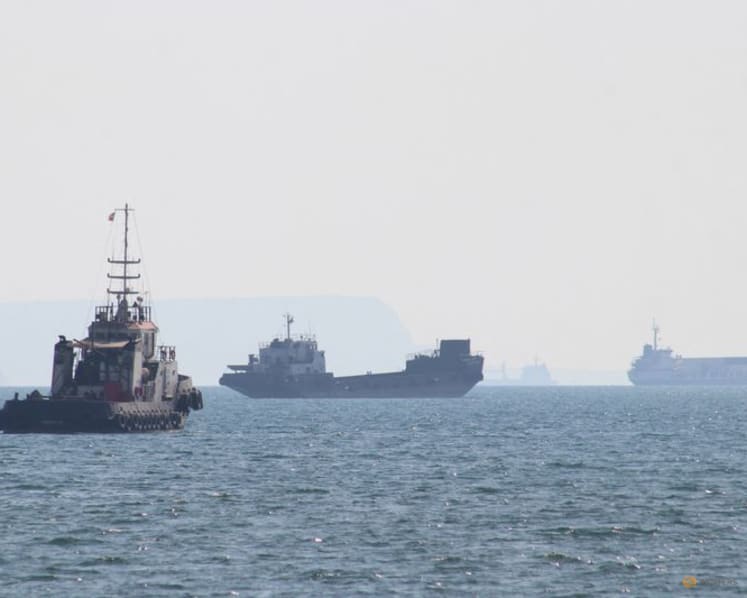
Vessels in the Strait of Hormuz near the beach of Bandar Abbas, Iran, November 16, 2026. Razieh Poudat/ISNA/via WANA (West Asia News Agency) via REUTERS
LONDON, Nov 23 : Oil prices fell on Monday as a rise in supplies from the Middle East and the restart of a Libyan oil pipeline offset unease about persistent shipping and refinery attacks in the region.
Brent crude futures fell $2.02, or 2.18 per cent, to $90.55 a barrel by 1436 GMT. US West Texas Intermediate futures were down $1.59, or 1.91 per cent, at $81.82 a barrel.
Earlier in the session, both contracts fell by more than 3 per cent, with Brent hitting its lowest level in two weeks at $89.48 a barrel while WTI fell to its lowest since August 27 at $80.55.
Libya's Sharara oil pipeline has reopened and crude is beginning to flow into storage tanks at the Akakus facility in Zawiya, the chairman of the National Oil Corporation told Reuters on Monday.





Meanwhile, JPMorgan expects oil futures to fall to the high $70s in the first half of 2027 due to an estimated supply surplus, with higher Middle East production outside Iran next year along with more supply from the Americas led by the US.
Bank of America said geopolitics would remain the key driver of oil prices, with relatively low global inventories leaving much of the world vulnerable to supply disruptions.
"It is partly the growing signs of a glut, but with each passing day it seems less likely that Trump will attack again," said IG chief market analyst Chris Beauchamp.
On Sunday, however, the Iran-aligned Houthi movement said it attacked a Saudi Arabian oil refinery, while the UK Maritime Trade Operations reported multiple attacks on shipping in the Gulf and near the Strait of Hormuz over the weekend.
Bahrain said an Iranian attack hit a civilian industrial facility on Saturday, while Iran's Revolutionary Guards said they had launched a missile-and-drone assault on US military positions in the kingdom, home to the US Navy's 5th Fleet.
"It would be irresponsible to conclude that oil will now be supplied uninterruptedly and in vast volumes. Iranian attacks on ships transiting the Strait of Hormuz are taking their toll," said PVM analyst Tamas Varga.
In Turkey, talks on Sunday at the global climate conference COP31 collapsed for the first time since 2009 after nations could not agree on a deal on including a statement on the phase-out of fossil fuels.
Saudi Arabia and other big oil-producing countries have said fossil fuels will play a role in the economy for the foreseeable future and they lobbied to keep any mention of fossil fuels out of the text, observers at the conference said.
OPEC+ ministers will hold a series of meetings on November 29 to decide their 2027 output policy. The group is made up of OPEC and other oil producers such as Russia.