Oil prices surge on US-Iran attacks; tech shares fall
Seoul led losses in most Asian stocks, dragged down by market heavyweight SK hynix's plunge of more than 15 per cent.

A view shows oil pump jacks outside Almetyevsk in the Republic of Tatarstan, Russia on Jun 4, 2023. (File photo: Reuters/Alexander Manzyuk)
NEW YORK: World oil prices surged Monday (Jul 13) as a fresh flare-up between the United States and Iran rattled investors, while a selloff in chipmakers sent South Korea's stock market plunging.
Wall Street's tech-heavy Nasdaq Composite led major US indices lower while European stock markets were little changed.
Oil prices shot up more than nine per cent as US President Donald Trump announced the reimposition of a US naval blockade on Iranian ports while threatening the US would charge a 20 per cent rate on all cargo shipped through the Strait of Hormuz, a critical waterway for petroleum shipments.
Iran's military warned on Monday that it would not allow the United States to "interfere" in the management of the Strait of Hormuz, while Iranian Foreign Minister Abbas Araghchi mocked Trump's threatened levy.
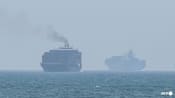
Iran on Monday fired "warning shots" at two ships attempting to pass through the Strait of Hormuz, state television reported, as Tehran and Washington battle for control of the strategic waterway.
Analysts said the renewed sparring would reduce shipping in the key waterway.
"But in addition, the market is trying to assess what President Trump means by charging 20 per cent on all cargo shipped through the strait and how that might impact not only crude oil prices but other commodities and container ships," said Andy Lipow of Lipow Oil Associates.
"The market is looking and saying, 'Do we need to pay Iran for protection or are we going to be paying the United States for protection? And how much is that going to be?'"
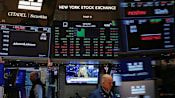
The heightened uncertainty over the Middle East also weighed on US equities, with the Nasdaq falling about 1.5 per cent.
"A weekend of hostilities between the US and Iran is triggering a risk-off day on Wall Street," said Jose Torres of Interactive Brokers.
"The renewed attacks are generating growing worries about the feasibility of a longer-term truce in which both nations commit to peace, as significant disagreements regarding control of the Strait, sanctions relief and Tehran's nuclear program remain sticking points," he said.
Wall Street's tech-heavy Nasdaq Composite led major US indices lower while European stock markets were little changed.
Oil prices shot up more than nine per cent as US President Donald Trump announced the reimposition of a US naval blockade on Iranian ports while threatening the US would charge a 20 per cent rate on all cargo shipped through the Strait of Hormuz, a critical waterway for petroleum shipments.
Iran's military warned on Monday that it would not allow the United States to "interfere" in the management of the Strait of Hormuz, while Iranian Foreign Minister Abbas Araghchi mocked Trump's threatened levy.
Iran on Monday fired "warning shots" at two ships attempting to pass through the Strait of Hormuz, state television reported, as Tehran and Washington battle for control of the strategic waterway.
Analysts said the renewed sparring would reduce shipping in the key waterway.
"But in addition, the market is trying to assess what President Trump means by charging 20 per cent on all cargo shipped through the strait and how that might impact not only crude oil prices but other commodities and container ships," said Andy Lipow of Lipow Oil Associates.
"The market is looking and saying, 'Do we need to pay Iran for protection or are we going to be paying the United States for protection? And how much is that going to be?'"
The heightened uncertainty over the Middle East also weighed on US equities, with the Nasdaq falling about 1.5 per cent.
"A weekend of hostilities between the US and Iran is triggering a risk-off day on Wall Street," said Jose Torres of Interactive Brokers.
"The renewed attacks are generating growing worries about the feasibility of a longer-term truce in which both nations commit to peace, as significant disagreements regarding control of the Strait, sanctions relief and Tehran's nuclear program remain sticking points," he said.
KOSPI TANKS
On equity markets, tech firms came under renewed pressure after weeks of volatility fuelled by concerns about stretched valuations and questions over the vast sums pumped into the AI sector.
South Korean chip titan SK hynix plunged more than 15 per cent, extending a recent bout of selling that has seen the market heavyweight lose nearly 40 per cent since hitting a record last month.
The loss came after the firm's US-listed shares soared almost 13 per cent on their New York debut following a record US$26.5 billion share sale.
Rival Samsung was down more than 10 per cent by Monday's close.
"The South Korean market is now considered a key barometer of sentiment towards the chip sector, so when it declines it can have ripple effects across the world," said Kathleen Brooks, research director at trading group XTB.
There were also losses in Tokyo, where tech firms Advantest and Tokyo Electron tumbled.
Shares in US chipmakers were also hit, with Micron and Marvell both down more than six per cent.
Investors are gearing up for the latest earnings season, which will be pored over for an idea about the outlook for the AI industry.
This week sees reports from Taiwanese chip giant TSMC and Dutch firm ASML, which produces chipmaking equipment, while US tech firms begin reporting next week.
A number of Wall Street banks are lined up to report earnings this week, including JP Morgan, Bank of America and Goldman Sachs.
South Korean chip titan SK hynix plunged more than 15 per cent, extending a recent bout of selling that has seen the market heavyweight lose nearly 40 per cent since hitting a record last month.
The loss came after the firm's US-listed shares soared almost 13 per cent on their New York debut following a record US$26.5 billion share sale.
Rival Samsung was down more than 10 per cent by Monday's close.
"The South Korean market is now considered a key barometer of sentiment towards the chip sector, so when it declines it can have ripple effects across the world," said Kathleen Brooks, research director at trading group XTB.
There were also losses in Tokyo, where tech firms Advantest and Tokyo Electron tumbled.
Shares in US chipmakers were also hit, with Micron and Marvell both down more than six per cent.
Investors are gearing up for the latest earnings season, which will be pored over for an idea about the outlook for the AI industry.
This week sees reports from Taiwanese chip giant TSMC and Dutch firm ASML, which produces chipmaking equipment, while US tech firms begin reporting next week.
A number of Wall Street banks are lined up to report earnings this week, including JP Morgan, Bank of America and Goldman Sachs.
Source: AFP/co/dy/fs