




Putin seizes control of Japan Tobacco's Russian assets
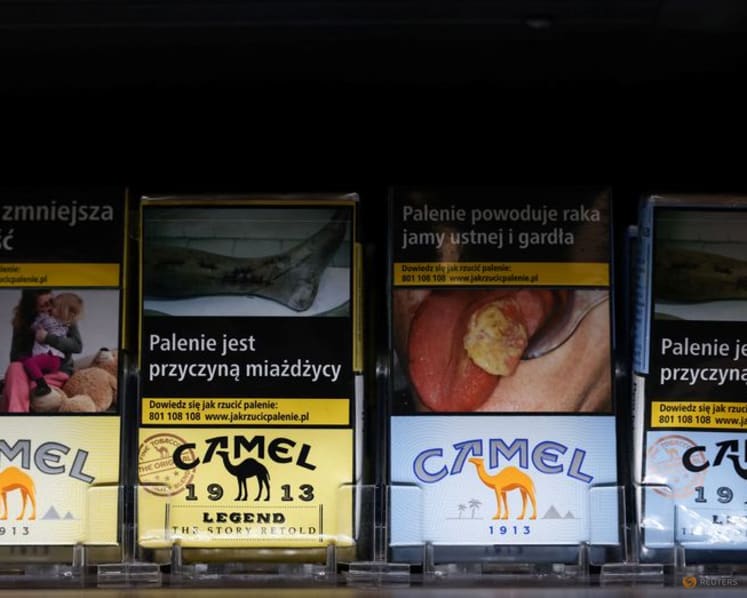
FILE PHOTO: Packages of Camel cigarettes produced by JTI Japan Tobacco International are displayed at the grocery store in Warsaw, Poland May 29, 2024. REUTERS/Kacper Pempel/File Photo
(Refiles to fix typo in first paragraph)
MOSCOW/TOKYO, Nov 5 : Russian President Vladimir Putin has signed a decree to temporarily seize the Russian assets of Japan Tobacco International, making it the latest foreign company to lose control of local operations in a widening crackdown.
The move drew an immediate rebuke from Tokyo on Friday, whose already sour relations with Moscow have deteriorated sharply in recent months.
Stakes in four businesses of JTI, which is part of Japan Tobacco Inc. and is Russia's biggest tobacco manufacturer, will now be under the administration of Russian company Industrial Assets, according to the decree signed on Thursday.





The Japanese government owns around 37 per cent of shares in Japan Tobacco Inc., whose brands include Winston and Camel cigarettes. Those shares were set to fall by the daily allowable limit in Tokyo on Friday with no shares changing hands due to a glut of sell orders.
"The Japanese government has consistently urged Russia to ensure that the interests of Japanese citizens and companies are not harmed," Japanese Finance Minister Satsuki Katayama told a regular press conference on Friday.
"We have already protested through diplomatic channels and requested that the measure be withdrawn."
The decree gave no reason for the seizure, but the Kremlin has linked similar moves in the past to the behaviour of countries it designates as "hostile".
In an emailed statement, JTI said it was aware of the decree and was "assessing the situation and our options, prioritising our stakeholders, most notably our employees".
The Russian business accounts for about 10 per cent of JT Group's revenue and roughly 25 per cent of its operating profit.
STRAINED RELATIONS
The decree follows Russia's decision to place the assets of Swiss food giant Nestle, German wholesaler Metro AG, and French retailer Auchan under temporary management in September.
Moscow took control of the Russian assets of four more European companies in October, citing those nations’ support for Ukraine and what it called illegal expropriations of Russian property.
Relations between Japan and Russia have been strained since Tokyo and other capitals slapped broad sanctions on Moscow after its full-scale invasion of Ukraine in 2022.
But they have spiralled in recent months, following Putin's visit to a disputed island close to Japan in August and the detention of Japanese journalist in the far eastern Russian region of Sakhalin on suspicion of espionage.
Russia's foreign ministry in October also said it considered a drone sale to Ukraine by a Japanese company to be a hostile step and warned of a harsh response.
Until at least last year, most Japanese companies that remained in Russia had been hunkering down, hoping for business conditions to improve.
Around three quarters of 50 companies surveyed by Japanese trade promotion agency JETRO in September 2025 said they planned to maintain the status quo over the next one to two years, and only 6 per cent said they would scale back, relocate or withdraw.
Japan sent several officials to Moscow earlier this year to facilitate communication and help protect assets owned by Japanese companies operating there, its trade ministry said.