Oil surges, stocks slip and bond yields rise as Gulf conflict flares up again
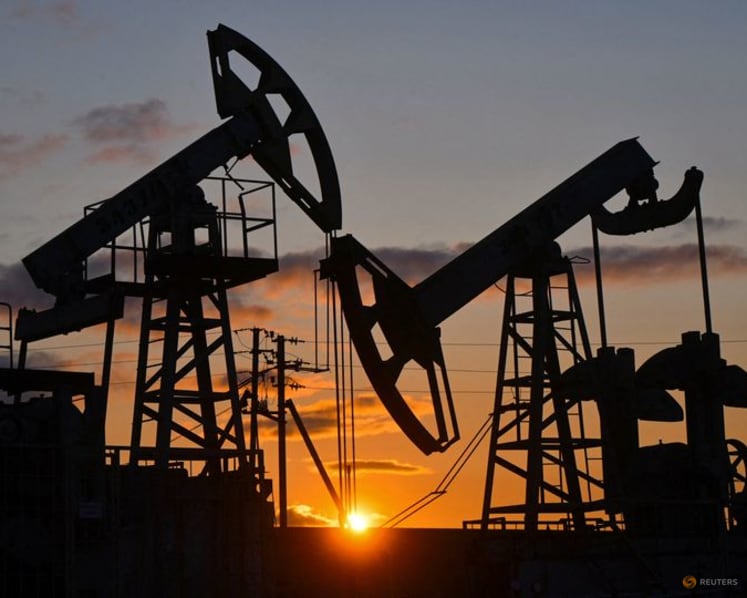
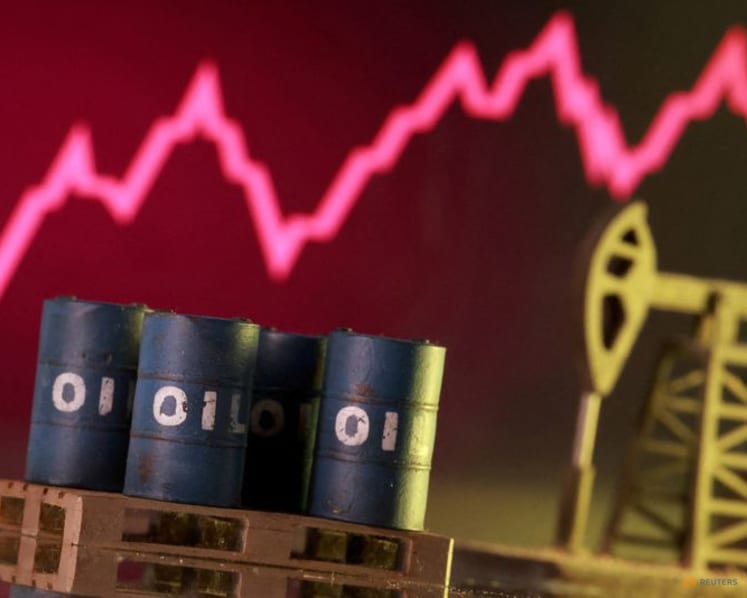
July 13 : Oil futures surged nearly 9 per cent on Monday and equities fell as conflict between the United States and Iran re-ignited over the weekend, once again throttling the flow of goods through the key Strait of Hormuz.
Over the weekend, Tehran had said it closed the strait, a vital global artery for oil-and-gas shipping. President Donald Trump responded Monday by saying the U.S. was reinstating its blockade of Iranian shipping in the Gulf.
Trump also promised to keep the strait open for a fee, though the U.S. has not been able to wrest control of the waterway from Iran since the outset of the war at the end of February.
The revival of the blockade jolted oil markets that had already been rallying after the two sides had exchanged missile and drone attacks over the weekend. U.S. crude settled up 9.4 per cent, or $6.73, to $78.14 a barrel while Brent settled at $83.30 per barrel, up 9.6 per cent, or $7.29.





"The trading of bombs between the United States and Iran is front and center," said Robert Pavlik, senior portfolio manager at Dakota Wealth in Fairfield, Connecticut. "It's more of the same uncertainty surrounding where the Middle East stands. What's going to resolve it and when is it going to be resolved?"
MSCI's gauge of stocks across the globe fell 10.26 points, or 0.9 per cent, to 1,116.28.
On Wall Street, the Dow Jones Industrial Average fell 138.37 points, or 0.3 per cent, to 52,498.64, the S&P 500 fell 60.05 points, or 0.8 per cent, to 7,515.34 and the Nasdaq Composite ended the session down 408.43 points, or 1.6 per cent, at 25,873.18.
Technology shares were the weakest sector on Monday, as investors sold stocks related to artificial intelligence and particularly semiconductor shares. U.S.-listed shares of SK Hynix finished down 9 per cent after rallying sharply on their Nasdaq debut on Friday.
South Korea's KOSPI KOSPI closed down nearly 9 per cent overnight. That index has emerged as a key global barometer for chip-sector sentiment.
Earlier, the pan-European STOXX 600 index finished down 0.01 per cent.
U.S. Treasury yields rose as U.S.-Iran hostilities and rallying oil prices fanned concerns about inflation pressures and their potential effect on Federal Reserve monetary policy.
The yield on the benchmark U.S. 10-year note rose 5.06 basis points to 4.62 per cent from 4.569 per cent late on Friday. The 30-year bond yield rose 3.31 basis points to 5.104 per cent.
The two-year note's yield, which typically moves in step with Federal Reserve interest-rate expectations, rose 6.71 basis points to 4.275 per cent, hitting its highest yield since February 2025.
The U.S. dollar index , which measures the greenback against a basket of currencies including the yen and the euro, rose 0.26 per cent to 101.32, with the euro down 0.32 per cent at $1.1377.
Against the Japanese yen, the dollar strengthened 0.48 per cent to 162.47.
Sterling weakened 0.47 per cent to $1.3345 at the start of a pivotal week in British politics as Andy Burnham is expected to be formally anointed as Labour leader on Friday and be officially named as UK prime minister on July 20.
Precious metals prices fell on worries about higher-for-longer U.S. interest rates.
Spot gold fell 3 per cent to $3,998.52 an ounce while spot silver fell 3.8 per cent to $57.56 an ounce.