Suzuki asks India suppliers to shorten production week in push for quality, sources say
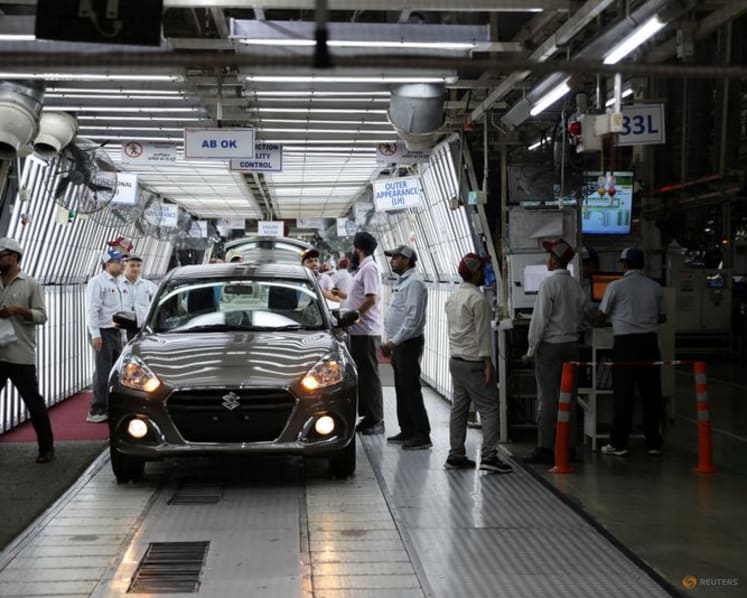
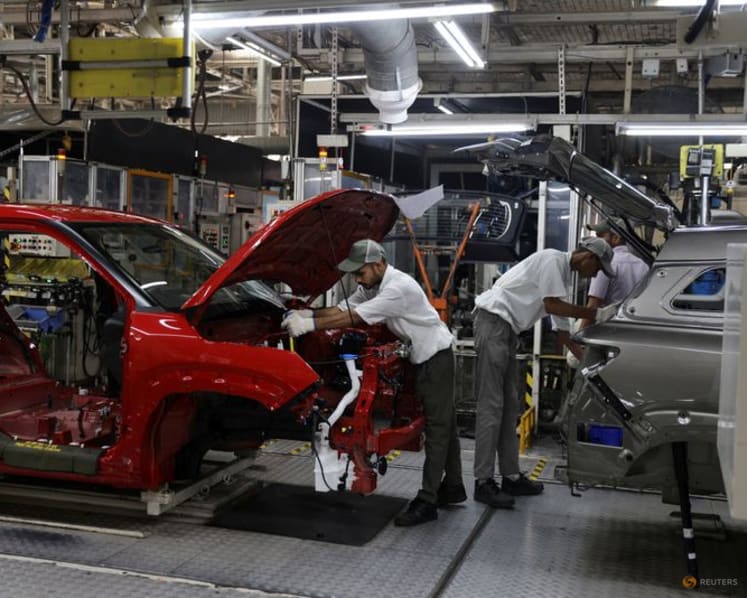
NEW DELHI, Oct 2 : Suzuki Motor has asked suppliers in India to halt production for one day a week for machine maintenance, as the Japanese vehicle maker aims to prevent unscheduled stoppages and maintain quality ahead of ramping up output, two people said.
The company has issued such a directive to its Indian suppliers for the first time, the people said, and it comes as Indian unit Maruti Suzuki prepares to boost annual production to 4 million cars by 2030 from about 2.4 million.
When contacted by Reuters, Maruti Suzuki did not provide a comment for this story.
Suzuki Motor counts India as its biggest market and, increasingly, a key manufacturing base from which it aims to increase exports to destinations including Japan and Europe.





In turn, Maruti Suzuki is the biggest player in the world's third-largest car market but has seen its share slide after home rivals such as Tata Motors and Mahindra & Mahindra launched feature-packed cars in quick succession.
Maruti is preparing a series of launches in the run-up to 2030 to regain market share, and the production increase – with attendant risk management – is central to that goal.
In August, Suzuki Motor President Toshihiro Suzuki met suppliers in India and asked them to plan production capacity according to a six-day schedule, the people said.
Maruti Suzuki has since asked suppliers to sign declarations by year-end confirming production lines that output components for the vehicle maker do not operate all seven days in a week, the people said.
Suzuki wants suppliers to move towards an operational model of 20 hours a day, 6 days a week by September 2027, giving production machines 4 hours of downtime each night and a full day for maintenance, the people said.
The concern is that running machinery every day raises the risk of factory accidents, unscheduled stoppages and quality problems as production volume increases, the people said.
POTENTIALLY COSTLY DIRECTIVE
Suzuki Motor is preparing to introduce a new powertrain and safety technology in India and plans to halve vehicle development lead time while improving manufacturing efficiency by 2030.
Beyond India, Maruti Suzuki's exports to markets including Japan, Europe and the Middle East are set to approach half a million units in 2026.
However, its Indian suppliers are already under pressure to meet demand, with overall domestic car sales set to reach about 5 million vehicles in 2026 from 3 million in 2019.
Indian component makers traditionally run machinery continuously, seven days a week, to maximise utilisation and profit. That makes Suzuki's directive potentially costly, just as commodity and raw material prices are soaring, the people said.
Suppliers will therefore need to plan additional capacity to make up for rested production lines, which is likely to require investment in plants and machinery, one of the people said.