Commentary: The White House's oil-restraint toolbox is empty
Despite President Donald Trump’s blustering that America benefits when oil prices surge, crunch time is fast approaching for both the war and the energy market, says Javier Blas for Bloomberg Opinion.
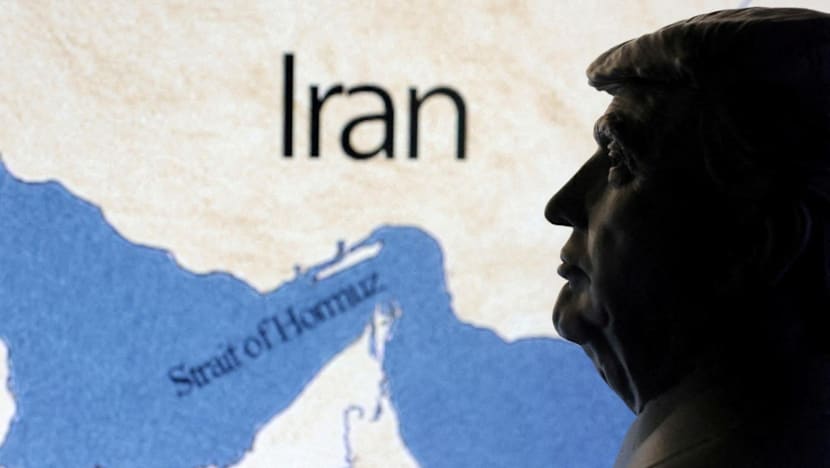
A map showing the Strait of Hormuz and Iran is seen behind a 3D printed miniature of US President Donald Trump in this illustration taken Jun 22, 2025. (Photo: REUTERS/Dado Ruvic)
LONDON: Despite President Donald Trump’s blustering that America benefits when oil prices surge, crunch time is fast approaching for both the war and the energy market.
He either ends the conflict quickly, or sky-high energy costs will force him to do so. The oil market may not have the same fearsome reputation as the bond market but, trust me, it can be equally savage in twisting a politician’s arm.
This week, the White House earned some breathing space thanks to the release of emergency reserves, plus the use of pipelines bypassing the Strait of Hormuz. But the extra time is measured in days, rather than weeks. Certainly, Trump does not have months.
WHAT CAN THE WHITE HOUSE DO?
My working assumption is that the oil market will add US$3 to US$6 a barrel to the headline price for every day - every single day - that the war continues. Monday to Friday, that’s US$15 to US$30.
It’s bearable for another week, perhaps two, but any longer and the world will start to incur serious economic damage through soaring energy costs. Short of a very risky - and possibly illegal - intervention in the oil futures market, the White House doesn’t have more meaningful tools to wield to bring energy prices down.
Do I believe the Trump administration is seriously thinking about interfering with the futures market? You bet. Even the Biden administration considered it in 2022 after Russia invaded Ukraine, before realising it was too hazardous and unlikely to succeed.
The White House has already thrown everything it can at the problem. Sure, it can ask Congress to scrap federal fuel taxes, as Biden did in 2022. But that would take time - and may ultimately not win sufficient votes. US states, particularly those under Republican control, may also announce their own fuel-tax holidays, as some Democratic states did three years ago. Trump can waive some environmental rules for gasoline and diesel too.
All those measures would buy time at home - but internationally, the damage from rising oil prices would continue. The White House, cornered, may try another tool: an export ban on US oil and refined products. That would certainly crash domestic prices, but send global ones soaring. It would be a tremendous mistake.
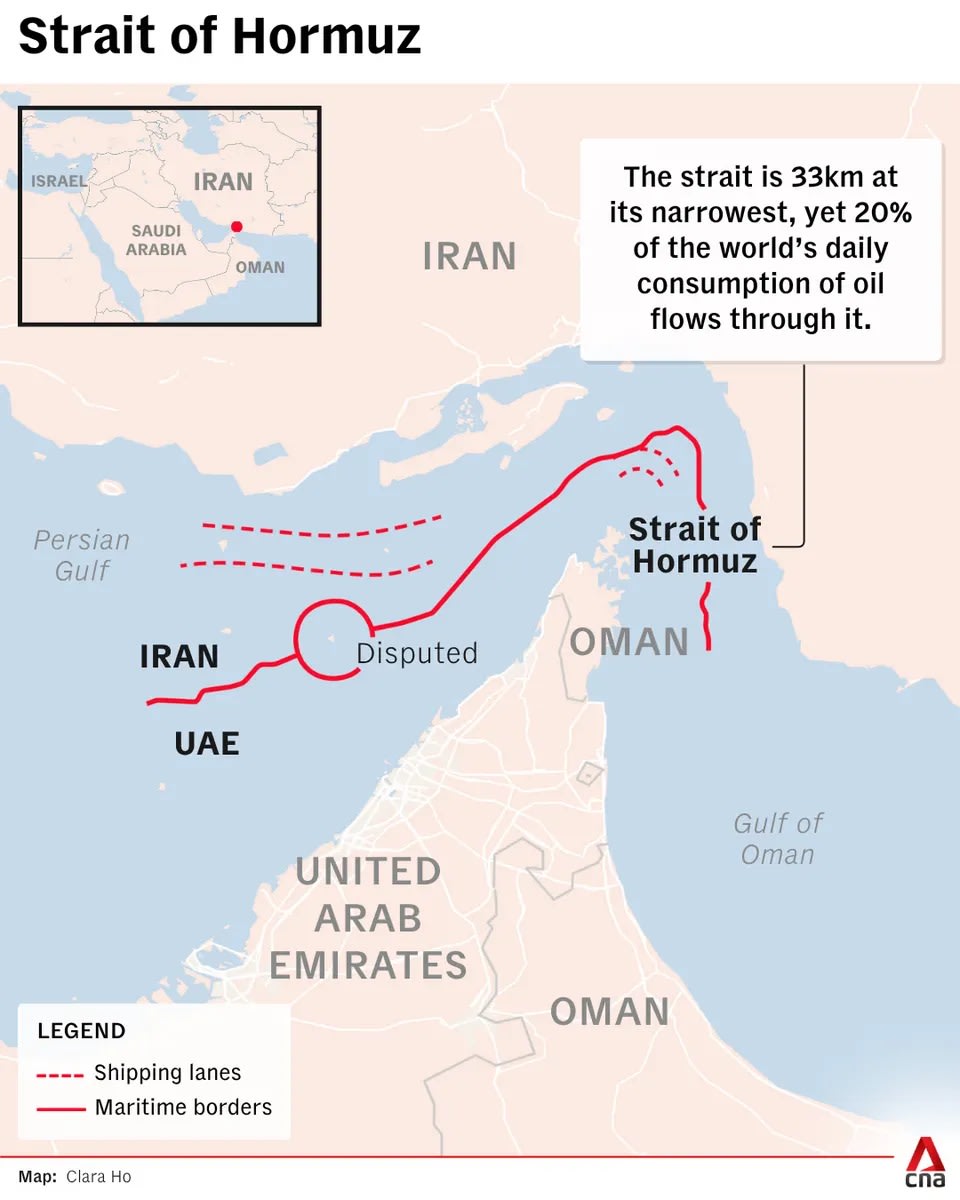
Ultimately, the only durable solution is to reopen the Strait of Hormuz. Here, the US seems to have realised that oil tankers won’t sail again until the hostilities end, after wasting a lot of time last week trying to solve a non-existent insurance problem. And, of course, Iran has a say in when and how any ceasefire, whether formal or tacit, starts. Tehran may not be willing to acquiesce.
NOT ALL DOOM AND GLOOM?
It’s not all gloom. Until now, the war’s impact on the global economy has been minimal.
West Texas Intermediate, the US oil benchmark, has yet to end the day above the US$100-a-barrel level for a single day this year. Back in 2022, after Russia invaded Ukraine, WTI closed above the triple-digit level for nearly 83 consecutive days. For a crisis to manifest, oil prices need to remain high for a sustained period; that’s not happened yet.
With the conflict approaching the two-week mark, most drivers will have refuelled their cars once at most. Beyond benchmark oil, energy costs haven’t moved much. The crucial electricity market - the crux of the 2022 crisis - hasn’t reacted at all. Indeed, German wholesale power prices are today lower than a few weeks ago. Thus, inflation expectations haven’t changed much - yet. In rich nations, the outlook for economic growth hasn’t changed either - yet.


If the war was to end now, or in a few days, the global economy would barely remember it by mid-year. That’s crucial context when looking at the war throughout the lens of Wall Street or sovereign bonds, rather than oil.
The energy market provided a good preview of what would happen if tankers start to traverse the Strait of Hormuz: US Secretary of Energy Chris Wright posted on social media, mistakenly, that a tanker had crossed, and prices plunged more than 10 per cent. It was an error, but an indication of how quickly prices can change. For now, however, the tanker traffic remains at a standstill.
If oil continues to rise, the market will resolve the problem the hard way: demand destruction, with prices high enough to drive consumption down. Here, the key is where that demand destruction happens.
At risk of sounding unkind, it matters less for the global economy if it occurs in a small country such as Bangladesh - where there are signs it’s already happening - than if a major nation such as Germany starts to curb its appetite, as happened in 2022 during the European energy crisis.
Initially, Trump aimed for a war lasting four to five weeks. With the third week about to commence, the expense in energy terms will continue to increase, but I think it remains manageable. Beyond that, though, every day the conflict continues, the inflation and economic risks mount. The White House surely knows the power of the oil market - just listen the parade of cabinet members doing live television interviews trying to talk down the market.
If the war goes on for months, extending into April and May, the scenario would be grim. The cost of oil would reach stratospheric levels, stoking inflation. But the bigger issue would be growth. Extend the war from days and weeks into months, and economists will need to start reducing their forecasts for gross domestic product - and not in a linear fashion. Stagflation could become a real risk.