Commentary: At 250, America could use a birthday resolution in Southeast Asia
As the US celebrates its 250th anniversary of independence, Southeast Asia still has questions about its reliability as a partner, says Kevin Chen from the S Rajaratnam School of International Studies.
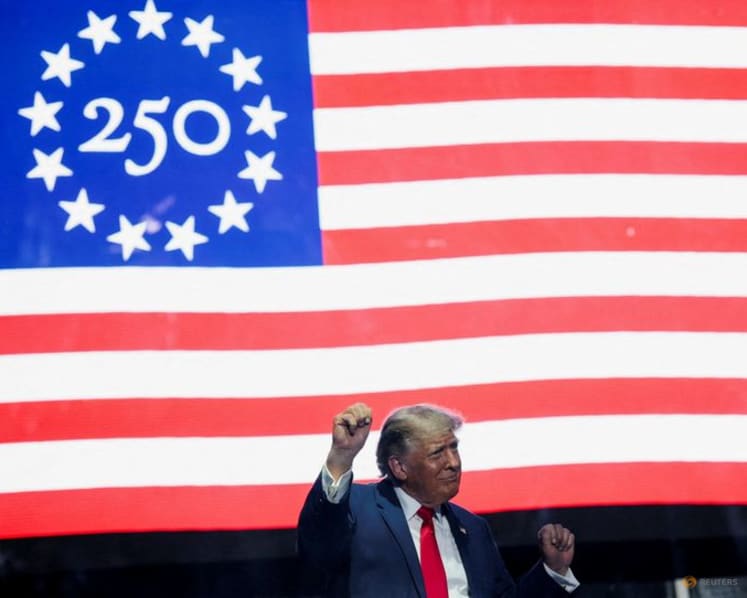


SINGAPORE: As America prepares to celebrate its 250th birthday, its latest attempt to project itself in Southeast Asia has been dressed up in pomp and circumstance. From performances in Singapore to cultural exhibitions in Cambodia, the US government is trying to tell the world that America is back, and great again.
But what Southeast Asian governments care most about is not the pageantry. It is whether the United States remains a reliable partner they can plan around.
The events of the past 18 months showcase how Washington’s actions have made that question harder to answer. The region can adapt to a transactional America, but it will struggle with one that is no longer predictable enough for Southeast Asian governments to make decisions on trade, technology or security.
A WELCOME SENSE OF PRAGMATISM
From the start of President Donald Trump’s second term, some in Southeast Asia hoped that his transactional approach to foreign relations would create opportunities to embrace Washington more closely, especially those that chafed against traditional US demands on human rights. The fact that Mr Trump’s National Security Strategy did not mention values such as democracy promotion and human rights seemed to support these hopes.
Instead, US officials have focused on common strategic interests, particularly in the areas of critical minerals, artificial intelligence and defence technologies.
Pax Silica, for example, shows the upside of this approach: an initiative to serve US economic security by securing tech supply chains while offering partners a path to work more closely with American AI companies to develop new services. It is also an opportunity for partners to attract investments, with the Philippines reportedly in talks with iPhone manufacturer Foxconn to invest in its new AI hub.
The US continues to be a key security partner. Besides building on existing partnerships with allies such as the Philippines, it is also rekindling ties with once-spurned partners – the annual Angkor Sentinel exercise with Cambodia, for example, is expected to resume in early 2027, 10 years after it was discontinued.
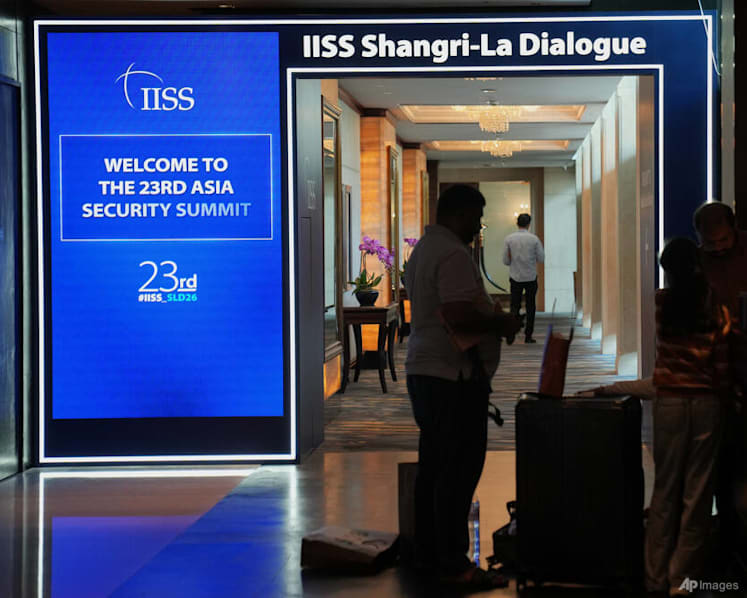
US Secretary of War Pete Hegseth summed up this proposition bluntly at this year’s Shangri-La Dialogue in Singapore. The US needed “partners, not protectorates”.
His accompanying demand for US allies and partners to spend at least 3.5 per cent of their gross domestic product on defence has been deemed unrealistic, but the message was clear: Washington wants others to share the responsibility and the price of sustaining the system that it created. Countries that want something from Washington would need to pay their fair share first.
DISRUPTIVE AND INACCURATE
The clarity of Mr Hegseth’s message was refreshing. Washington has traditionally struggled to coherently explain how they want to engage Southeast Asia, which makes such an unambiguous, if demanding message a welcome change.
However, while I still believe that the region can benefit from closer ties with Washington, it is increasingly important to take a sobering look at the risks that America’s actions and words create.
First, the Iran war has had severe implications for the region’s economy. Even if a peace deal is eventually reached, global energy prices may take months to return to pre-war levels, while the Asian Development Bank has warned of stagflation risks in Asia.
Then there are the tariffs – the baseline tariffs, the sectoral tariffs, the upcoming Section 301 tariffs (over forced labour allegations directed at many trading partners, including seven Southeast Asian countries) or any other tariffs that Washington may impose.
Countries will adapt. They can find ways to deal with difficult policies. What is harder to manage is the uncertainty created by a Washington that shows open hostility to free trade and professes a desire to create an alternative to the system under which regional economies have prospered.
Second, Washington’s inconsistent messaging about the Iran war have also raised questions about its reliability.
On many occasions (at least 39, by US platform CNN’s count in mid-June before a preliminary agreement was announced), Mr Trump claimed he was “very close” to reaching a deal with Tehran, only for negotiations to drag on. He has made inaccurate claims about the status of the Strait of Hormuz. Similarly, Vice President JD Vance’s claim that nuclear inspectors would be allowed into Iran was almost immediately refuted by Tehran.
Iran, too, has made some spurious claims, but its behaviour does not absolve Washington. More than gaffes or political posturing, repeated falsehoods erode US credibility, making it harder for third parties to trust its leaders at their word.
This disconnect matters for Southeast Asia, as it is increasingly difficult to take Washington’s offers to collaborate with the region for mutual benefit at face value.
A BIRTHDAY RESOLUTION
In years past, the simplest solution for Washington’s credibility issues was to put its money where its mouth is.
Now, however, no amount of pragmatic cooperation or financial pledges are likely to fill the credibility gap created by the perception of a disruptive and unreliable Washington.
Southeast Asian governments have made peace with the realisation that the era of the US championing the rules-based order is over. These countries will continue working with the US but increasingly diversify their partnerships.
The US will still be important, but it will be treated less like a constant and more like a variable to hedge against.
This trend is set, but not irreversible. Washington’s best hope for the long run is to reclaim its reliability, starting from the messaging sent from the White House. While the truth can be inconvenient, making consistently inaccurate claims is a corrosive choice.
Reclaiming this reliability should be America’s birthday resolution.
Kevin Chen is an Associate Research Fellow with the US Programme at the S Rajaratnam School of International Studies (RSIS), Nanyang Technological University (NTU), Singapore. He writes a monthly column for CNA, published every first Friday.