







Japan to survey animal cafes over hygiene, welfare concerns
The environment ministry will examine whether they comply with relevant laws, including whether animals have enough space and how often cleaning takes place, said an official.
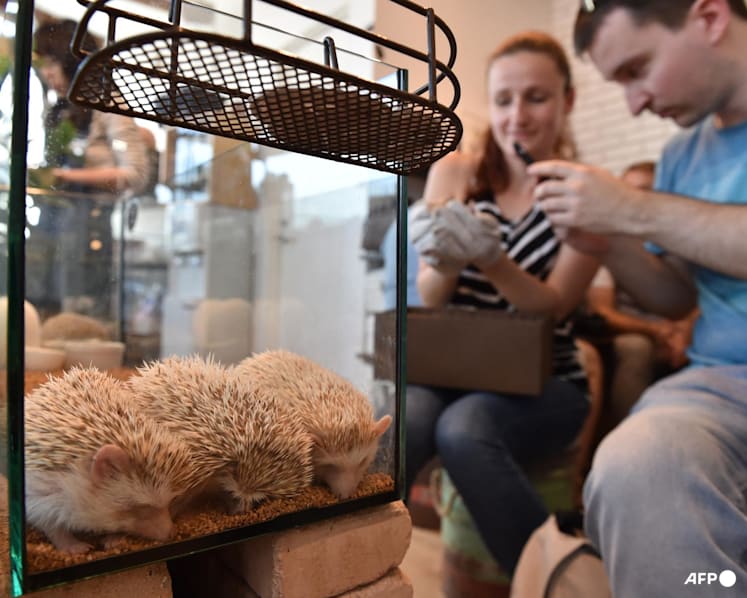
Tourists from Australia play with hedgehogs at a cafe in Tokyo, on Oct 15, 2016. (File photo: AFP/Kazuhiro Nogi)
TOKYO: Japan plans to probe popular animal cafes, where visitors can interact with anything from cats to capybaras, following concerns about hygiene and the creatures' welfare, authorities said on Thursday (Aug 27).
Japan has hundreds of cafes where campaigners say animals are sometimes kept in cramped spaces, and that their popularity encourages the capture and illegal trade of rare wildlife.
A fact-finding survey will begin as early as next month, starting with obtaining basic facts like the number of establishments and what animals they keep, an environment ministry official told AFP.
The ministry will examine whether they comply with relevant laws, including whether animals have enough space and how often cleaning takes place, said the official, without wishing to be named.





"We may then do on-site inspections if we find facilities that appear to be breaching rules" stipulated by the animal welfare law, he said.
The decision to launch the survey followed recommendations by members of an expert panel about animal welfare.
Animal welfare groups have long been alarmed by the cafes, where visitors can pet and play with a dizzying array of animals including micro-pigs, hedgehogs, owls and snakes.
A 2025 survey by World Wide Fund for Nature Japan said that some kept endangered species listed on the Red List of the International Union for Conservation.
They also included species covered by the Convention on International Trade in Endangered Species, which regulates international trade in wildlife.
Some shops had inadequate hygiene management without nudging users to handwash after contact with animals, and its "microbiological testing detected pathogenic bacteria in multiple facilities", the report said.
"Whether the animals are otters, capybaras, raccoons, owls, reptiles, or other wild species, these businesses are built around close encounters that prioritise customer entertainment over the animals' needs," said Laila Imai, campaign coordinator in Asia of animal welfare group PETA.
"Many are subjected to constant handling, noise, flashing cameras, and interactions with strangers throughout the day," Imai said.
"What may appear charming to visitors can be stressful and unnatural for the animals forced to live that way."
Some animal cafes act as adoption centres, helping to find new homes for rescued cats and dogs.






