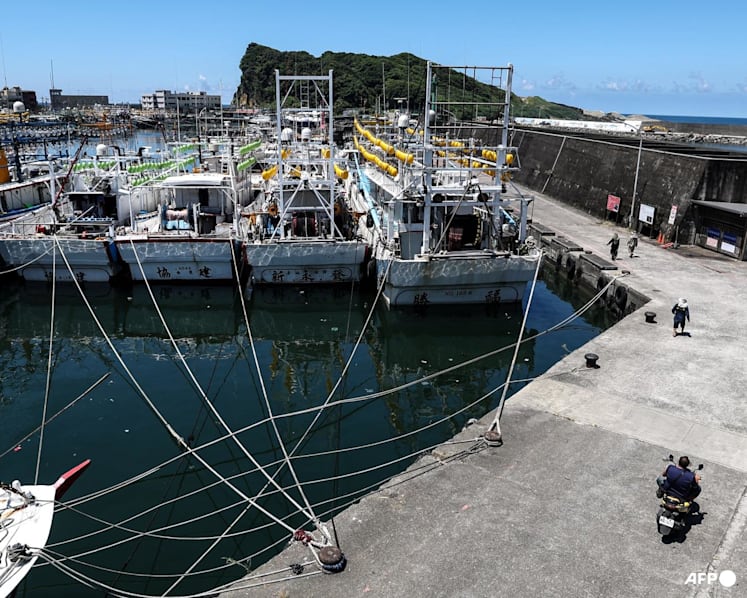
Southern China drenched as Typhoon Noul makes landfall
Typhoon Noul brought heavy rain and gale-force winds across Guangdong province and neighbouring Hong Kong.
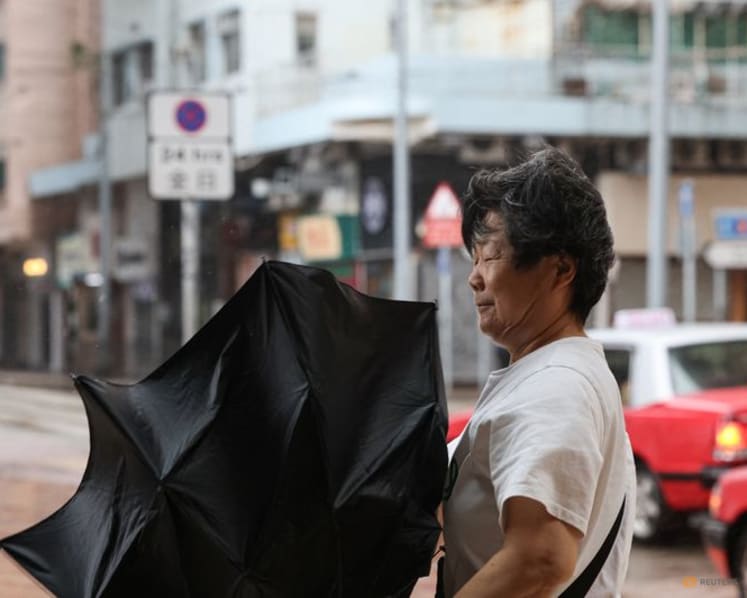
A pedestrian holds an inverted umbrella against strong winds during heavy rain from Typhoon Noul, in Hong Kong, China, Jul 26, 2026. (Photo: Reuters/Tyrone Siu)
HONG KONG: Typhoon Noul made landfall early on Sunday (Jul 26) in southern China, bringing heavy rain and gale-force winds across Guangdong province and neighbouring Hong Kong, prompting the cancellation of flights at Hong Kong's international airport.
Noul, which means the glow of sunrise or sunset in Korean, is the 12th typhoon in the Pacific this year and the third to hit China this month. It has forced the relocation of more than 340,000 people in Guangdong province, authorities said on Saturday.
Guangdong suspended some train services Saturday morning, with all train services in the province halted on Sunday, CCTV said.
The centre of the typhoon crossed over land at around 3.50am near the town of Pinghai, Guangdong Province - about 80 kilometres northeast of financial hub Hong Kong - CCTV reported.





Maximum sustained winds near the eye of the storm at the time of landfall were 162 kilometres an hour.
That made Noul the strongest typhoon to strike the country so far in 2026, CCTV added.
Battering winds and heavy rains were seen in footage published by CCTV Sunday, with roads strewn with debris and some small structures including a basketball net toppled by the gusts.
The typhoon is weakening as it moves further inland, Hong Kong's Observatory said on Sunday, adding that strong gales continue to affect much of the city. The Observatory issued an Amber Rainstorm Warning for heavy rain and cautioned residents about flash floods. Rain exceeding 30 mm an hour has fallen and is expected to continue, it said.
Authorities in the Asian financial hub raised the storm alert to Typhoon Signal No 9 early on Sunday as the storm passed within 80 kilometres of Hong Kong, before downgrading it to Signal No 8 at 7.10am.
Typhoon Signal No 8, which keeps most businesses and transport links closed, will be in place until at least noon, the observatory said.
At least 350 passenger flights departing and arriving from Hong Kong had been cancelled on Sunday, the airport's website showed.
Airport authorities said flight operations will gradually begin resuming after 6.00pm.
Twenty flights between Singapore and Hong Kong and Shenzhen were cancelled on Sunday, according to Changi Airport's flight information page. The affected flights were operated by Singapore Airlines, Cathay Pacific, Shenzhen Airlines and China Southern Airlines.
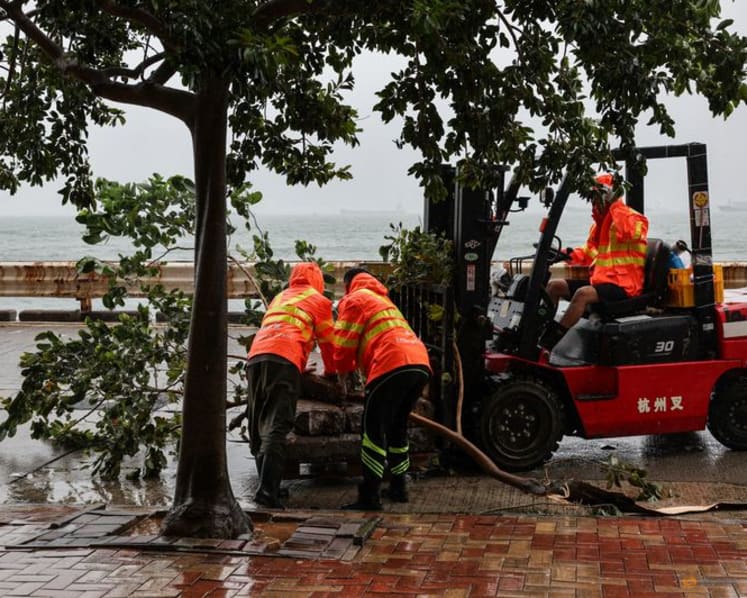
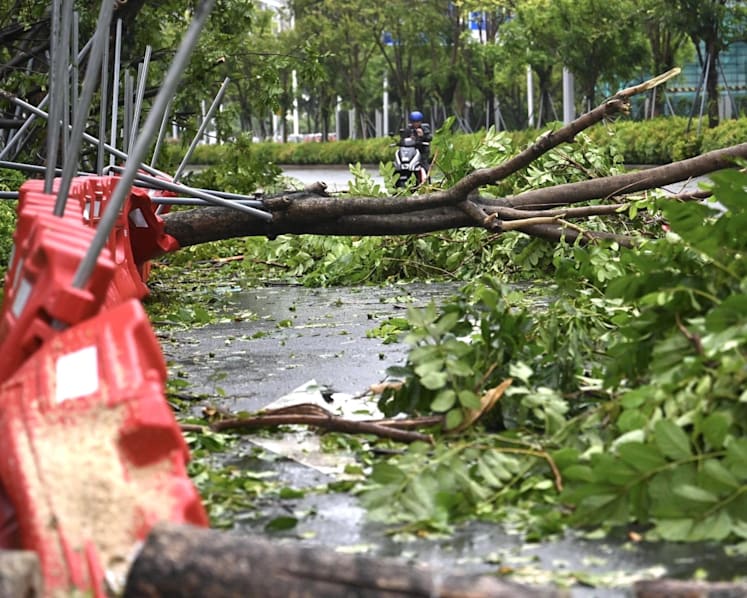
The Hong Kong government said it has received over 100 reports of fallen trees, and nine people were injured.
"After landfall, Noul will move inland, bringing strong winds and rain to Jiangxi, Hunan and Hubei provinces," CCTV said.
The report noted that precipitation caused by the typhoon could last through Tuesday, including in provinces as far north as Henan and Shandong.
Authorities in Guangdong elevated the province's disaster relief emergency response to its third-highest level on Sunday morning.
The central government's National Development and Reform Commission allocated 100 million yuan (US$14.8 million) to support Guangdong in post-typhoon recovery efforts, including reconstruction of damaged roads and infrastructure.



Before gaining intensity on Saturday over the South China Sea, Noul had already left a path of damage, clipping the extreme northern islands of the Philippines.
Three people were killed and one was missing due to the typhoon, the Philippine government's disaster agency said Sunday.
More than 9,300 people had been evacuated and 235 houses had suffered damage, the National Disaster Risk Reduction and Management Council added.

Extreme weather has already wreaked havoc on southern and central China this month, with 39 people killed when Typhoon Maysak triggered devastating floods in Guangxi.
Maysak also caused thunderstorms and gale-force winds that killed 11 people and injured 331 in the central province of Hubei.
Scientists warn the intensity and frequency of global extreme weather events will increase as the planet continues to heat up because of fossil fuel emissions.
China is the world's biggest emitter of greenhouse gases, but it is also a global renewable energy powerhouse that aims to make its massive economy carbon-neutral by 2060.