More than 260,000 evacuated in China as Typhoon Bavi brings severe floods
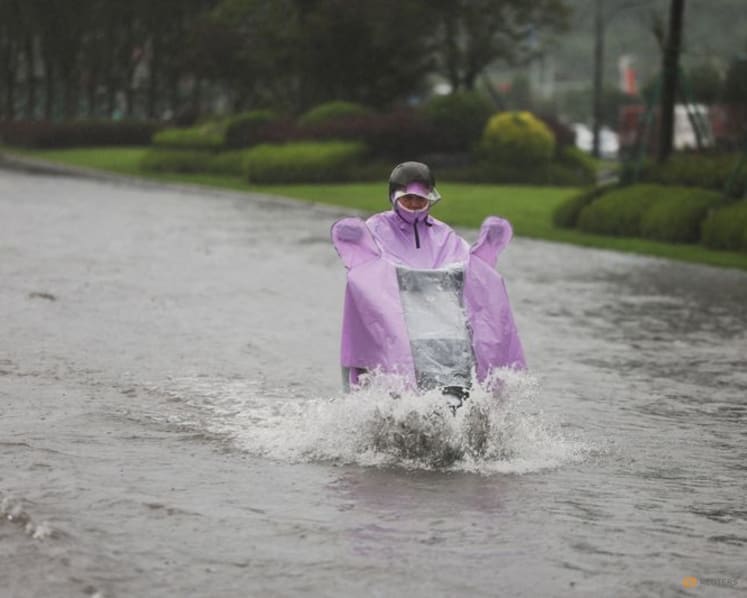
A person rides an electric scooter through a flooded road after heavy rain brought by Typhoon Bavi in Wenzhou, Zhejiang province, China July 12, 2026. (Photo: REUTERS/Go Nakamura)
HONG KONG: The most powerful storm to strike mainland China this year forced more than 260,000 people to evacuate their homes in northeastern Liaoning province, as Typhoon Bavi brought intense flooding.
Heavy rain is expected to persist through Tuesday (Jul 14), with extreme downpours in some areas, authorities said as Bavi draws vast amounts of tropical moisture northward, creating a sustained flow of humid air into northern China.
In Shenyang, Liaoning's provincial capital, a lighthouse severed its high-voltage power line and began drifting through floodwaters along main roads and crossing under a bridge, according to videos posted on Chinese social media.
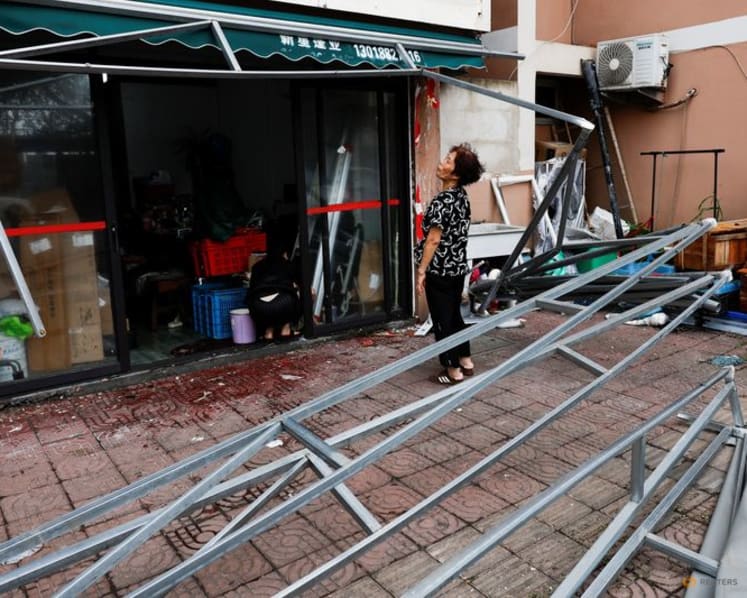
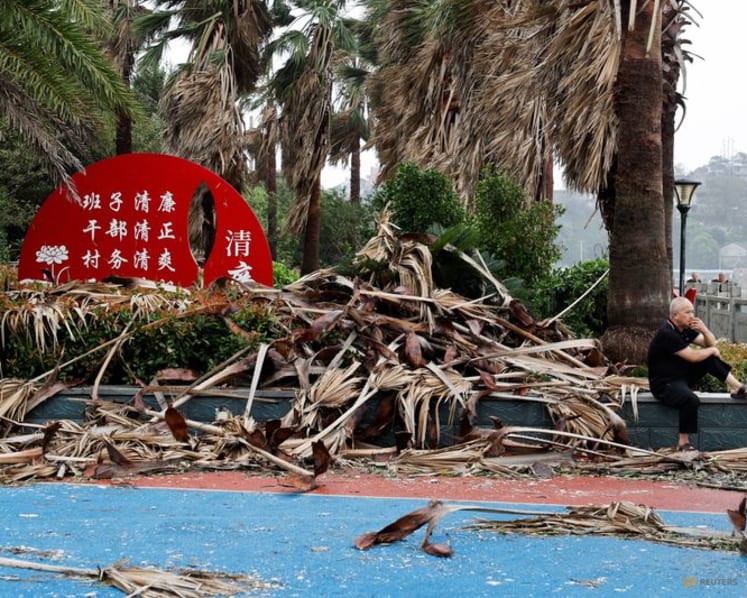
All schools and training institutions have been ordered to suspend classes, while transport services have been largely disrupted in northeastern cities, including in Shenyang and Jilin.
Bavi, covering an area the size of France, formed in the Pacific Ocean 13 days ago. Its structure remained largely intact on Monday even after making landfall in eastern China on Saturday night, making it the longest-lasting tropical cyclone in the Asia-Pacific region this year.
Its longevity is largely due to its unusually well-preserved warm core, Chinese meteorologists say, allowing Bavi to retain much of its moisture as it churns north towards the Korean peninsula. Intense rainfall is expected when Bavi, currently classified as a tropical storm, slows further and starts to release all the moisture that it has been holding.