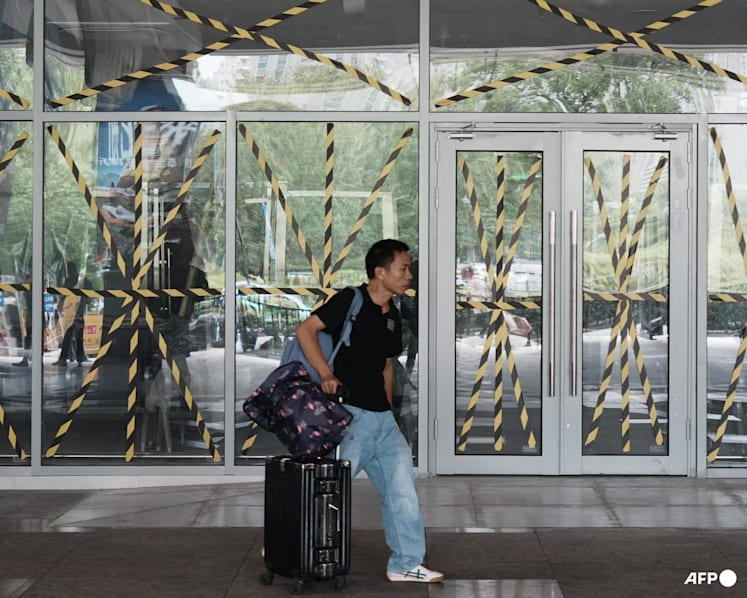
Typhoon Dolphin weakens but disrupts travel in east China
Typhoon Dolphin triggered a top-level alert over the weekend, prompting over 1,000 flight cancellations and over a million evacuations.
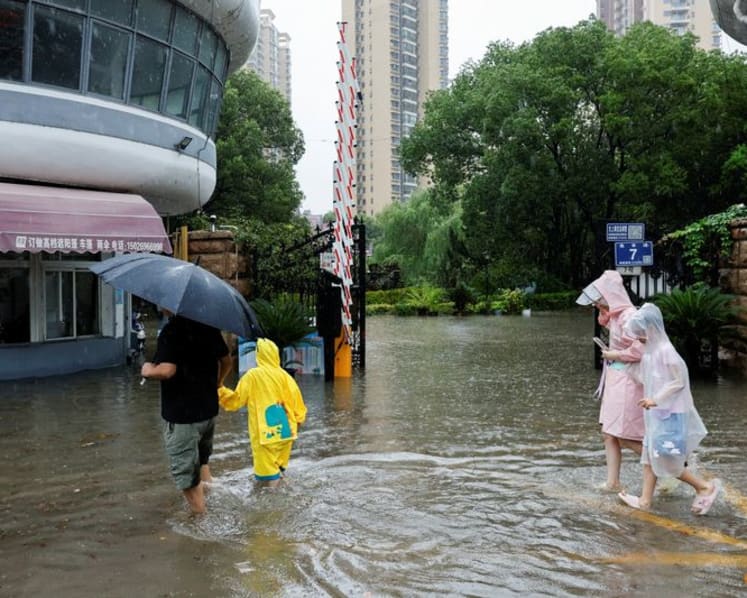
People walk through a flooded street after Typhoon Dolphin brought heavy rain to Shanghai, China, Aug 10, 2026. (Photo: Reuters/Go Nakamura)
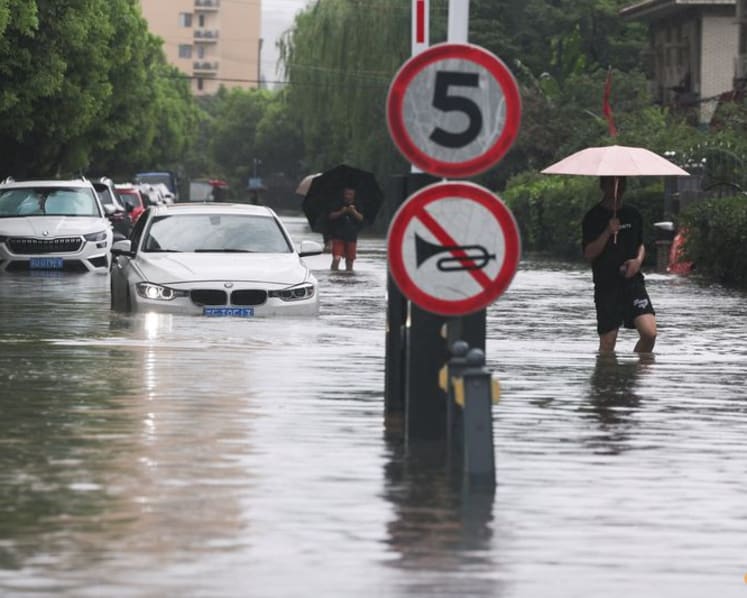
BEIJING: The weakening Typhoon Dolphin brought heavy rain and grounded hundreds of flights on Monday (Aug 10) in eastern China, where authorities said more than a million people have been evacuated over the past few days.
The weather system has lost power after making two landfalls along the coast of Zhejiang province on Sunday, with China's National Meteorological Centre (NMC) issuing its least severe typhoon alert on Monday morning.
However, the NMC warned that parts of east and central China would continue to receive heavy rain for the next day.
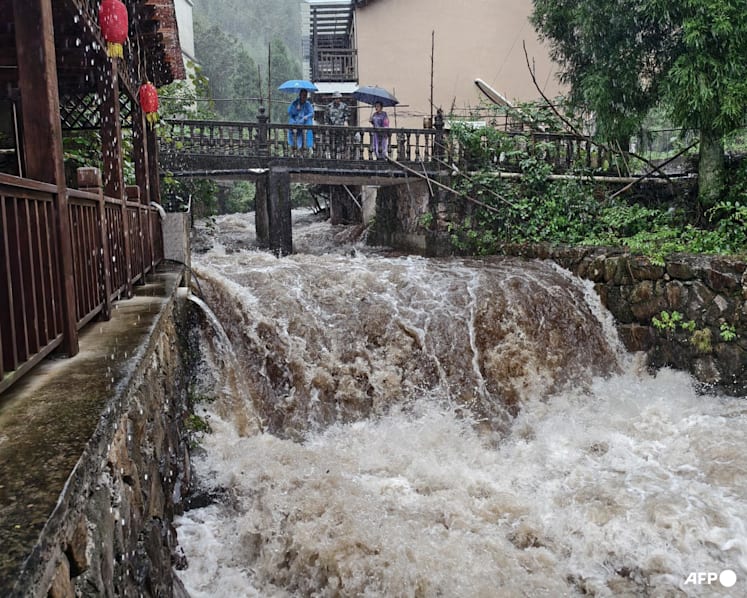
Authorities issued their most severe flash flood alert for parts of eastern and southern Zhejiang on Monday, state broadcaster CCTV said.





Shanghai's two main passenger airports saw 943 flights cancelled, the airport authority said in an online post.
Public transport services, including many local trains, have been suspended in the financial hub.
Zhejiang's Ningbo international airport will resume flight operations from midday (12pm, Singapore time) but warned that some journeys may still be delayed or cancelled since the effects of the typhoon have "not yet completely dissipated".
Provincial capital Hangzhou resumed subway services on Monday morning, after halting some train operations on Sunday.
BEIJING DISTRICTS ON ALERT
Northern China is also set for extreme weather this week, with five districts in Beijing issuing red alerts for heavy rain on Monday, with some warning of landslide and flooding risks.
Typhoon Dolphin triggered a top-level alert over the weekend, prompting over 1,000 flight cancellations and over a million evacuations.
The port city of Wenzhou in Zhejiang relocated more than 900,000 people, CCTV said Monday.
More than 1,500 emergency shelters were opened in the city, it added.
Authorities also evacuated more than 150,000 people in Fujian province and more than 200,000 people in Shanghai, Xinhua news agency reported.
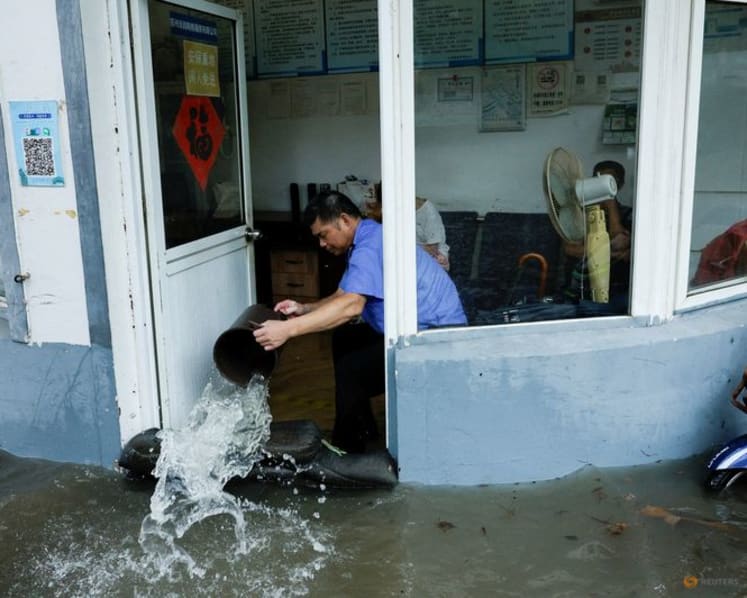

Typhoon Dolphin came two weeks after Typhoon Noul struck southern Guangdong province, with authorities saying at the time that it was the strongest storm to hit China this year.
Extreme weather also wreaked havoc on southern and central China last month, with 39 people killed when Typhoon Maysak triggered devastating floods in the southern Guangxi region.
Maysak also caused thunderstorms and gale-force winds that killed 11 people and injured 331 in the central province of Hubei.
Scientists warn the intensity and frequency of extreme weather events will increase as the planet continues to heat up because of fossil fuel emissions.
China is the world's biggest emitter of greenhouse gases, but it is also a global renewable energy powerhouse that aims to make its massive economy carbon-neutral by 2060.