Economic review recommends positioning Singapore as global AI leader, making lifelong learning practical
Singapore should position itself as a location of choice where people can collaborate to develop innovative AI solutions, according to the Economic Strategy Review committees.
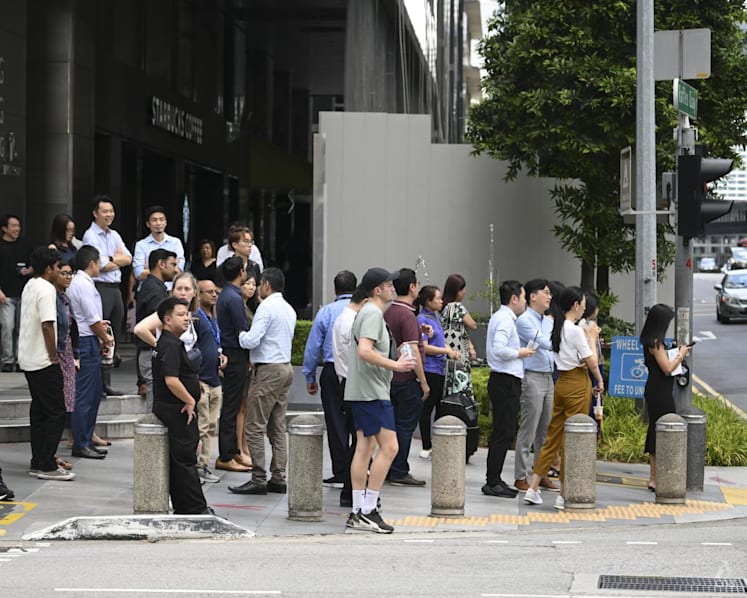
Office workers wait to cross a junction in Singapore's central business district on Jan 6, 2025. (Photo: CNA/Wallace Woon)

This audio is generated by an AI tool.


SINGAPORE: Singapore should establish itself as a global artificial intelligence leader and push for AI adoption across its economy, according to recommendations from the Economic Strategy Review.
The country must also evolve its skills and training systems to make lifelong learning a practical reality for workers.
These are among seven key recommendations released on Friday (Jan 30) by the review’s committees, which conducted more than 60 engagements, events and company visits.
The recommendations, based on feedback from businesses and workers, aim to secure economic growth and create quality jobs amid mounting challenges.





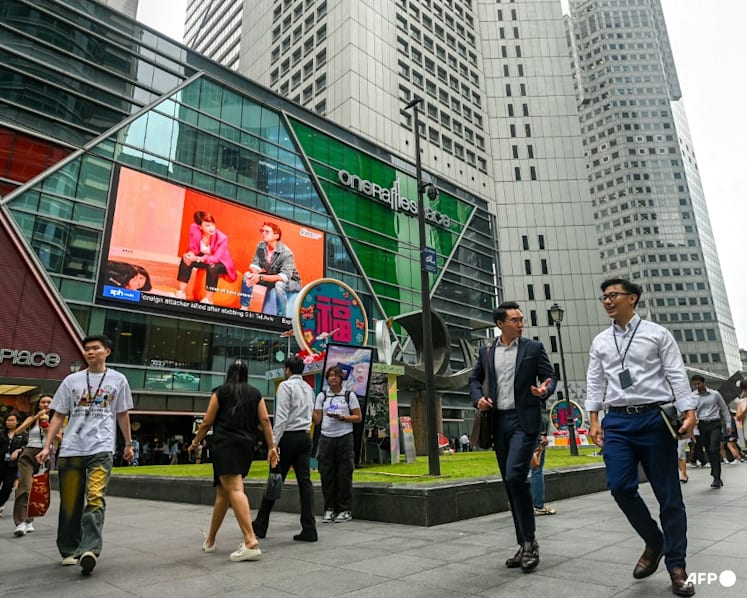
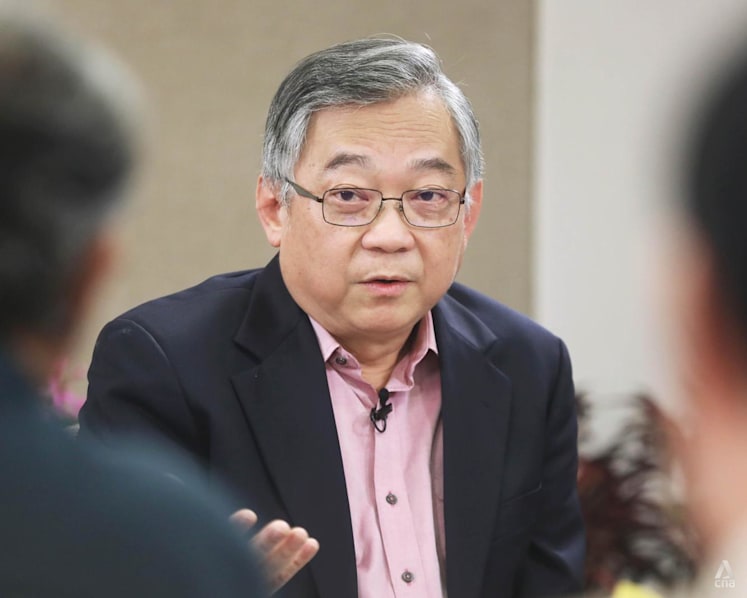
Deputy Prime Minister and Minister for Trade and Industry Gan Kim Yong outlined the challenges that Singapore faces: global uncertainty, rapid technological advances, climate change and an ageing population.
“We can no longer assume that growth will automatically generate jobs,” he said during a media interview.
Mr Gan, who chairs the Singapore Economic Resilience Taskforce, said the country needs deliberate strategies to achieve the "twin objectives" of growth and jobs.
The five Economic Strategy Review committees, each co-chaired by two political office holders, report to the task force.
The seven recommendations are:
Transform Singapore’s advanced manufacturing industry to establish global leadership in key sectors.
Pursue emerging opportunities in quantum, decarbonisation and space technology to push the growth frontier of the economy.
Establish Singapore as an AI leader where companies and top talent can develop solutions.
Strengthen connectivity with global markets and aggressively support local firms to internationalise.
Uplift and transform jobs to broaden Singapore’s range of good jobs.
Evolve skills and training models to make lifelong learning a practical reality.
Provide practical support for businesses to navigate transitions.
BECOMING AN AI POWERHOUSE
Four recommendations focus on driving Singapore's economic growth.
The committees noted that AI will revolutionise economies and industries, saying Singapore must stay ahead to harness its transformative power and put the country on a different growth trajectory.
“We should do more to position Singapore as a location of choice where companies and top talent come together to develop, test, deploy and scale innovative and impactful AI solutions,” the committees said in a media factsheet.
The government and the industry must collaborate to differentiate Singapore from other AI hubs by identifying ambitious problem statements and marshalling resources to develop and test solutions.
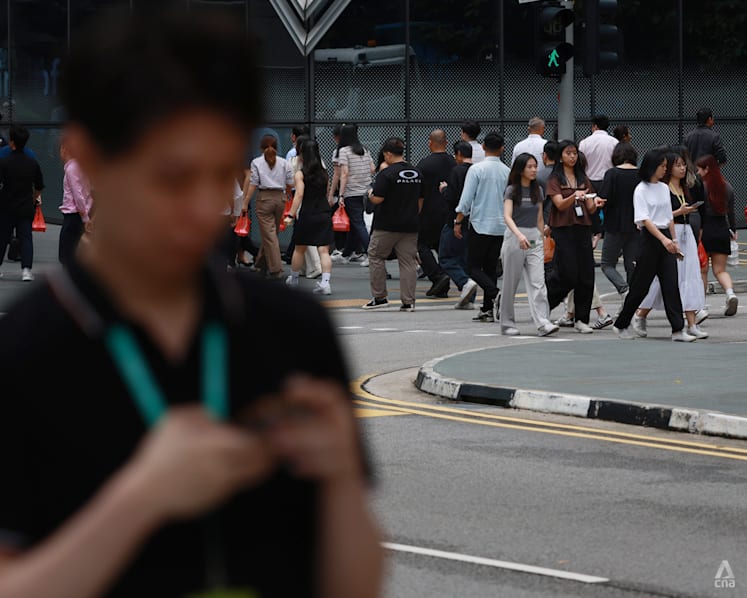
AI adoption should extend across the economy, including helping small- and medium-size enterprises reap the technology's full benefits.
“We want Singapore to be one of the AI leaders in the world. We already have a strong base,” said Acting Minister for Transport and Senior Minister of State for Finance Jeffrey Siow, who co-chairs the review's committee on global competitiveness.
Beyond AI, Singapore should strengthen its position in manufacturing sectors where it already has a foothold, such as semiconductors, healthcare and specialty chemicals.
“To stay ahead, we need to transform our advanced manufacturing industry towards best-in-class and sustainable operations,” the committees said.
National research and development resources should be deployed to secure global leadership in high-value sectors, capitalising on Singapore's trusted reputation, the committees said.
For emerging technologies, Singapore should pursue opportunities in quantum computing, decarbonisation and space technologies while attracting a new generation of companies to establish their home base here.
“We need to help high-potential, fast-growing start-ups scale regionally and globally by increasing availability of capital and access to top-tier talent,” the committees said.

DEVELOPING THE LABOUR MARKET
As the economy evolves, workers must become more agile in acquiring skills, proactive in career planning and entrepreneurial in seizing new opportunities.
“We should evolve our skills and training models, to enable training to be agile and responsive to worker and industry needs, and for Singaporeans to upskill and reskill throughout their careers,” the committees said.
This will require more flexible pathways blending training and work, a national AI workforce strategy, a more nimble career and skills system, and a review of how government support is organised.
Acting Minister for Culture, Community and Youth David Neo, who co-chairs the committee focusing on equipping workers with relevant skills, said SkillsFuture and Workforce Singapore both play important roles.
“What the committee is recommending is to see whether there’s room for these things to be a little bit more integrated … better organised so that Singaporeans and businesses find it a little bit easier to navigate the whole ecosystem,” he said.
The committees also recommended strengthening career transition support, including working with employers on earlier retrenchment notices and providing tailored placement and training.
Businesses must innovate and reposition themselves, with Singapore enabling them to proactively navigate transitions and pivot to viable opportunities.
“This could entail providing practical support for businesses to better understand their business health and make transition plans, including rationalising or offshoring parts of their operations to seize new opportunities,” the committees said.
The government will respond to the committees’ recommendations in the coming months.
The full report with final recommendations will be published in mid-2026.