




ASEAN families undergoing major demographic change, but ties remain strong: MSF-coordinated report
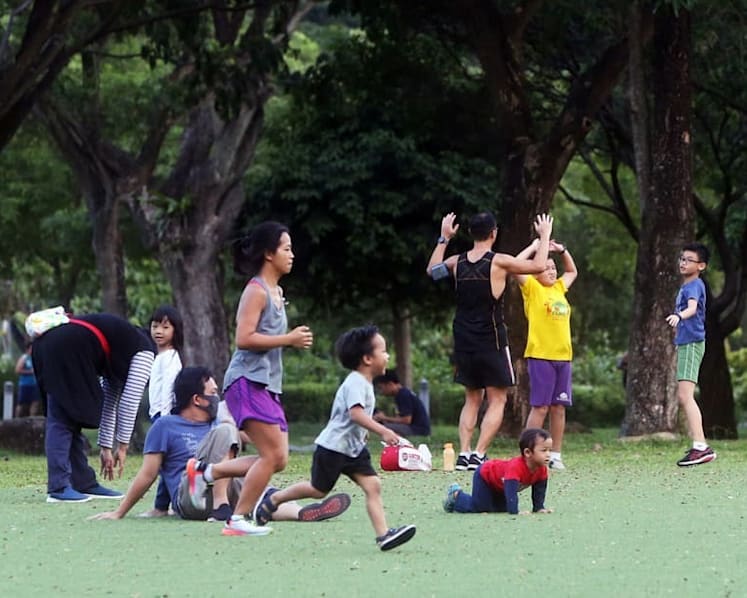
Coordinated by Singapore’s Ministry of Social and Family Development, the first-ever report on ASEAN families found that people across the region are marrying later, having fewer children and living in smaller households, even as family resilience and ties remain strong.

A family at Marina Barrage. (Photo: iStock)

This audio is generated by an AI tool.


SINGAPORE: Families across Southeast Asia are “undergoing significant demographic change”, with people marrying later, having fewer children and living in smaller households.
Despite these changes, households generally reported moderate to high levels of family resilience and well-being, according to the inaugural State of ASEAN Families Report 2026 released on Tuesday (Nov 17).
“Respondents also reported broadly positive quality of life, while marital relationships were generally positive, with high levels of relationship satisfaction,” said the report.
The report draws on national statistics from 10 ASEAN member states, alongside a survey of 12,942 households across 10 ASEAN cities.
It examined family resilience, relationships, well-being and quality of life, providing a snapshot of the experiences of urban families across the region.
The 10 participating states are: Singapore, Brunei, Cambodia, Indonesia, Laos, Malaysia, Myanmar, the Philippines, Thailand, Timor-Leste and Vietnam.
Timor-Leste, which became ASEAN's 11th member in October 2025, was not included in the report as the research collaboration was endorsed before its admission.
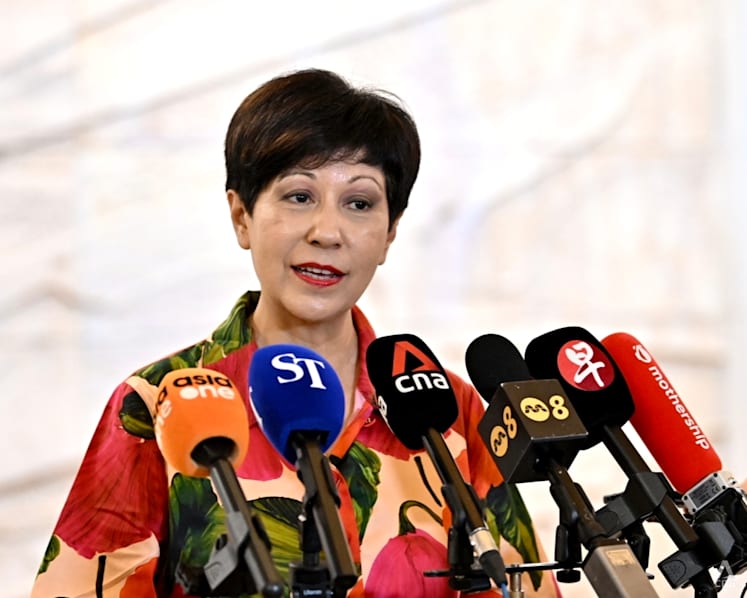
The report was launched by Singapore’s Minister for Social and Family Development Masagos Zulkifli at the Asian Family Conference 2026 at Shangri-La Hotel on Tuesday.
MARRIAGE AND FERTILITY
The report found that the median age at first marriage has risen for both men and women in most ASEAN member states, while fertility rates have declined across the region.
The median age at first marriage ranged from 21.2 to 29.6 years for women and from 24.4 to 31.1 years for men across ASEAN countries with available figures.
In Singapore, the median age at first marriage rose from 28.2 years in 2015 to 29.6 years in 2025 for women, and from 30.3 to 31.1 years for men.
Vietnam also saw an increase, with the median age at first marriage for women rising from 22.8 to 25.9 years over the same period, while that for men climbed from 26.9 to 30.1 years.
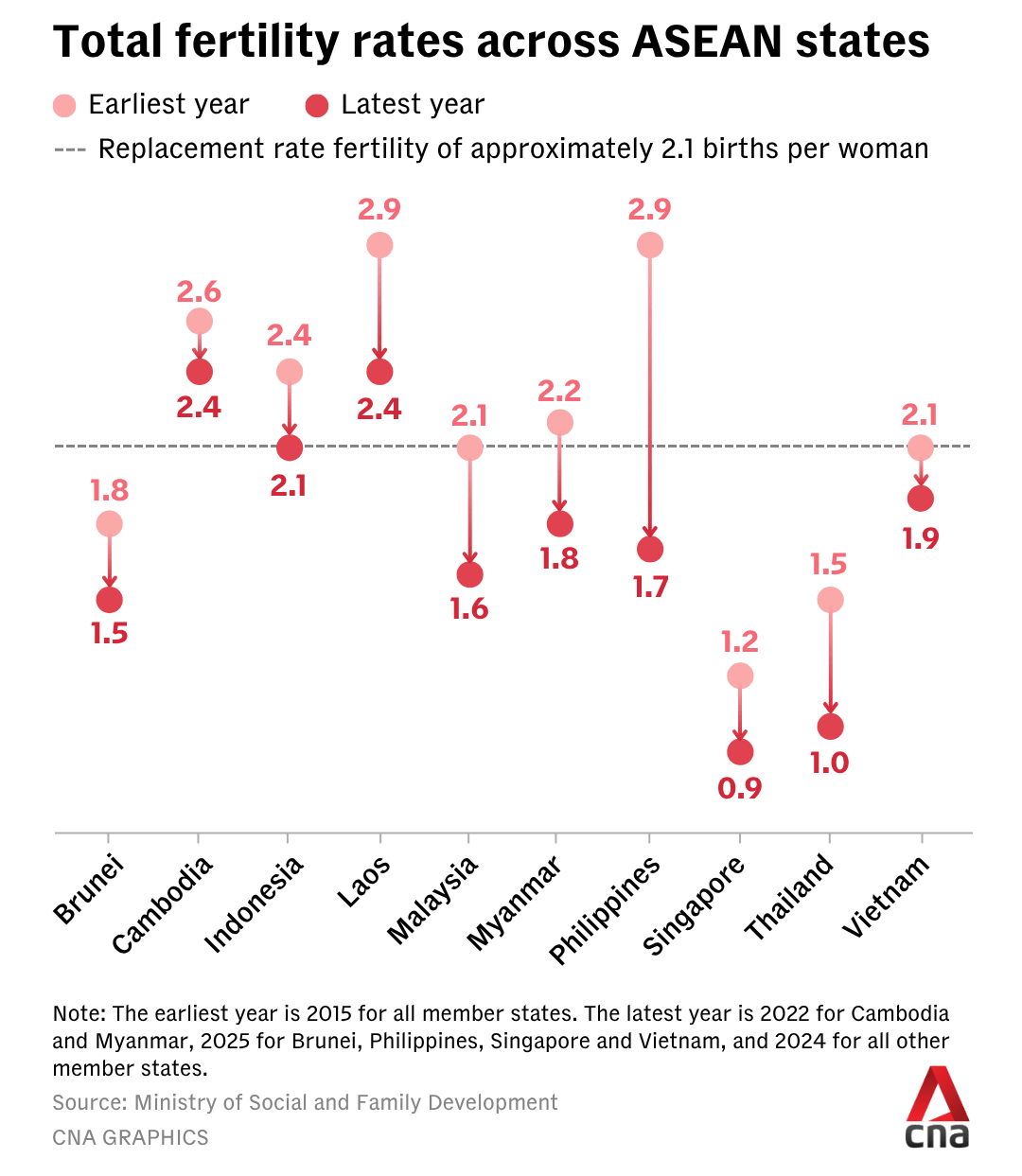
Most ASEAN states now have fertility rates below the replacement level of 2.1 births per woman, with only Cambodia, Indonesia and Laos remaining at or above this threshold.
In Singapore, the total fertility rate fell from 1.2 births per woman in 2015 to 0.9 in 2025, while the Philippines recorded a sharp decline from about 2.9 births per woman in 2015 to around 1.7 in 2025.
Dr Paulin Tay Straughan, Professor of Sociology (Practice) at Singapore Management University, told CNA that as families become smaller, there may be fewer family members available to share caregiving responsibilities, particularly as populations age, and policies need to evolve alongside changing family structures and needs.
"While reliance on the family for primary caregiving is the norm, moving forward, we will have to evolve community care systems which will widen the care network to support those with fewer family members to count on for caregiving," said Dr Straughan, who was not involved in the research for the report.





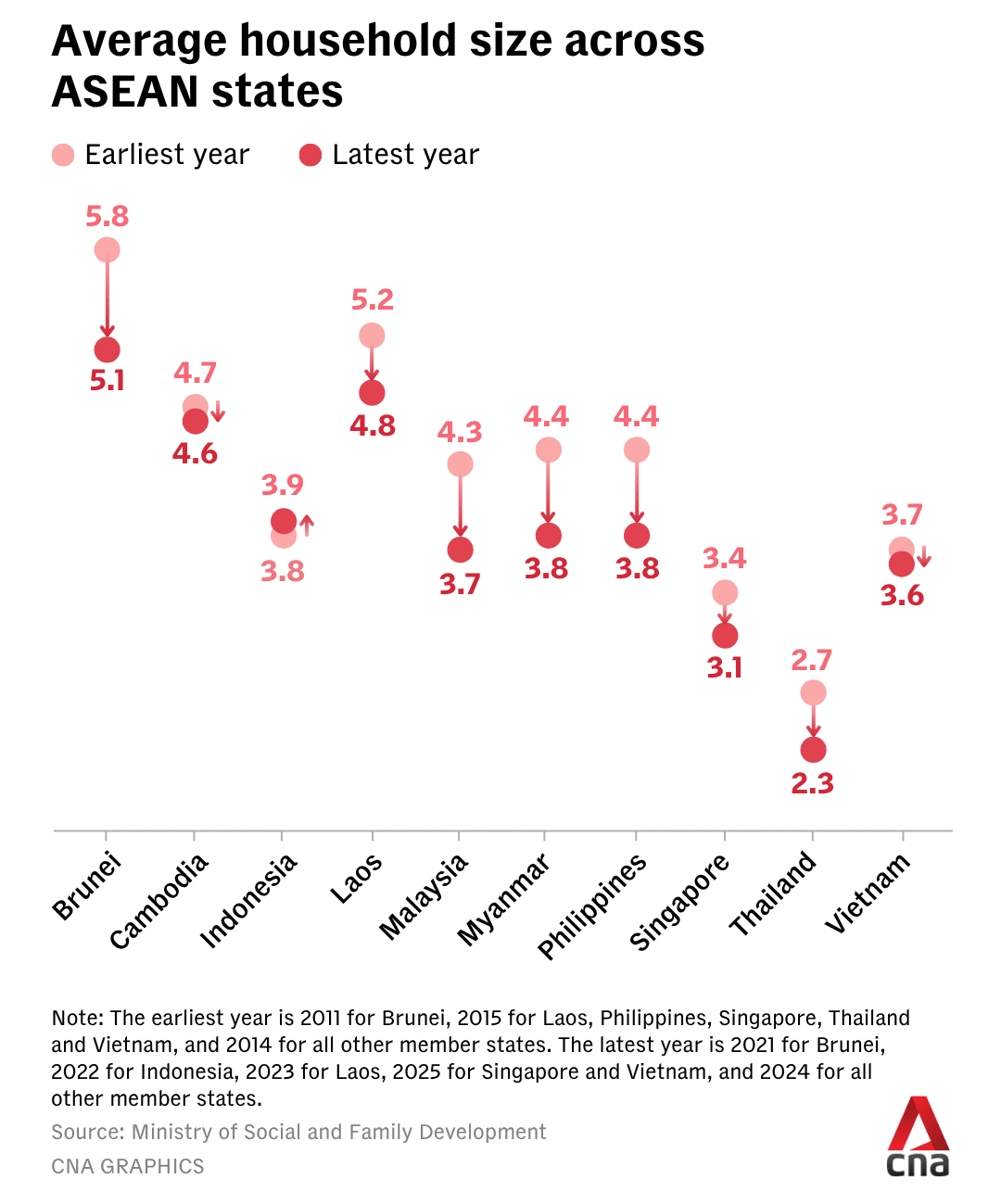
Average household sizes have also fallen across most ASEAN states over the years, with the pace of decline varying.
The exception was Indonesia, where the average household size increased slightly from 3.8 to 3.9 persons per household from 2014 to 2022.
In Singapore, the average household size fell from 3.4 people in 2015 to 3.1 in 2025.
Brunei recorded a sharper decline, with its average household size dropping from 5.8 people in 2011 to 5.1 in 2021, but it still remained among the highest in the region.
Despite these demographic shifts, families across the region continue to report strong ties and positive family outcomes.
The report found that 92.7 per cent of respondents reported moderate to high levels of family resilience, which refers to a family's ability to cope with adversity, recover and emerge stronger.
About 79.6 per cent of respondents said they had close-knit families, while 89.1 per cent of married respondents reported being happy in their marriage.
“Across ASEAN, higher family resilience was associated with stronger family bonds, higher family well-being, better quality of life and higher marital quality,” Singapore's Ministry of Social and Family Development (MSF) said.
The report, coordinated by MSF with the support of the ASEAN Secretariat, is part of a three-year regional research collaboration from 2025 to 2027. The Singapore University of Social Sciences (SUSS) was the lead research partner.
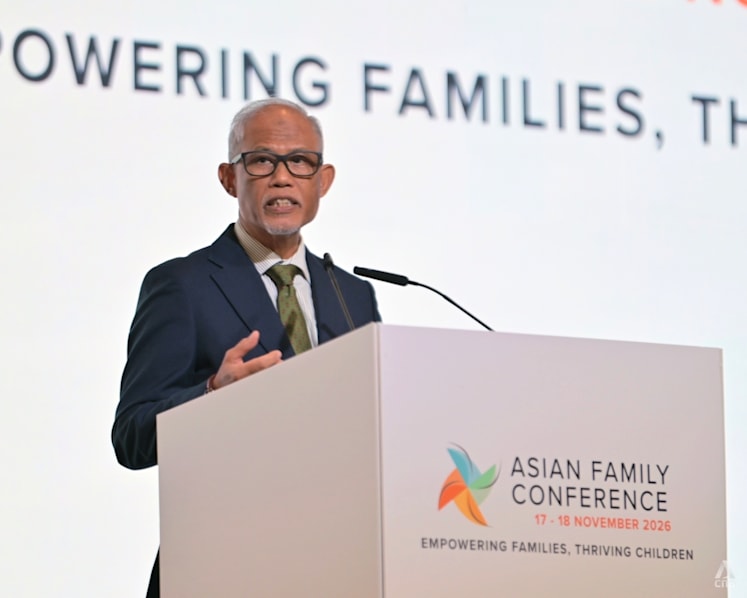
Speaking at the conference, Mr Masagos noted that much of today’s family research draws on Western experiences, which may not fully reflect the lived realities of Asian families.
This is why ASEAN had decided in 2024 to build a stronger body of knowledge on families grounded in regional contexts and embarked on the research over the last two years.
“A collective evidence base can help us better understand these trends, learn from ASEAN’s diverse experiences, and design more effective policies and programmes for our own countries.”
Singapore changing approach to helping vulnerable families: Ong Ye Kung
Singapore is changing its approach to how it helps vulnerable families, with the aim of providing more coordinated support centred on the family as a whole, said Minister for Health and Coordinating Minister for Social Policies Ong Ye Kung.
Speaking at the opening of the Asian Family Conference 2026, he said that Singapore has developed many programmes and services over the years to help families in need, each addressing different issues.
“The problem with that approach is that while we are very responsive, we have become very programme centric, instead of focusing on the person or the family in need as a whole,” he said.
He cited the example of a family whose members may be dealing with separate – but intertwined - problems, such as domestic violence, unemployment or mental health challenges.
“To resolve them fundamentally, we need to rebuild the broken relationships within the family,” he said.
“We are therefore changing our approach, to bring the many helping hands together, integrate and synergise our efforts so that the individual or family experiences support as one coherent whole.”
Mr Ong said MSF is reviewing how family services are organised, with the aim of bringing service providers together to take a “whole-family view” rather than through the lens of individual programmes.
At the conference, he also spoke about how a “great worry” for modern societies is the fraying of human relationships.
He noted for example that social bonds are thinning, with fewer youths in many countries reporting having close friends they can turn to in times of need.
Mental health conditions are also on the rise. Against this backdrop, governments must consciously strengthen relationships, families and communities, he said.
He outlined three ways this can be done. The first is to reshape people’s relationship with technology and devices, and the second is to develop a living environment that “nourishes, nurtures and strengthens relationships”.
The third is “getting better at helping people in need”, and this is where the MSF review on how family care services are delivered comes in.
POSITIVE OUTCOMES FROM NUCLEAR AND THREE-GENERATION HOUSEHOLDS
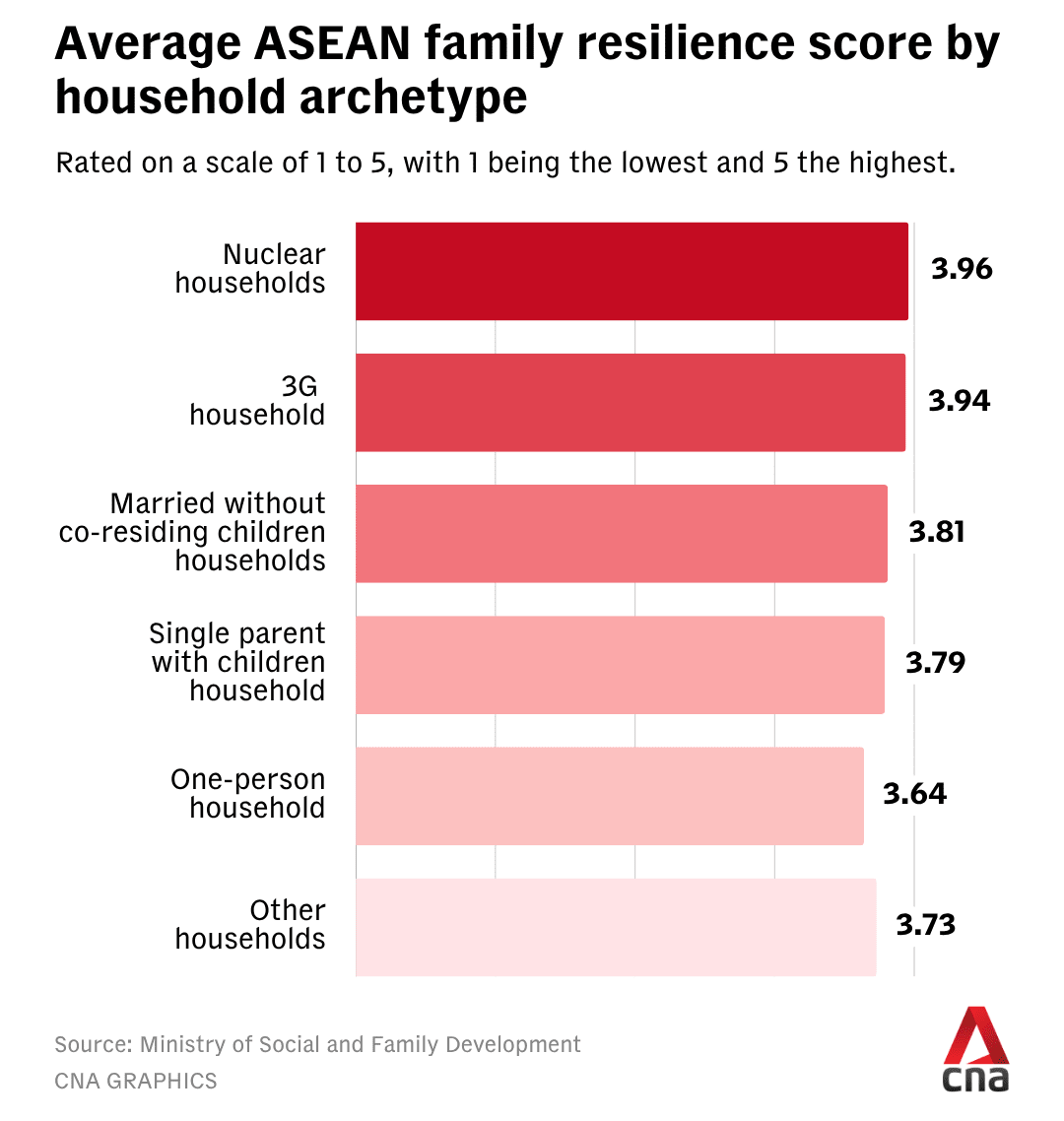
The report also found that family outcomes varied across different household structures, with nuclear and three-generation households generally reporting higher family resilience, family well-being and quality of life.
Nuclear households consist of two-generation households with a married household head and spouse living either with parents or with children, or where the household head lives with his or her married parents.
Respondents from nuclear and three-generation households had higher average family resilience scores among the household archetypes examined, with average scores of 3.96 and 3.94 out of five respectively, compared with 3.64 for one-person households.
They were also more likely to report having close-knit families, with 83.9 per cent of respondents from nuclear households and 83.3 per cent from three-generation households saying so, compared with 67 per cent of those living alone.
Family resilience was measured using the Walsh Family Resilience Questionnaire, which covers family belief systems, organisational patterns, and communication and problem solving, said MSF.
Families across ASEAN generally reported moderate levels of work-family balance, with an average score of 7.22 out of 10.
Nuclear households recorded the highest average score of 7.44, followed by three-generation households at 7.31. However, one-person households reported the lowest score of 6.77, report findings showed.
Respondents from nuclear households also reported the highest quality-of-life scores, averaging 71 out of 100, followed by three-generation households at 69.5.
One-person households scored 66.5, while other household types recorded the lowest average score of 66.4.
The overall ASEAN average was 69.1 out of 100.
Dr Straughan said there could be many factors behind the differences in family outcomes from the different household types, including caregiving responsibilities and access to family or social support.
"More research is needed to understand what is driving these differences and whether particular groups face specific challenges that may require additional support. While not all who live alone are disengaged, our worry is with those who may not have close friends or family to check in on them.
"Therefore, it is important that we have community engagement programmes which will weave a support safety net for those who suffer from social isolation," she said.
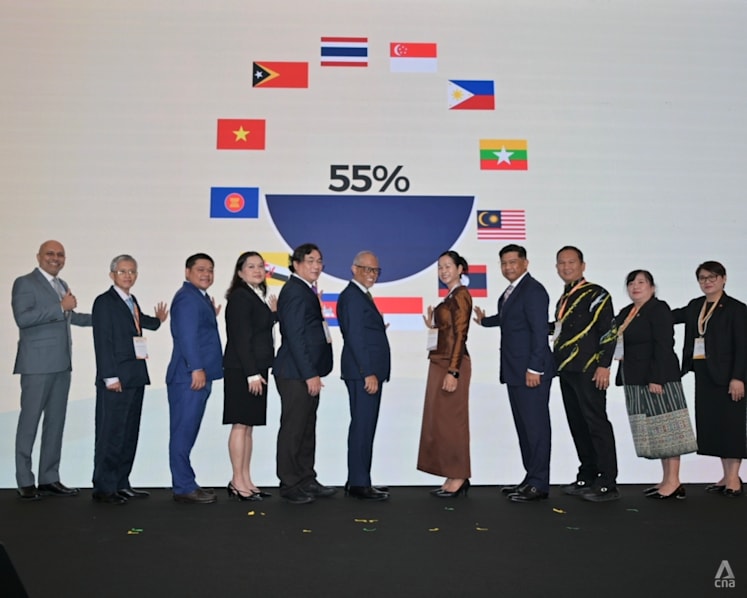
The two-day conference, jointly organised by MSF and SUSS, is attended by over 500 regional government officials and experts.
Addressing the audience, Mr Masagos said the report is not the end point, but the beginning of a longer-term effort, with three areas of focus.
First, future rounds of research will help track family trends over time and ensure policies remain responsive and grounded in current evidence.
Second, the findings could spur further research into ASEAN families, including how parenthood and caregiving shape family resilience.
“We encourage governments, researchers and academic institutions to build on this evidence base, deepen research partnerships, and foster cross-country learning,” he said.
Third, Mr Masagos said he hopes that the collaboration could be expanded to include more researchers and partners from other countries.
The report is “an important milestone, but its real value lies in what we do with it”, he added.
“If we continue to learn from one another, translate evidence into action, and reshape how we support families, we can help them thrive amidst change.”
As Singapore prepares for its ASEAN chairmanship in 2027, MSF said it looks forward to working with regional partners to build on the research and strengthen support for families.