Daily haze advisories to start after first unhealthy 24-hour PSI reading since October 2023
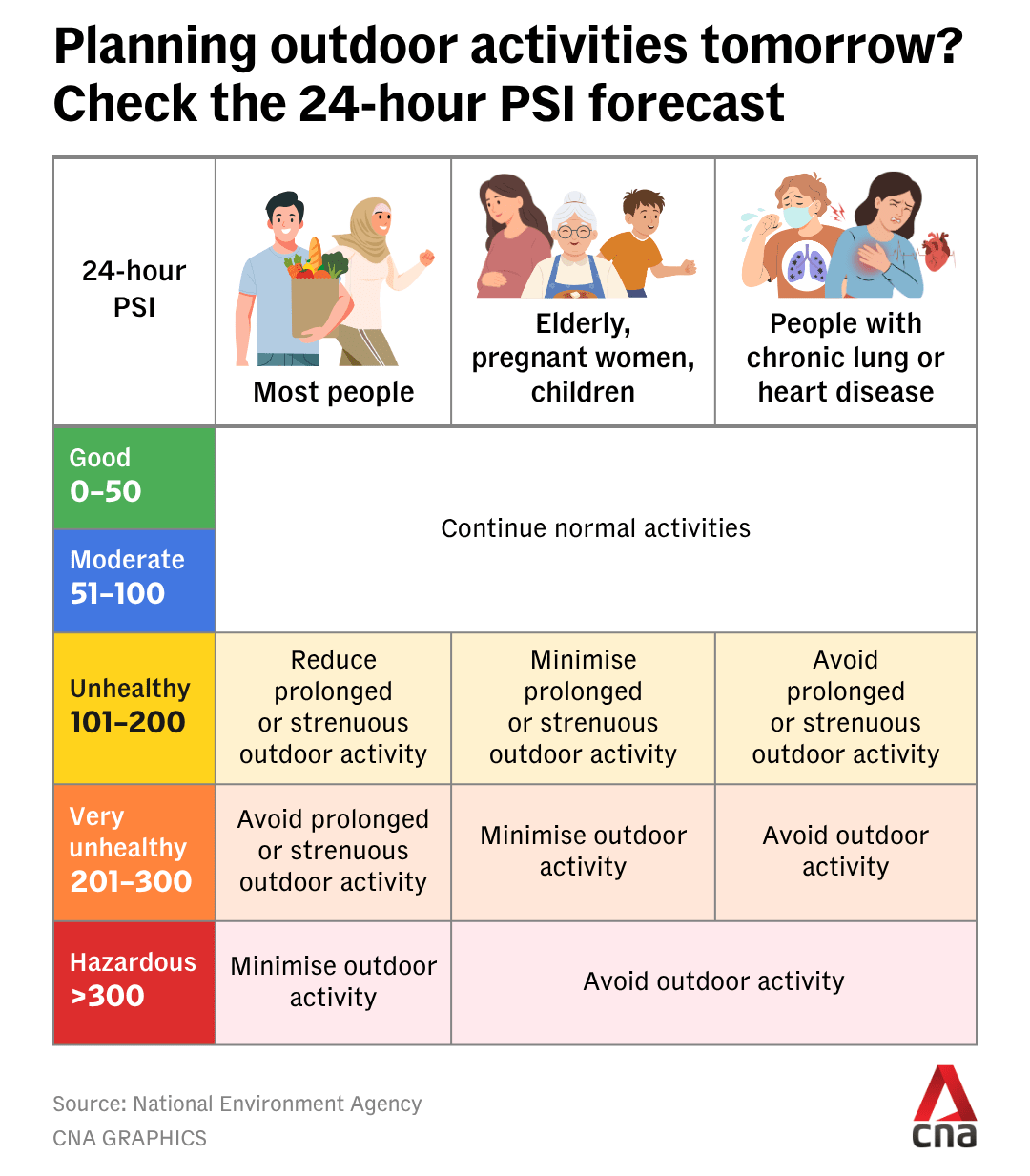
From Friday (Sep 4) evening, NEA's daily haze advisories will include the 24-hour PSI forecast to help the public plan activities and events for the next 24 hours.
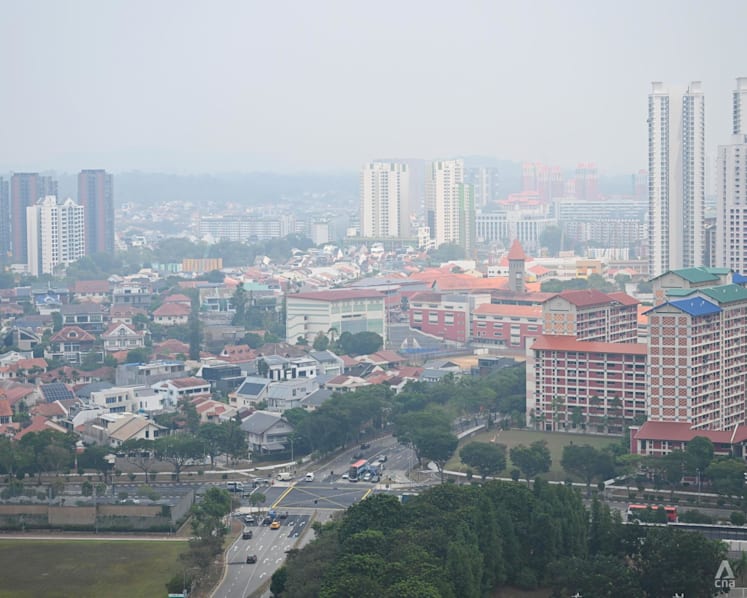
A view from Bishan Ridges during the afternoon of Sep 4, 2026. (Photo: CNA/Marcus Mark Ramos)

This audio is generated by an AI tool.


SINGAPORE: The National Environment Agency (NEA) will start providing daily haze advisories from Friday (Sep 4) evening after the 24-hour Pollutant Standards Index (PSI) entered the unhealthy range for Singapore's central region.
It crossed into the unhealthy band of 101 to 200 at 7am, marking the first time the PSI has breached the level since Oct 8, 2023.
In a joint media release issued on behalf of agencies in the Haze Task Force (HTF), NEA said those in the taskforce have implemented their respective action plans and advisories to protect public health and well-being.
In its daily haze advisories, NEA will include the 24-hour PSI forecast, which can be used by the public to plan their activities and events for the next 24 hours.





A 24-hour PSI reading is considered "very unhealthy" when it is within the 201-300 range, and "hazardous" when it goes over 300.
"The health impact of the haze is dependent on each individual’s health status, the PSI level, and the duration and intensity of outdoor activity. Reducing outdoor activities and physical exertion can help limit the ill effects from haze exposure," said NEA, adding that the public is advised to drink plenty of water to stay hydrated.
"Those with chronic heart and lung conditions should ensure that medications are on hand and readily accessible. Vulnerable persons, especially the elderly, pregnant women, children, and those with chronic heart and lung conditions, who develop symptoms or feel unwell, should seek medical attention promptly."
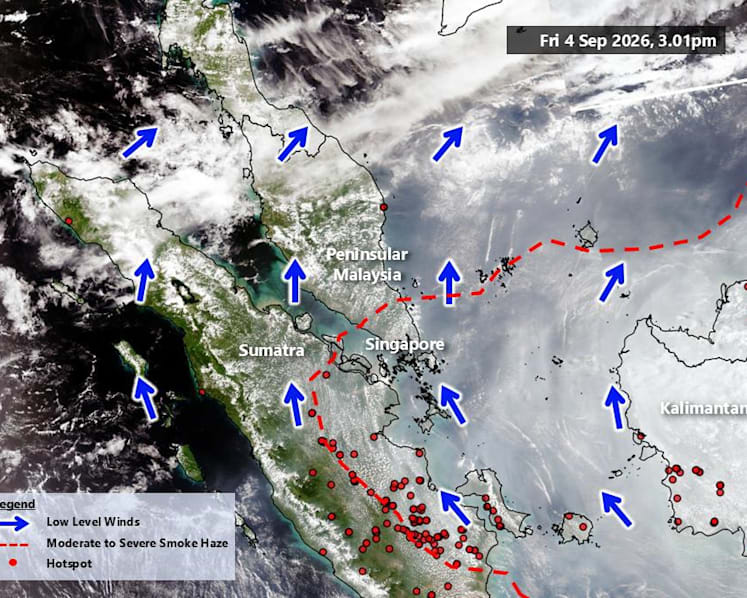
In its daily advisory issued on Friday evening, NEA said that the 1-hr PM2.5 concentration readings in Singapore were within the normal to elevated range, while the 24-hr PSI was is in the moderate to unhealthy range.
The weather over Singapore on Friday was fair and occasionally windy, while the surrounding region was mostly dry, NEA said.
"Smoke plumes from fires in the southern and central parts of Sumatra and various parts of Kalimantan were observed to drift towards Singapore."
As dry conditions are expected in the coming days, Singapore may continue to be affected by transboundary haze under the prevailing southeasterly or southerly winds if the fires persist, said NEA.
"The 24-hr PSI for Singapore is forecast to be in the higher end of the moderate to the middle of the unhealthy range."
N95 masks are not required when there is short exposure, such as commuting from home to school or work, or in an indoor environment, said NEA.
It added that in general, healthy individuals who have to be outdoors for several hours may wear an N95 mask to reduce exposure when the forecasted air quality is in the hazardous range.
Vulnerable populations should avoid or minimise outdoor activity when the forecasted air quality is very unhealthy. If they have to be outdoors for several hours, they can reduce exposure by wearing an N95 mask.
The elderly, pregnant women and those with severe lung or heart conditions who have difficulty breathing at rest or on exertion should seek medical advice on whether they should use the N95 mask. They can also access the Ministry of Health (MOH)'s website for more information.
In a Facebook post, Minister for Sustainability and the Environment Grace Fu said that while most essential activities can continue, members of the public should look at the PM2.5 readings to plan activities for the next hour and the 24-hour PSI to plan activities for the next day.
"Keep yourself and your family safe. N95 masks are not required for short exposure and you should only buy them when needed."
NEA added that MOH has worked with healthcare institutions and long-term care providers - including public hospitals, polyclinics and nursing homes - to implement haze preparedness measures.
Such measures include using air purifiers and fans, as well as lowering ambient temperature by using portable air coolers where appropriate.
"Our public healthcare institutions are also monitoring patients closely for possible health effects of the haze and will carry out appropriate medical intervention where necessary," said NEA.
Members of the public may access current air quality readings and advisories via NEA's website, the haze microsite and the myENV application.
SAFEGUARDS FOR SCHOOL CHILDREN
For preschools, the Early Childhood Development Agency (ECDA) has advised them to monitor air quality levels and comply with the corresponding health advisories.
Preschools will minimise prolonged outdoor activities and strenuous indoor physical activities for children when the air quality is in the unhealthy range. Those with underlying chronic heart and lung conditions will be exempted from such activities.
NEA said that all preschools are equipped with air purifiers to safeguard the general well-being of the children, and that they have at least one enclosed room with an air purifier turned on to temporatily accommodate children who may feel unwell or develop respiratory problems due to the haze.
It added that preschools are required to ensure that children with asthma, heart or respiratory problems have their prescribed medication with them, and to closely monitor the health of all the children. Should a child exhibit respiratory problems or feel unwell, parents will be alerted and advised to seek medical attention for their child.
Similarly, all classrooms of primary and secondary schools, junior colleges, the Millennia Institute, Ministry of Education (MOE) kindergartens and special education schools have been equipped with air purifiers to protect students' well-being during a haze situation.
Teachers will monitor students who are unwell or have pre-existing lung or heart conditions, and parents should also ensure their children have their medication on hand.
NEA said that schools and MOE have plans to ensure the well-being of students and staff during a haze situation, and the schools will be ready to respond to take appropriate haze management measures based on NEA's readings.
Institutes of higher learning will also monitor the haze situation and adopt risk-mitigating measures as per MOH's health advisories.
Schools have made arrangements for all candidates to take their examination papers in enclosed spaces with air purifiers should the air quality enter the unhealthy range or get worse.
WORKPLACES, SAF TRAINING
Employers are advised to follow the Ministry of Manpower's (MOM) haze guidelines and tripartite advisories, and take necessary measures to prepare their workers to mitigate the impact of haze effects.
For instance, they should reduce the duration of prolonged or strenuous work for healthy employees and minimise prolonged or strenuous outdoor work for vulnerable workers, especially the elderly and pregnant women.
They should also avoid prolonged or strenuous outdoor work for workers with chronic heart and lung conditions, and provide suitable protective equipment.
Motorists are also advised to switch on headlights when visibility is low and drive with care.
The Singapore Armed Forces have also calibrated the level and intensity of training and outdoor activities, as well as taken precautionary measures based on the 24-hour PSI level and 1-hour PM2.5 concentration levels to safeguard the health of all service personnel.
Those participating or organising sporting activities are also advised to take the necessary precautions such as monitoring air quality and following health advisories.
The inter-agency haze task force said it will continue to monitor the situation closely to minimise the impact of haze on the public, and the agencies will provide further advisories should the haze situation worsen.
The task force comprises 28 public agencies, including MOH, MOE and MOM.
Chaired by NEA, it develops and rolls out plans to minimise and manage the impact of haze here, with agencies adopting tiered responses based on air quality readings and forecasts.
The task force convenes yearly before the start of the dry season in June. It has met twice so far this year - once at the end of January, following peatland and vegetation fires in east Johor, and again in April.