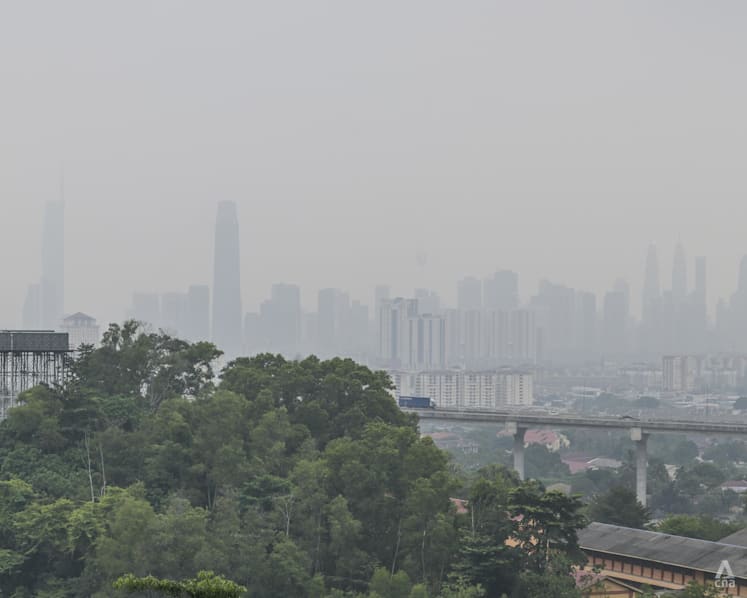
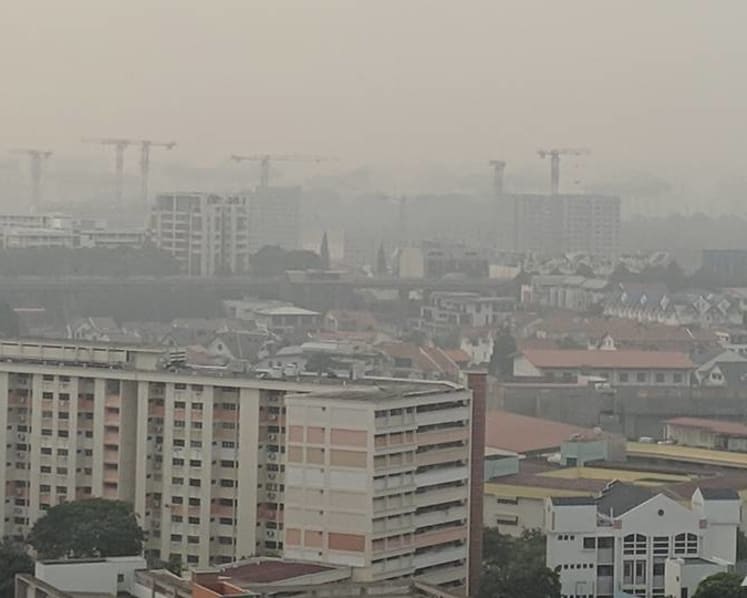
Singapore air quality enters unhealthy range in three regions; NEA says haze could persist
The 24-hour PSI in the central region crossed the unhealthy threshold of 101 at 7am, before steadily rising throughout the day.
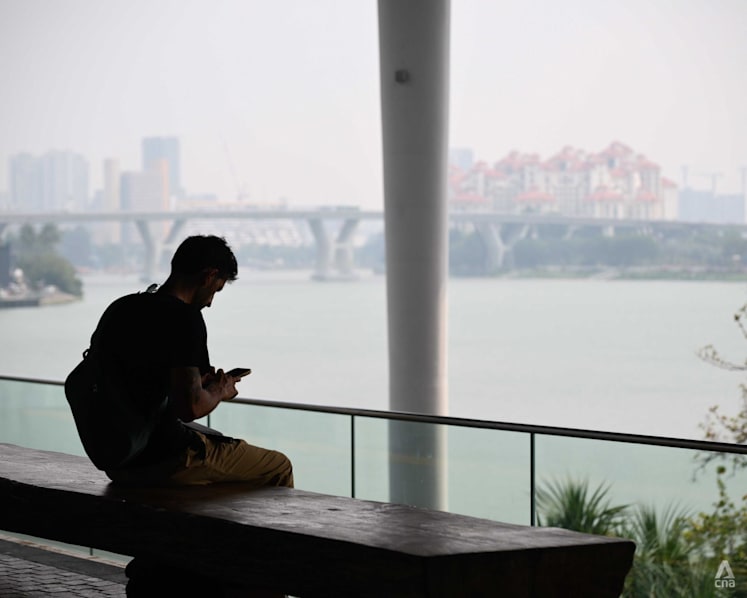
A man is silhouetted against Marina Bay and condominiums in Tanjong Rhu shrouded by haze, on Sep 4, 2026. (Photo: CNA/Wallace Woon)

This audio is generated by an AI tool.
SINGAPORE: Air quality in parts of Singapore entered the unhealthy range on Friday (Sep 4), with the 24-hour Pollutant Standards Index (PSI) rising to 123 in the central region by 10pm, according to the National Environment Agency (NEA).
The 24-hour PSI in the central region crossed the unhealthy threshold of 101 at 7am, before steadily rising throughout the day.
At 9pm, the air quality in the eastern region also crossed into the unhealthy range. The reading rose to 104 at 10pm.
The western region crossed into the unhealthy range at midnight on Saturday, with the PSI at 102.





The other regions remained in the moderate range at midnight, with the PSI at 87 in both the north and south.
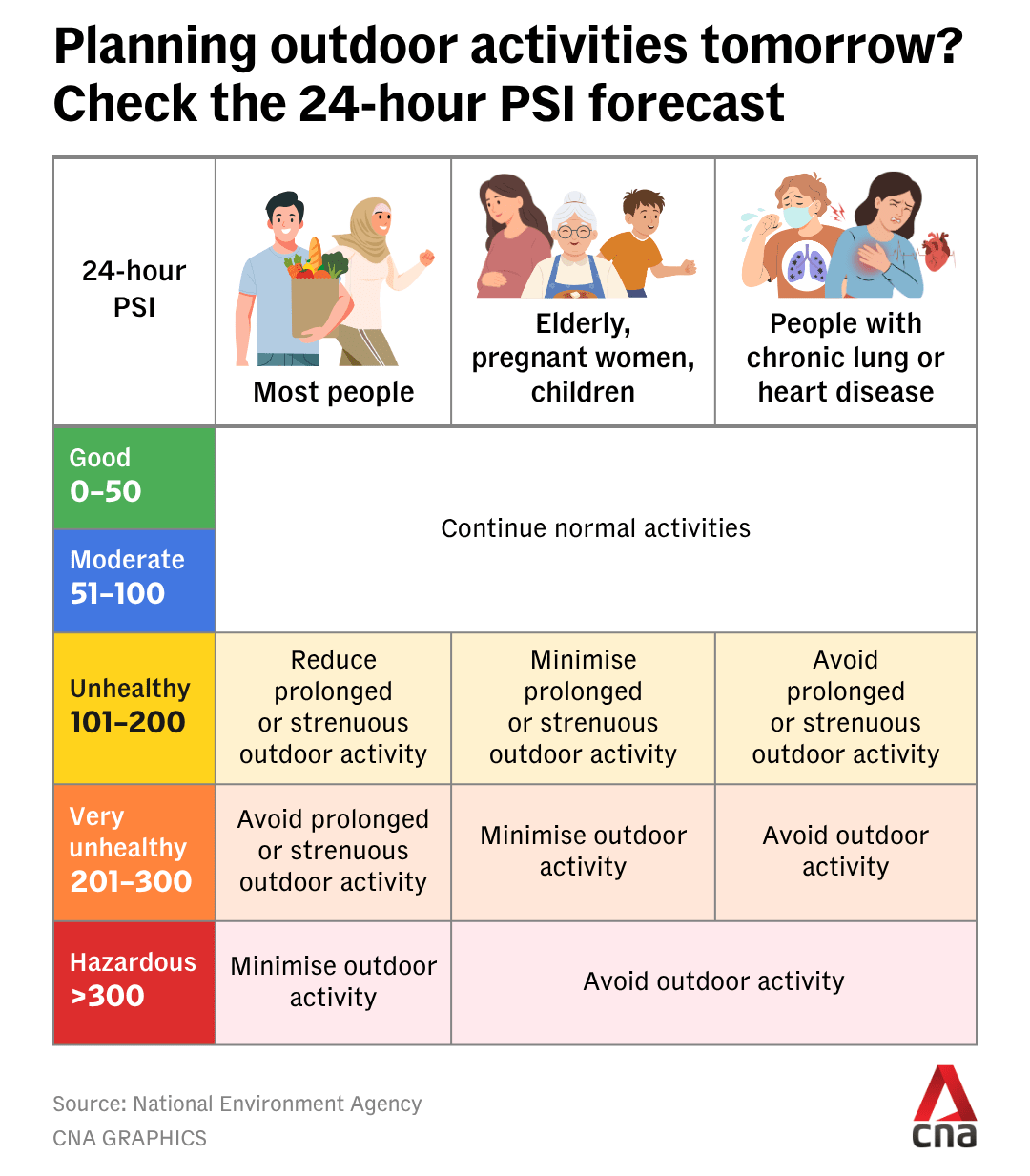
The unhealthy band runs from 101 to 200.
Following the rise in the 24-hour PSI, NEA said it will issue daily haze advisories, including a 24-hour PSI forecast, to help the public plan activities and events for the following day.
In the first daily advisory on Friday evening, NEA said Singapore could continue to be affected by transboundary haze, with the 24-hour PSI forecast to be at the higher end of the moderate to the middle of the unhealthy range.
"The surrounding region was mostly dry today. Smoke plumes from fires in the southern and central parts of Sumatra and various parts of Kalimantan were observed to drift towards Singapore," NEA said.
"As dry conditions are forecast for the coming days, Singapore may continue to be affected by transboundary haze under the prevailing southeasterly or southerly winds if the fires persist."
The 24-hour PSI is Singapore's indicator of daily air quality and forms the basis of NEA's daily health advisories. It is calculated using six air pollutants - PM2.5, PM10, ozone, sulphur dioxide, nitrogen dioxide and carbon monoxide.
The 1-hour PM2.5 reading, on the other hand, is the hourly average of the PM2.5 pollutant levels. PM2.5 is fine particulate matter with a diameter of 2.5 micrometres or shorter, and is the dominant pollutant during haze that causes harm to health.
While the 24-hour PSI is an average of the past 24 hours, the one-hour PM2.5 reading reflects the air quality at a single point in time.
LATEST WEATHER AND HAZE SITUATION
Many air quality stations in Borneo were reporting unhealthy to hazardous levels, NEA said in its advisory, while some stations in Peninsular Malaysia were reporting unhealthy levels.
"The full extent of the hotspot situation could not be determined due to obscuration by thick smoke haze," the agency said.
In the coming days, dry conditions are expected to prevail over many parts of the southern ASEAN region, NEA said.
"The hotspot and haze situation over the region is expected to remain escalated in areas facing prolonged dry conditions, with a continued risk of severe transboundary haze occurrence," it added.
At the start of August, the ASEAN Specialised Meteorological Centre raised its alert to Level 2 for the southern ASEAN region – the second-highest level – amid increasing hotspot activity and the risk of transboundary haze.
The alert indicates escalating hotspot activity, with moderate to dense smoke haze observed over two or more consecutive days.
The 28 public agencies that make up the government's inter-agency haze task force are ready to roll out their respective action plans if air quality deteriorates into the unhealthy range, the authorities said previously.
Chaired by NEA, the task force develops and rolls out plans to minimise and manage the impact of haze here, with agencies able to adopt tiered responses based on air quality readings and forecasts.
The task force convenes yearly before the start of the dry season in June to update its plans. It has met twice so far this year – once at the end of January, following peatland and vegetation fires in east Johor, and again in April.
Members of the public may access updates, including current air quality readings and health advisories, via NEA's website, the haze microsite, the myENV application and the agency's social media channels.