







PM2.5 readings 'high' in the west; air quality across most of Singapore remains in unhealthy range
The 1-hour PM2.5 readings in the west jumped into the high band as of 10pm. Earlier, the central region was also in the high zone, but dipped back into the elevated band at 10pm.
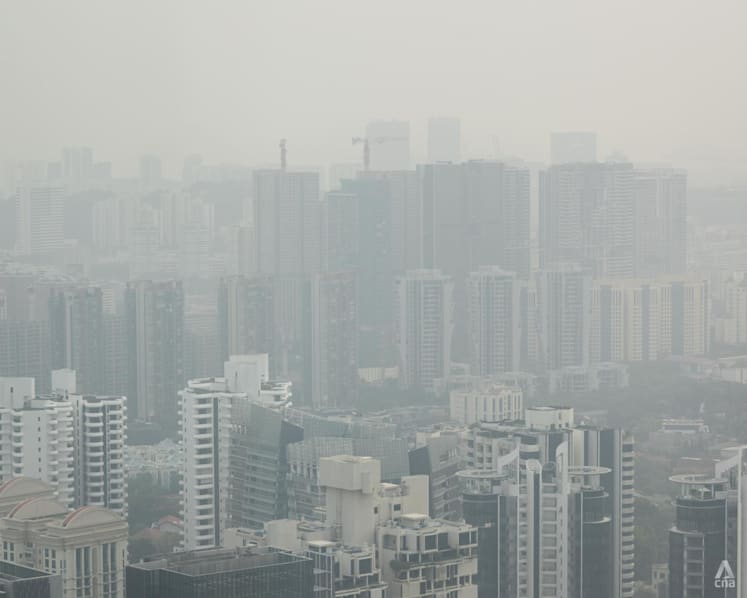
A view of the haze seen from Orchard Road on Oct 8, 2026. (Photo: CNA/Ili Mansor)

This audio is generated by an AI tool.
SINGAPORE: Air quality across most regions of Singapore remained in the unhealthy range on Thursday (Oct 8), with the 24-hour Pollutant Standards Index (PSI) hitting a high of 160 in the west at 10am.
The north region dropped into the moderate range at 6pm, with the remaining regions still in the unhealthy range as of 10pm.
The 24-hour PSI readings entered the unhealthy range across Singapore at noon on Wednesday and remained there overnight into Thursday afternoon.
The 1-hour PM2.5 readings in the west jumped into the high band as of 10pm. Earlier, the central region was also in the high zone, but dipped back into the elevated band at 10pm. The remaining regions were in the elevated band.





The 24-hour PSI readings entered the unhealthy range across Singapore at noon on Wednesday and remained there overnight into Thursday afternoon.
On Wednesday, the 1-hour PM2.5 reading in the west rose to 152 at 4pm, entering the "high" band for the first time this haze season, before falling back into the elevated band an hour later.
In its latest update on Thursday morning, the National Environment Agency (NEA) said moderate transboundary smoke haze was covering parts of Singapore, Peninsular Malaysia, Kalimantan, Sarawak and Sumatra's southern and central parts.
Moderate to dense smoke plumes were also observed from hotspot clusters detected in large parts of Kalimantan, as well as central and southern areas in Sumatra.
While there were scattered hotspots detected in Kalimantan and Sumatra, only a few were observed elsewhere in southern ASEAN, said NEA.
However, the full extent of the situation could not be determined because of thick smoke haze and cloud cover, the agency said.
Dry conditions are expected to continue over most of southern ASEAN, except over Borneo's northern areas, as well as parts of Sumatra and Peninsular Malaysia where showers are forecast.
"The hotspot and smoke haze situation may improve in areas experiencing showers but also continue to stay elevated in areas experiencing prolonged periods of dry weather, with a continued risk of transboundary haze occurrence," said NEA.
"On the other hand, wet weather is expected to persist over the northern ASEAN region, which helps to keep the hotspot and smoke haze situation subdued."
On Thursday evening, NEA said the 24-hour PSI for Singapore was forecast to be in the high moderate to mid unhealthy range.
In its advisory, NEA said that dry conditions are expected to continue over the southern parts of Sumatra, and parts of Kalimantan, and smoke haze may continue to drift towards Singapore.
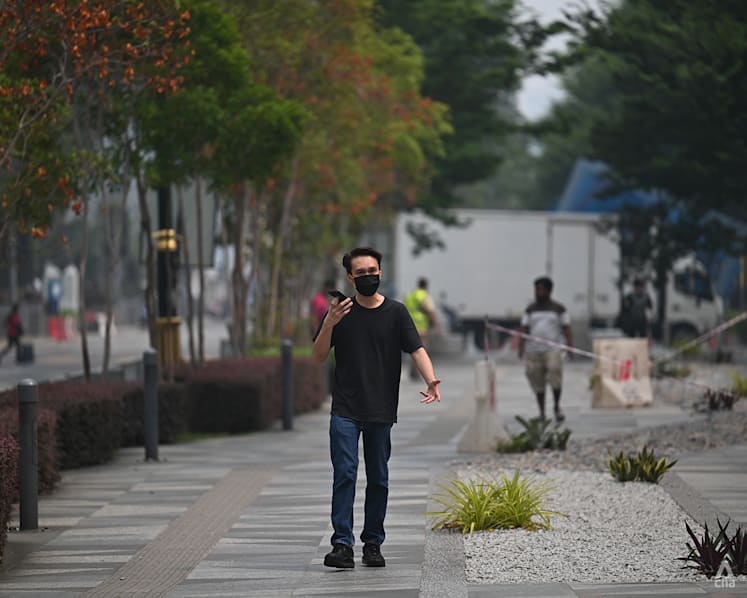
When planning outdoor activities for the next 24 hours, the public is advised to use the 24-hour PSI forecast and health advisories.
When 1-hour PM2.5 levels are elevated, healthy people are advised to reduce strenuous outdoor activity for the next hour, while the elderly, pregnant women, children and people with chronic heart or lung conditions should avoid such activity.
The 24-hour PSI is Singapore's indicator of daily air quality and forms the basis of NEA's daily health advisories. It is calculated using six air pollutants - PM2.5, PM10, ozone, sulphur dioxide, nitrogen dioxide and carbon monoxide - and reflects the average air quality of the past 24 hours.
The 1-hour PM2.5 reading, on the other hand, is the hourly average of the PM2.5 pollutant levels. PM2.5 is fine particulate matter with a diameter of 2.5 micrometres or shorter, and is the dominant pollutant during haze that causes harm to health.
A 24-hour PSI reading is considered "unhealthy" when it is in the 101 to 200 range, "very unhealthy" when it is within the 201-300 range and "hazardous" when it goes over 300.
The hourly PM2.5 reading is classified in four bands: normal, elevated, high and very high. It is considered elevated when it ranges from 56 to 150. The "high" band ranges from 151 to 250, and readings above that are classified as "very high".




