Revamping Singapore’s heartlands: How grants are helping neighbourhood shops find new life
Enhanced government support is helping retailers modernise their look and engage residents, with some reporting a 20 per cent jump in revenue.
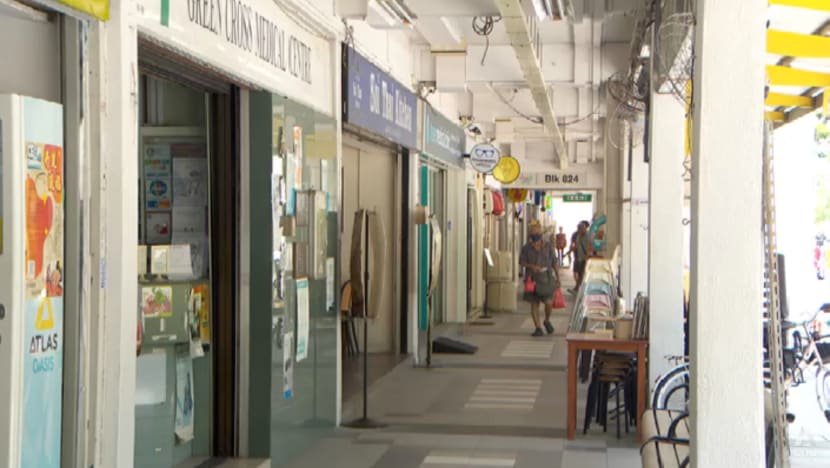
Hurdles such as manpower constraints and the financial loss from temporary shop closures continue to keep some business owners hesitant over modernising.

This audio is generated by an AI tool.




SINGAPORE: More than 40 heartland retailers have tapped into Enterprise Singapore grants in the past year to reinvent their businesses through store makeovers and community events.
While some have reported a 20 per cent revenue boost, others remain hesitant, held back by the costs of temporary closures and manpower constraints.
For those who have taken the leap, however, the goal is simple: Stand out in an increasingly crowded market.
BIKE SHOP PUTS ITSELF ON THE MAP
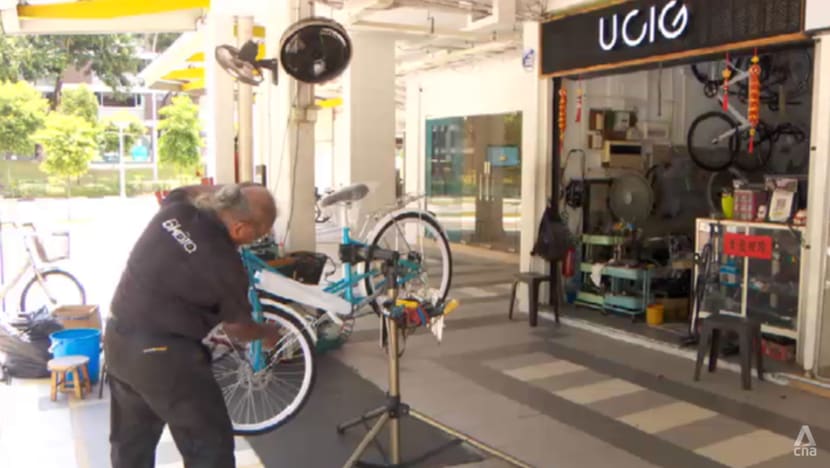
After taking over its Tampines premises in 2022, bicycle shop UCIG Enterprise quickly realised it needed to do more to put itself on the neighbourhood map.
"In Tampines, quite a number of people (don’t) know that there is a bicycle shop around this area," said director Yap Siew Ha.
To solve this, the shop tapped into the Heartland Enterprise Placemaking Grant to move its bike fleet onto a nearby hard-court for a roadshow.
During the June school holidays last year, the event drew hundreds of residents with demonstrations of BMX bikes and "fixies", or fixed-gear bicycles - an effort that Mdm Yap says paid off.
"Our sales, revenue, there was an increase thereafter," she said, adding the distribution of CDC (Community Development Council) vouchers around the same time gave the business an additional fillip.





MODERNISING THE CAFE EXPERIENCE
In Serangoon, the Enhanced Visual Merchandising Programme helped the owners of The Meeting Pint breathe new life into their cafe.
The grant helps heartland shops refresh their layout and build better visual strategies, offering up to S$60,000 (US$46,800) for larger projects.
Mr Timothy Luk, a first-time entrepreneur and the cafe’s co-owner, said that they rebranded from a previous concept because the old minimalist style was not working anymore.
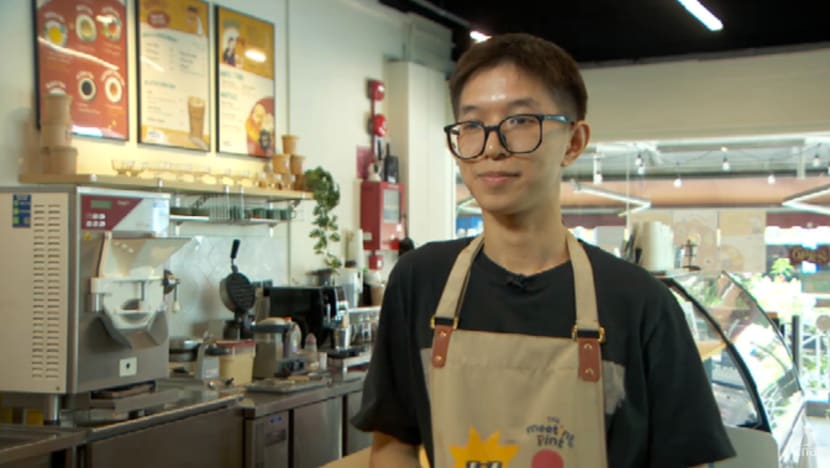
"We wanted to make the interior and the brand just more fun, more modern, more family-friendly, and we also wanted to make it more appealing on social media," Mr Luk said.
By using the grant to pivot to a "maximalist" trend and increasing seating capacity from 30 to 45 customers, Mr Luk said the cafe saw a significant shift.
"With the new rebranding, there's a lot more interest in the store. A lot more people are taking photos and sharing this on social media," he added.
“Our revenue increased by 15 to 20 per cent, which is honestly quite a big step up for a heartland business.”
HURDLES TO UPGRADING
Despite the success stories, HECS – the resource arm of Federation of Merchants’ Associations, Singapore – noted that many owners are still hesitant to make improvements.
"One of the main challenges is due to the manpower, resource issues," said Mr Lim Wei Sen, HECS’ centre director.
He added that many owners are so focused on the day-to-day running of their shops that they do not have the bandwidth to plan an upgrade.
"The shop closure for that period of time will mean the loss in sales revenue to them," Mr Lim noted.
To help heartland shop owners overcome this, business advisors from HECS engage with them to explain the support available.
The government also recently enhanced funding. Since Apr 1, the grants now cover 70 per cent of project costs, up from the previous 50 per cent.
Mr Lim said the response to this boost is already showing.
"We have some cases whereby they need time to consider … this will definitely help them with their decision to move forward,” he added.
Data from the HECS shows participating shops are seeing an up to 15 per cent surge in footfall and up to 20 per cent revenue growth, he said.


PRESERVING HEARTLAND HERITAGE
Such grants not only serve to boost sales – they are also about keeping the heartland's unique identity alive, said Mr Lim.
He added that without them, local shops might eventually be replaced by generic chains.
"What we also hope not to see is that the heartlands trade mix in the near future will consist of chain outlets, chain stores, and then it looks like … an open-air shopping mall," he said.
The goal, observers say, is to ensure that heritage businesses with good products can continue to thrive and bring people together by building community ties.
Mr Luk from The Meeting Pint added: "Having local brands, having different kinds of stores in every neighbourhood, it’s kind of like the spice we need in life to just make things more interesting."