Borrowing from a licensed moneylender? New cooling-off period starts Sep 15
The cooling-off period will apply to all unsecured loans from licensed moneylenders, except business loans, and will last three business days, excluding Saturdays, Sundays and public holidays.
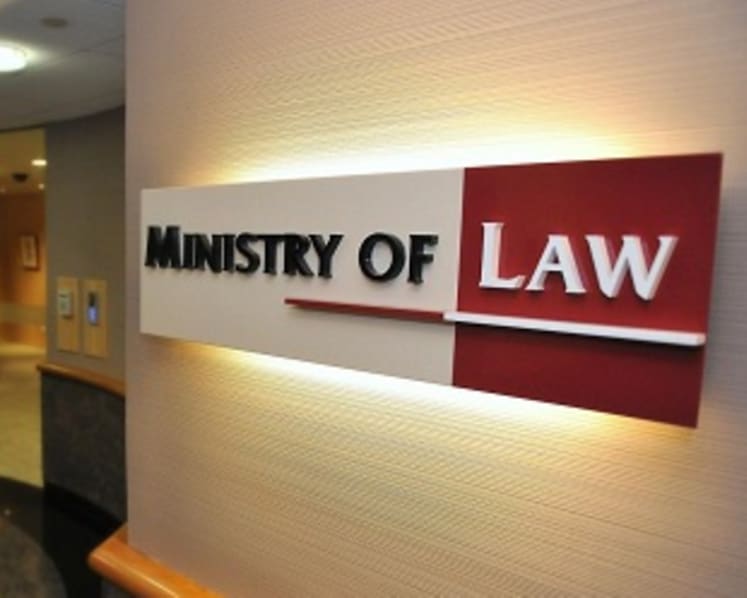
Singapore's Ministry of Law. (Photo: Ministry of Law website)

This audio is generated by an AI tool.
SINGAPORE: Borrowers taking unsecured loans from licensed moneylenders will have a mandatory three-business-day cooling-off period from Sep 15, 2026, allowing them to cancel the loan at a reduced cost if they reconsider their need for credit.
The Ministry of Law (MinLaw) announced the move on Monday (Aug 31), saying that the cooling-off period will apply to all unsecured loans from licensed moneylenders, except business loans. The period will last three business days, excluding Saturdays, Sundays and public holidays in Singapore.
Under the new framework, borrowers who cancel a loan during the cooling-off period will no longer have to pay interest, while licensed moneylenders will only be allowed to retain part of the loan approval fee to cover overheads and due diligence costs.
For unsecured loans of up to S$5,000 (around US$4,000), moneylenders can keep up to S$50, but not more than the loan approval fee charged if a borrower cancels the loan during the cooling-off period.





For loans above S$5,000, they can keep up to 3.5 per cent of the principal amount of the loan, but not more than the loan approval fee charged.
Currently, licensed moneylenders are allowed to keep the full loan approval fee and any accrued interest when a borrower cancels a loan.
Borrowers will need to repay only the remaining principal amount of the loan disbursed to them, after deducting the loan approval fee upfront, as well as the portion of the approval fee the moneylender is allowed to retain.
"There will not be any interest charged, and the total amount to be repaid by the borrower cannot exceed the principal amount of the loan," MinLaw said.
Licensed moneylenders are moneylenders licensed under the Moneylenders Act.
They are not allowed to solicit loans through text messages, phone calls or social media platforms.
They must also meet the borrower in person at the approved place of business to conduct physical face-to-face verification of the borrower's identity before granting any loan.
In an example of a possible scenario under the new framework, a borrower who takes out a S$1,000 loan would receive S$900 after a 10 per cent loan approval fee of S$100 is deducted upfront.
If the borrower cancels the loan during the cooling-off period, he would have to repay up to S$950, comprising the S$900 disbursed and S$50 that the moneylender is allowed to retain from the loan approval fee.
The ministry said the framework was developed in consultation with the Credit Association of Singapore, which represents licensed moneylenders.
It aims to give borrowers time to reconsider credit decisions that may have been made on impulse, while ensuring that moneylenders are compensated for the work done in granting a loan.
MinLaw noted that licensed moneylenders will need time to adjust their processes and systems, and it will work closely with the relevant parties to ensure that the new framework rolls out smoothly.
The Registry of Moneylenders, which is under the ministry, updated its professional service handbook in April to encourage licensed moneylenders to adopt borrower-friendly practices, such as offering incentives for timely repayments, providing digital tools to help borrowers manage their loans, and assisting distressed borrowers through loan restructuring or referrals to social service agencies.
MinLaw said that it would continue to balance borrower protection with maintaining access to credit from licensed sources.
Licensed moneylenders are listed on the ministry's Registry of Moneylenders found on its website.