







MAS commits S$220 million to accelerate innovation in the fintech sector: Gan Kim Yong
The fourth iteration of the scheme will be implemented through six tracks spanning institutional innovation, AI adoption, infrastructure and platforms and talent development.
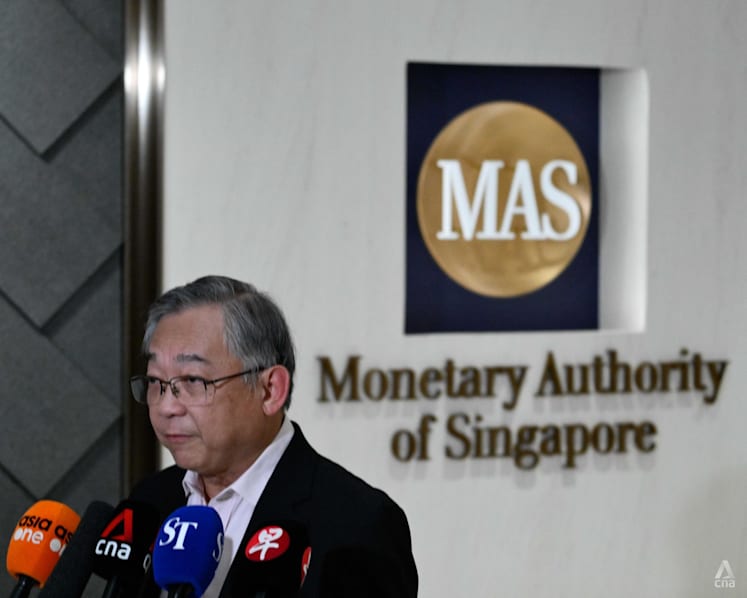
Deputy Prime Minister and Monetary Authority of Singapore (MAS) chairman Gan Kim Yong speaks to the media, Aug 31, 2026. (Photo: CNA/Wallace Woon)

This audio is generated by an AI tool.


SINGAPORE: The Monetary Authority of Singapore (MAS) will commit S$220 million (US$173 million) to accelerate innovation in the fintech sector, said Deputy Prime Minister Gan Kim Yong on Monday (Aug 31).
To be spread over three years, the investment is part of a renewed fourth iteration of the Financial Sector Technology and Innovation (FSTI) scheme aimed at strengthening Singapore's position as a vibrant and competitive fintech hub.
To this end, the scheme aims to develop technology infrastructure to position the financial sector to adopt new technology solutions and support talent development and attraction for the industry, MAS said in a press release.
MAS said the scheme will help build a "pipeline of young talent for Singapore's fintech ecosystem" by co-funding internship stipends, aiming to support at least 1,000 fintech internship opportunities over the next three years. Singaporean citizens can qualify for this





MAS also seeks to anchor and scale innovation activities in Singapore and accelerate financial technologies, with a focus on frontier technologies, the central bank added.
“Taken together, these efforts will help our financial institutions, fintech firms, and workers innovate, scale, and build the capabilities to seize the emerging opportunities,” said Mr Gan, who is also the Minister for Trade and Industry and the MAS chairman.
He added that the government has been consulting the financial industry and fintech companies to get feedback to identify gaps and needs, and will continue to engage the industry to refine and improve the scheme.
The first version of the scheme was started in 2015 by MAS. Since then, more than 350 fintech projects have been supported under the programme.
Mr Gan said the scheme has helped to build a “very strong ecosystem” for fintech and the financial industries.
He noted that Singapore has more than 1,800 fintech companies, many of which have already ventured into the region as well as served the world market.
The industry also employs some 10,000 people, he said.
“And last year, in 2025, we have already seen a total investment of close to S$3 billion in fintech alone. So I think the momentum will continue, and we hope that FSTI 4.0 will continue to provide that boost to the fintech industry,” he said.
MANPOWER SUPPORT
The latest iteration of the scheme, FSTI 4.0, will be implemented through six tracks spanning institutional innovation, AI adoption, infrastructure and platforms and talent development, MAS said.
Apart from co-funding internship stipends over the next three years, MAS announced a new FinTech Internship Portal, fintechinternships.sg, which is managed by the Singapore FinTech Association (SFA).
The portal will connect fintech firms with students from Institutes of Higher Learning for internships across business, technology and other roles.
Each internship, which can be either full-time or part-time, must be at least three months in duration and have defined learning outcomes, MAS said.
For each qualifying hire, MAS will support 80 per cent of the monthly internship stipend, capped at S$1,000 per month of internship completed, for up to 12 months.
Each participating firm may be funded for up to 10 interns per calendar year, according to MAS' website.
Mr Gan said building a pipeline of talent is “particularly critical” in the fintech industry because it is emerging.
“Not only is it a new industry, it is also evolving very rapidly with the emergence of AI and frontier technologies," he said.
"You can imagine that the talent that we need, the capability we need to build, is going to be very critical for the growth of this sector, and that's why we want to invest in building our people, in giving them the skills and knowledge so that they are able, well-positioned to seize the opportunities where they emerge,” he said.
The fintech sector has been facing a talent crunch and high attrition rates.
SFA's 2025 talent report said the industry is facing “significant shortages” of talent in AI, data science, cybersecurity and cloud architecture. Some issues surfaced by firms include a protracted time to hire, high compensation expectations, as well as high turnover due to insufficient career development or compensation.

FRONTIER TECH
Apart from manpower issues, other tracks in the scheme include the Institution Project Track, which will support Singapore-based financial institutions and fintech firms in developing and deploying innovative solutions.
MAS said it will focus on frontier technologies such as AI, distributed ledger technology and quantum technology.
Projects should demonstrate "significant business impact, technical feasibility, and innovativeness of the solution", MAS said.
The AI Pathfinder track will help accelerate adoption of market-tested AI solutions listed on PathFin.ai and drive sector-wide AI use across financial services, the central bank added.
The infrastructure and platform track supports industry-wide infrastructure and platforms that improve sector efficiency, productivity and innovation.
Meanwhile, the Centre of Excellence track aims to anchor high-value functions of financial institutions and fintech firms in Singapore.
It will bring together specialised talent and expertise, while supporting the growth of emerging technologies such as AI, quantum computing and digital assets.
MAS will provide up to 50 per cent and 25 per cent funding support on manpower expenses for qualifying roles for Singapore citizens and non-citizens, including permanent residents, respectively, for a period of 24 months.
The MAS FinTech Awards track aims to raise Singapore's global profile as a fintech hub through the Singapore FinTech Festival (SFF) FinTech Excellence Awards and the Global FinTech Hackcelerator (GFH).
The competition, organised annually, challenges start-ups from around the world to develop market-ready solutions that address industry problem statements.
As a new enhancement, MAS will introduce the GFH Scale-up Grant to further develop and validate eligible finalists’ solutions after the competition and help them attract private investment, scale their business and strengthen their presence in Singapore.
Eligible finalists may apply for the GFH Scale-up Grant, which will provide follow-on funding of up to S$500,000.
Since the scheme's inception, more than S$3.8 billion of funding has been raised by GFH finalists, and more than 30 Centres of Excellence have been established, said MAS.
BUILDING A FINTECH ECOSYSTEM
In the previous iteration of the scheme, FSTI 3.0, MAS committed S$150 million over three years, between 2023 and 2026.
The scheme similarly comprised tracks that supported Centres of Excellence and introduced new tracks on environmental, social, and governance (ESG) fintech and quantum technology.
It also supported advanced capability development and adoption in areas such as artificial intelligence and data analytics, regulatory technology and industry-wide projects.
The second iteration of FSTI involved a commitment of S$250 million between 2020 and 2023, and broadened digital adoption across the financial sector. It also provided critical support during COVID-19 by helping smaller financial institutions pivot to remote working.
MAS committed S$225 million between 2015 and 2020 through the first iteration of the scheme.
It established the foundational ecosystem to build Singapore's reputation as a leading fintech hub, introduced tracks like Proof-of-Concept and Innovation Labs to kickstart early-stage innovation and laid the groundwork for public-good utilities and infrastructure.
Asked whether the upgraded version of the scheme can help Singapore better compete with other regional financial hubs such as Hong Kong, Mr Gan said the financial industry is not a “zero-sum game”.
"I think as we get better, Hong Kong and other financial centres will also get better. And as they get better, we want to make sure that we get even better. And I think this FSTI 4.0 will help to spur innovation in the local financial sector and fintech sector," he said.
"And hopefully, with this, it will keep Singapore's financial sector and fintech industries continue to be very competitive, and as we do better, many of the innovations, many of the solutions will also benefit the financial industries in this region."
FINTECH INDUSTRY WELCOMES SCHEME
Industry players welcomed the latest iteration of the scheme, saying it shifts the focus from supporting innovation to helping fintech firms commercialise and scale their solutions.
President of the Singapore FinTech Association Holly Fang said FSTI 4.0 builds on the foundation of FSTI 3.0, with greater emphasis on adoption and commercialisation.
While Singapore has built a strong fintech ecosystem over the past decade, the challenge is helping "good solutions" move from development and experimentation into real adoption and scale, she added.
"I think FSTI 4.0 provides that end-to-end view and support across different stages of that journey: from innovation, to adoption, to supporting promising fintechs as they validate and scale their businesses.
"For Singapore to remain competitive and lead as a global fintech hub, we need to be both a place where new solutions are built, and a market where they can be deployed and scaled," she said.
Co-founder and CEO of multi-currency payment platform YouTrip, Caecilia Chu, said the refreshed scheme comes at a pivotal time, given the "relatively muted" venture capital and growth capital landscape for funding startups and companies.
She added that the dedicated AI Pathfinder Track, in particular, coupled with the enhanced grants, will encourage businesses to be bolder in developing new AI products that can benefit Singapore and the wider region.
Mr Kelvin Teo, co-founder and director of digital financing platform Funding Societies, said the latest iteration of the scheme lowers the cost and risk of experimenting with and adopting innovation and AI solutions.
"For smaller firms, that cost can be prohibitive. For larger firms, co-funding removes avoidable friction in getting budget approval internally," he said, adding that FSTI 4.0 also provides continuity for technology projects that usually span multiple phases and outlast a single funding cycle.
On the manpower track, Mr Teo said the focus on internships is well-timed and meaningful for entry-level talent.
However, he said the bigger challenge remains attracting mid-career and senior-level professionals, as fintech firms compete with banks and global technology companies for experienced hires.
"This gap is better addressed by meaningful mid-career grants for locals, and greater certainty on the long-term settlement pathway for experienced foreign talent with families," he added.




