







CNA Explains: What are protected cell companies, and why does Singapore want them for the insurance industry?
The Monetary Authority of Singapore is calling for feedback on a new corporate structure for the insurance sector that could make it cheaper and faster to manage complex risks. Here’s why it matters.

This audio is generated by an AI tool.




SINGAPORE: The Monetary Authority of Singapore (MAS) on Tuesday (Jul 7) launched a public consultation on a new corporate structure for the insurance sector known as the protected cell company (PCC).
The proposal comes as businesses face increasingly complex risks, including climate change, geopolitical tensions and supply chain disruptions.
MAS said companies are looking beyond traditional insurance, seeking greater control and flexibility over how they finance, retain and transfer risks.
It added that the framework would also strengthen Singapore's position as a regional insurance and risk management hub.





Subject to the legislative process, MAS is targeting implementation in 2028.
WHAT IS A PROTECTED CELL COMPANY?
A PCC is a single legal entity that can create multiple "cells", each with its own legally separate assets and liabilities.
This means if one cell suffers losses, creditors generally cannot claim against the assets held in another cell.
Currently, companies that want to segregate their risks often must establish separate legal entities, such as special purpose vehicles. Each new entity takes time and money to set up and administer.
A PCC provides legal segregation within a single company, making the structure simpler and potentially cheaper to operate.
WHY IS MAS PROPOSING THIS NOW?
MAS says businesses are facing risks that are becoming more difficult to predict and insure.
At the Association of Banks in Singapore's annual dinner in June, Deputy Prime Minister Gan Kim Yong said: "Risks today are more complex, more connected, and harder to price. A single disruption can cascade across multiple sectors and geographies."
"Asia remains significantly underinsured,” added Mr Gan, who is also Minister for Trade and Industry.
According to MAS, natural disasters caused about US$65 billion in economic losses across Asia in 2025, with more than 90 per cent of those losses uninsured.

WHO STANDS TO BENEFIT?
The proposal is not aimed at ordinary retail insurance policies. Instead, MAS has identified three main uses:
- Captive insurance
Some large firms create their own insurance companies, known as captive insurers, to cover their own business risks instead of relying entirely on commercial insurers.
The PCC framework would allow smaller companies to participate through "rent-a-captive" arrangements, where they lease a protected cell instead of setting up an entire captive insurer.
Mr Simon Goh, partner and head of law firm Rajah & Tann’s insurance and reinsurance practice, said this could help companies that "may not typically have the means or the resources or the economic justification to set up its own captive insurer".
- Insurance-linked securities
Insurance-linked securities allow insurers to transfer risks to investors through the capital markets.
One example is catastrophe bonds, which transfer the financial risk of major disasters, such as earthquakes or hurricanes, to investors in return for potentially higher returns.
Currently, each transaction usually requires a separate special purpose vehicle.
Under a PCC, multiple transactions could instead be carried out through different cells within the same company, reducing costs and speeding up execution.
- Sovereign risk pools
Countries can also pool disaster risks together.
The Southeast Asia Disaster Risk Insurance Facility (SEADRIF), for example, helps participating nations access financing after natural disasters.
MAS said a PCC would allow each participating country's risk programme to operate in its own cell, lowering setup and administrative costs while making it easier to scale.

INDIRECT BENEFIT FOR CONSUMERS
Consumers are unlikely to see any immediate changes to the insurance products they buy, but experts say there could be indirect benefits if insurers become more willing to underwrite activities exposed to climate change and other hard-to-insure risks.
Associate Professor Goh Puay Guan from the National University of Singapore Business School said segregating risks into protected cells could make insurers more willing to provide such coverage.
"With climate change or natural disasters, the idea is the same; these are events that are highly uncertain, and therefore insurance companies have to find ways of being able to spread the risk across their different portfolio,” he said.
“Being able to isolate this risk under a certain cell structure … then allows for this risk to be contained, and therefore the insurance companies will be more willing to undertake such funding."
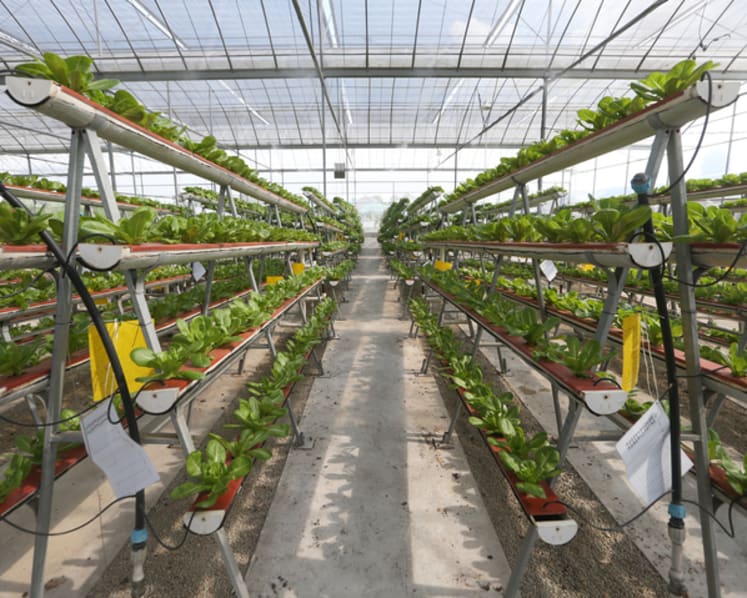
That could encourage investment in industries such as agriculture and food production, which are increasingly exposed to climate-related risks, he added.

WHY IT MATTERS FOR SINGAPORE
Singapore already serves as a regional hub for insurance and reinsurance.
The country is home to more than 380 licensed insurance entities, including 87 captive insurers, according to MAS.
According to Rajah & Tann's Mr Goh, Singapore has seen 33 catastrophe bond issuances since 2018.
He said the PCC framework could allow smaller companies to transfer their risks to captive insurers, which could then tap the capital markets through insurance-linked securities.
That would reduce the cost and time needed to establish specialised insurance structures, making Singapore more competitive in alternative risk transfer, he added.
“There’s been a lot of queries from mainly foreign players hoping to basically set up a vehicle in Singapore in some shape or form,” Mr Goh said.
MAS is accepting feedback on the proposed framework until Aug 7.
Want an issue or topic explained? Email us at digitalnews [at] mediacorp.com.sg. Your question might become a story on our site.




