







Sembawang Shipyard: A final voyage before housing redevelopment
As operations wind down at Seatrium’s Admiralty Yard, CNA speaks to two long-time employees about the site’s rich maritime history and their hopes for the redevelopment.
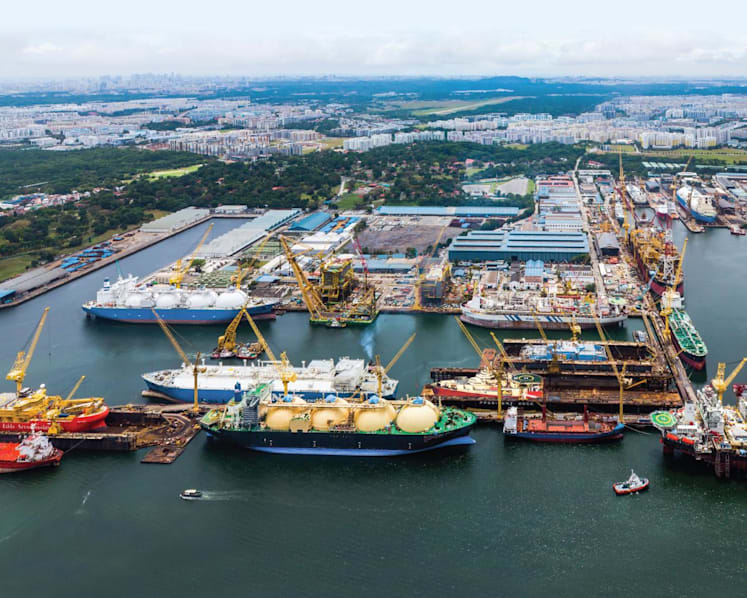
Seatrium Admiralty Yard, formerly known as Sembawang Shipyard. (Photo: Seatrium)

This audio is generated by an AI tool.


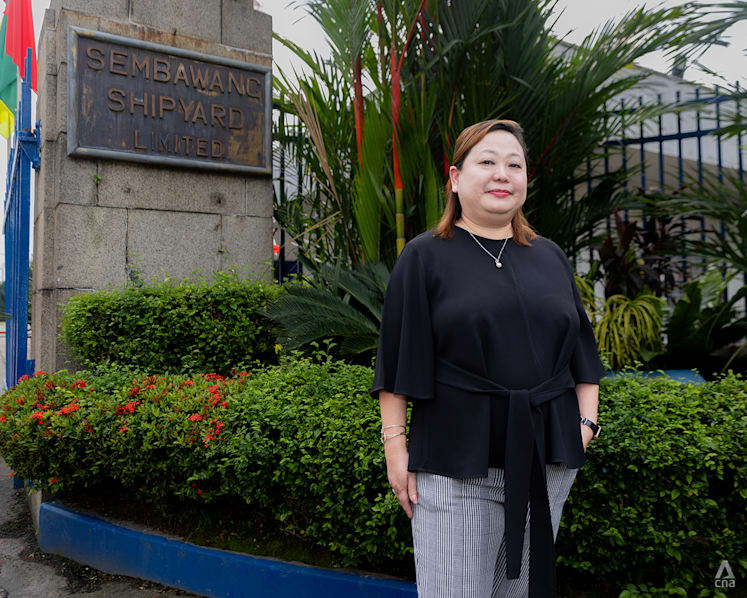
SINGAPORE: About once a week, Ms Wang Huiping makes her way to Admiralty Yard when she has meetings or projects to attend to.
It has been over a decade since the shipyard was renamed. But whenever she takes a taxi there, drivers still ask: "Going to Sembawang Shipyard?"
For many like Ms Wang, 56, who has worked at the shipyard since she was a fresh graduate in 1993, it is a name that is embedded in memory.
The shipyard is still operational under offshore, marine and energy company Seatrium. But it has begun to wind down ahead of 2028, when the land will be returned to the government for redevelopment.





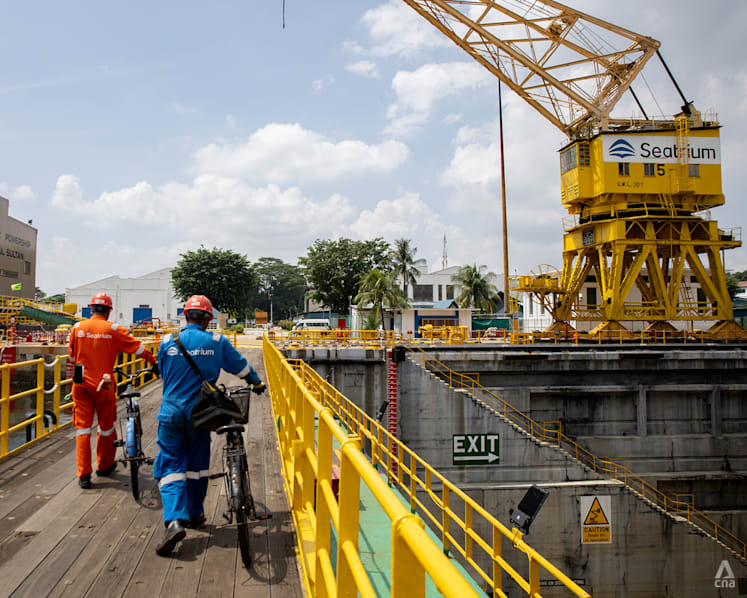
These days, the flurry of workers in coveralls cycling to their posts in the morning, and the grumble of machines that once filled the naval workshops have given way to a slower rhythm.
“Then you look around, it's really a very nostalgic feeling. Not many people, not many ships. It’s like counting the days,” said Ms Wang, Seatrium’s vice-president of marketing for repairs and upgrades.
“So that's why it can also be quite sad, because it used to be full house and full of vibe.”
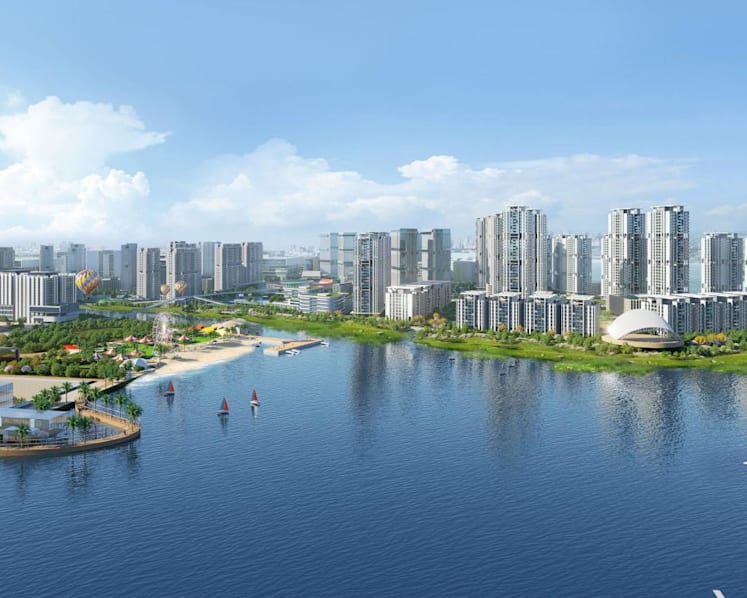
The 86ha site – almost the size of Jurong Lake Gardens – is planned for redevelopment into a mixed-use waterfront precinct, Prime Minister Lawrence Wong said at the 2025 National Day Rally.
The area’s maritime heritage will be preserved, including the King George VI Dock, which was once the world’s largest dry dock. Ideas being considered for the space include community spaces for concerts, sports and performances.
The government is also exploring waterfront homes, dining, shopping and recreation along the coastline.
“When you put it all together, this can become a new vibrant waterfront destination in the north – rich in heritage, yet reimagined for the future,” Mr Wong said at the time.
For the many employees who have spent decades of their lives at the shipyard, the redevelopment plans come with a sense of bittersweetness.
“We just hope that in doing that, some of the things very unique about this location, they can consider preserving,” said Ms Wang.
“And I mean, they cannot preserve us, the people, but (they can preserve) the buildings.”
A RICH HISTORY
Sembawang Shipyard’s roots date back to 1938, when it was built by the British as a naval base to service British warships.
At the time, it was comparable to the best naval bases in the world, boasting the King George VI Dock. The dock spans 4.55 million cubic ft – roughly equivalent to 51 Olympic-sized swimming pools – and could fit the biggest ships at the time.
During World War II, the base was occupied by Japanese forces, who enlisted civilian dockyard workers under harsh conditions, according to historical accounts. In 1945, it reverted to British control.
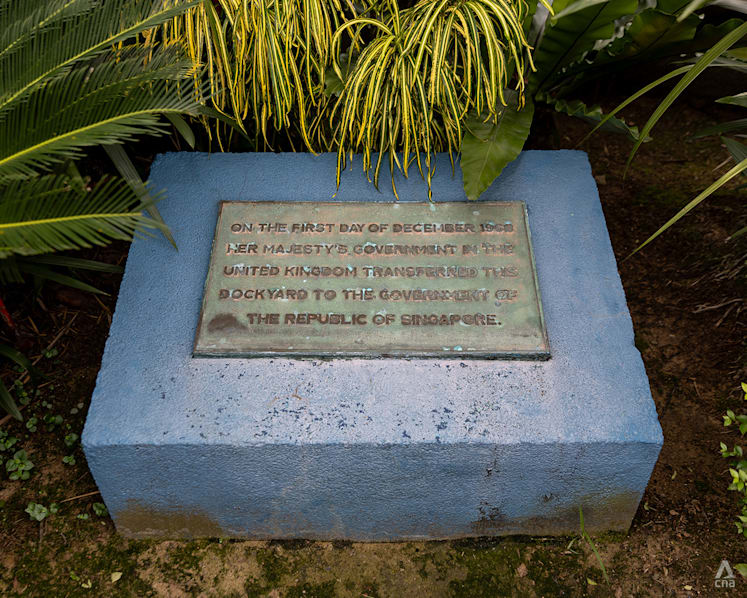
When the British handed over the base to Singapore in 1968, it was for a token sum of S$1.
The naval docks were commercialised and converted into Sembawang Shipyard. In 1971, it was officially declared open by then-President Benjamin Sheares.
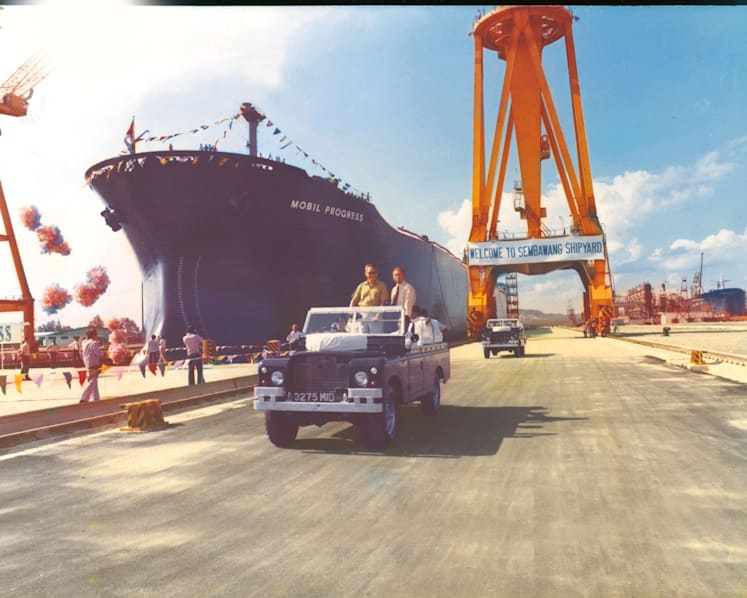
In its early days, the shipyard employed "thousands of people", many of whom made the surrounding Sembawang area home.
“So many people have done so much work (and) contributed. Last time they even tell me, ‘My father used to work here, my brother used to work here.’ Sometimes there are also couples who work together,” said Ms Wang, who also met her husband at work.
Employees were often willing to go the extra mile because they felt a strong sense of belonging to the place, she added.
“There’s a lot of kampung spirit. Long ago, we even had an in-house barber shop for the workers to cut their hair,” she said.
“At that time, we probably called it the Sembawang spirit … of course we have evolved over the years, and now we are part of a bigger Seatrium family,” she added, referring to Sembcorp Marine’s rebrand to Seatrium in 2023, following a merger with Keppel Offshore & Marine.
For more than 30 years, Ms Wang saw the shipyard grow and she will also be here to see its eventual end.
In its early years, the shipyard carried out standard repairs on simple tankers, bulk carriers and container ships.
Over time, through upgrades and long-term partnerships, more high-value ships began docking at the yard.
For example, the shipyard focused on retrofitting and converting liquefied natural gas (LNG) carriers into specialised vessels, such as floating storage and regasification units and floating liquefied natural gas vessels. Seatrium also developed its capabilities in cruise ship upgrades, refurbishment and life-extension.
“We always forecast and build our facilities to cater to what we think is coming,” said Ms Wang.
“The ships don't just come by chance. You need to target and build and court that particular customer.”
KEEPING THE LEGACY
With the shipyard calling time, many of her colleagues hope the redeveloped space will retain the memories of the site's rich maritime history.
According to the Urban Redevelopment Authority (URA), the Singapore Institute of Architects and the Singapore Institute of Planners have each developed ideas for what the future Sembawang Shipyard site could look like.
One idea is to turn the King George VI Dock into a sunken public plaza for community sports and recreation.
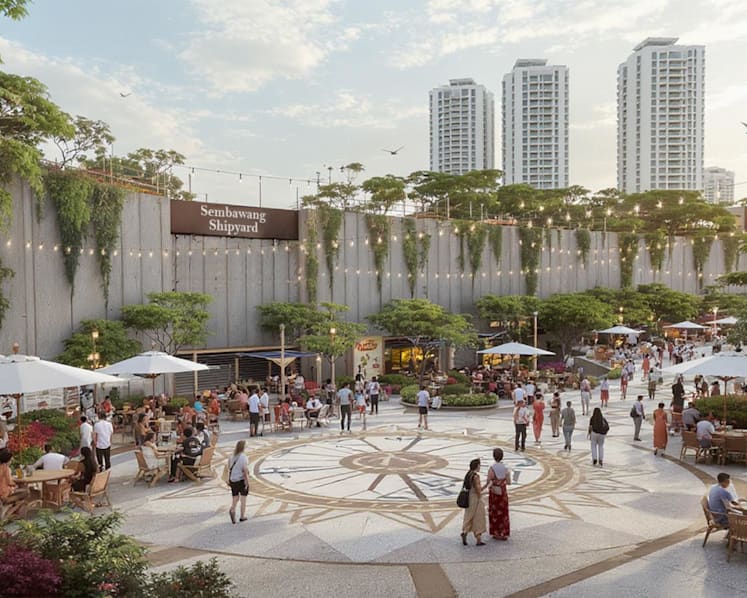
“I hope they don’t convert it into a swimming pool,” said Ms Wang jokingly.
“I hope it's still recognisable as a dock because imagine you develop this place, then if people shift in, they can see a semblance of the history behind this place. Not just Sembawang – the entire Sembawang, Chong Pang area is all part of a big naval base.”
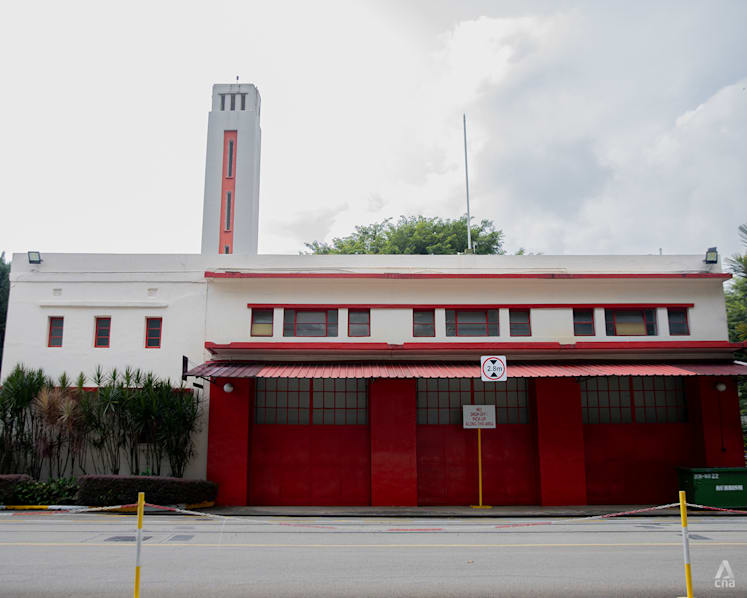
An art-deco modern fire station, which was conserved in 2007, can be transformed into a community and lifestyle hub.
Former naval workshops could be reimagined as spaces for media production, start-ups and artists, alongside a mall with cafes and co-working spaces, URA said.
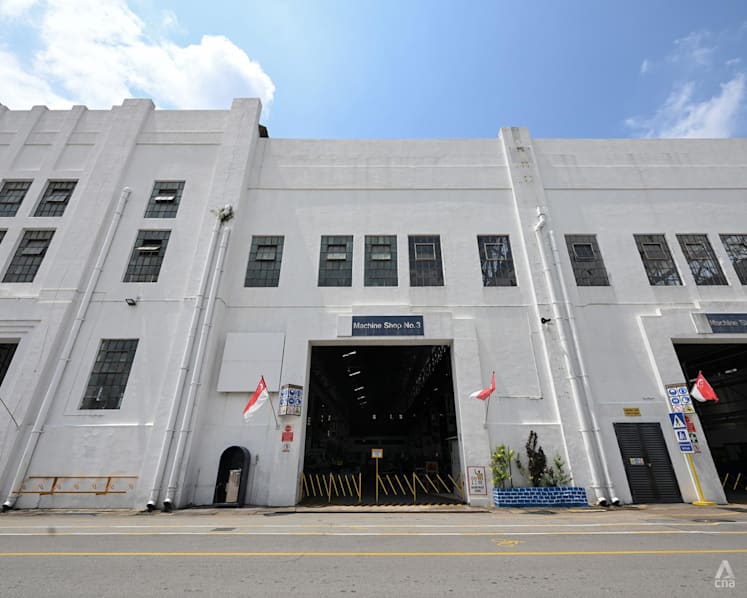
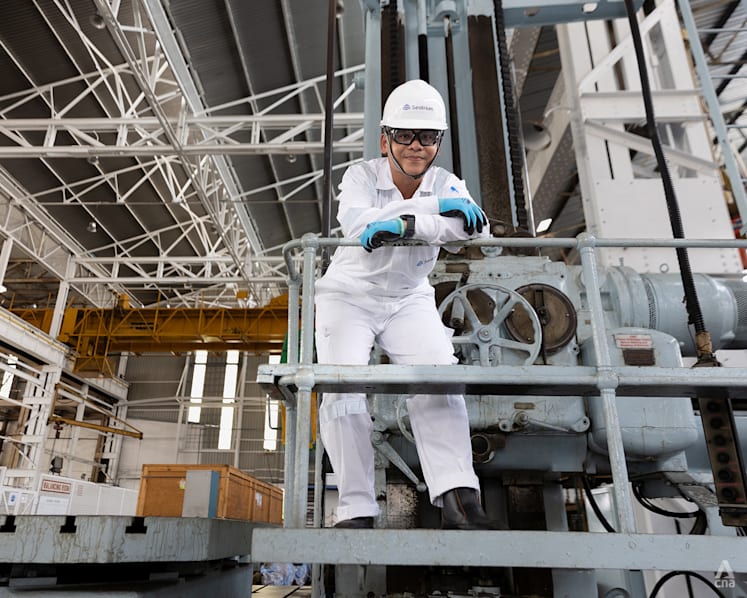
For assistant vice president of operations Choo Xin Jian, the machinery workshop has a special place in his heart.
Even after moving on from the machinery department to yard and project management, the 43-year-old still “holds a lot of feelings” for the building and drops by the workshop from time to time to say hello to the people there.
Mr Choo, who spent 16 years of his 20-year career at the workshop, said one of his favourite memories is working through the night on demanding projects.
“For cruise vessels, they don't have buffer time to extend the schedule because the customers, the passengers, are waiting. So, for some of the projects, what we do is that we work around the clock.
“Then, in order for better coordination … we actually spend time in the shop overnight to ensure that during the night the productivity and the safety are not slacking off; it's the same as what we did during the daytime,” he said.
It is painstaking work, but the effort is worth it.
“That blood, tears, sweat, but when you see the end product – high satisfaction. That satisfaction you can never take away. It is always part of your memory,” he said.
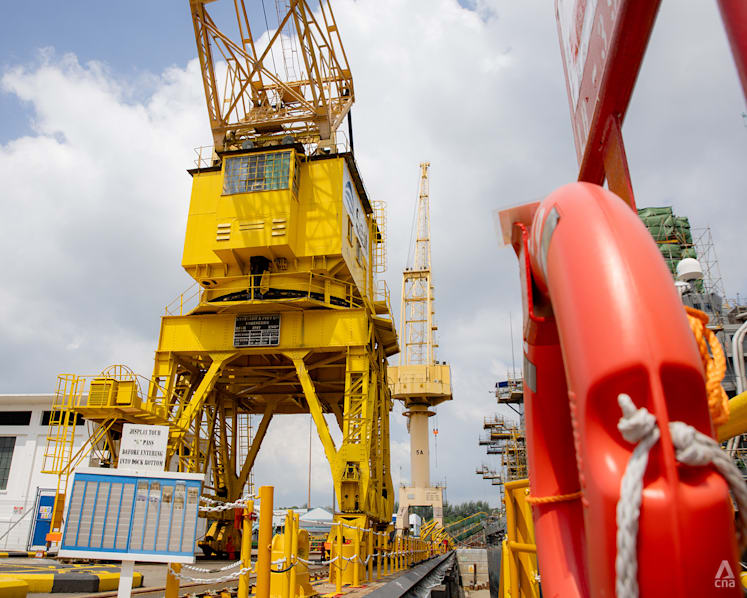
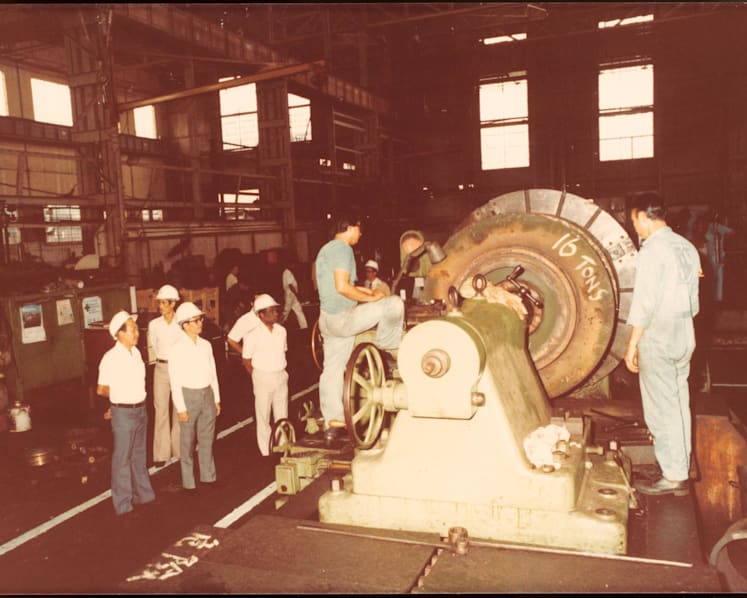
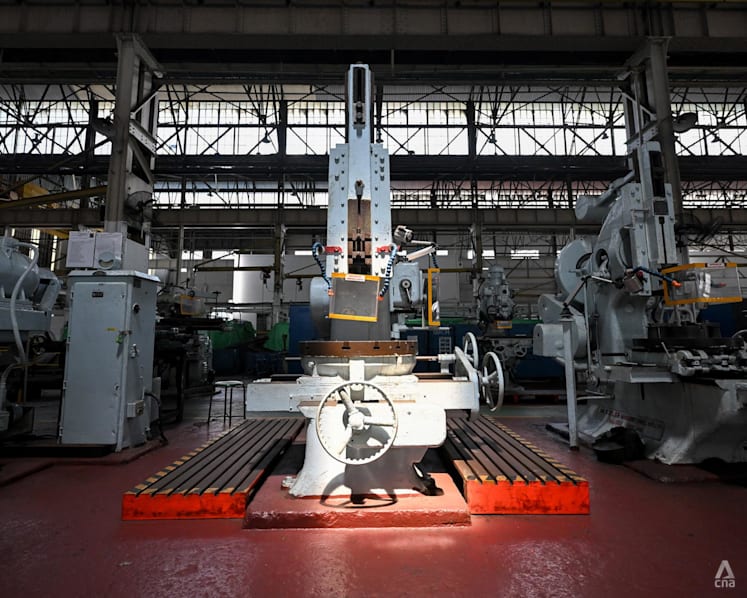
Mr Choo hopes the machines that have chugged alongside workers for decades – some of the oldest cranes date back to 1934 – can be preserved as part of the site's heritage for future generations.
When the British left the shipyard to Singapore, there were no operating instructions or manuals for the machines, said Mr Choo. Employees had to figure out how to use them through observation and on-the-job training.
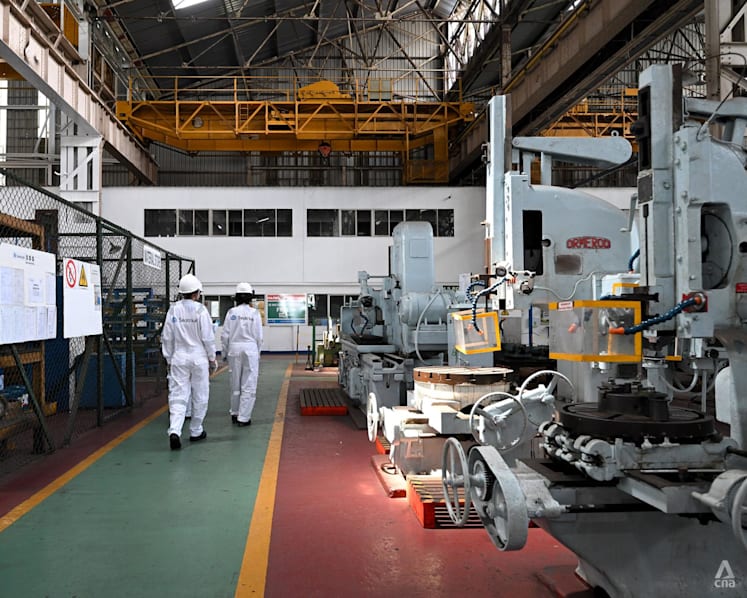
The machines are still being used for their original functions, such as lifting heavy items or creating parts for ship repair. Today, Seatrium uses a combination of legacy machines and modern equipment.
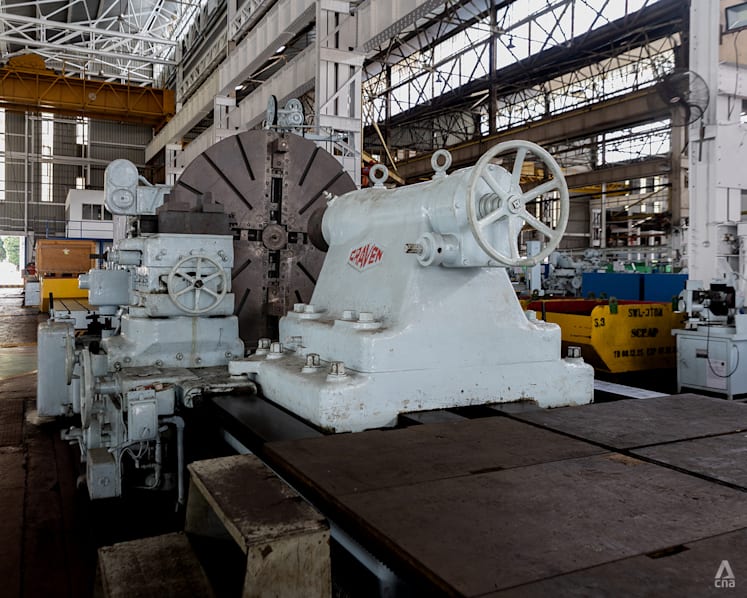
“So if we can use the machine, which is currently still operational up to the standards that we require, then there's no need to actually buy any machines,” said Mr Choo, adding that it is not cost-effective to replace them.
“Once you have feelings towards a particular piece of equipment, you want to keep it running. That is the pride that people have.”
NOT JUST ANOTHER PIECE OF LAND
For now, the focus is on transitioning the workforce and projects to Seatrium’s Tuas Boulevard Shipyard, an integrated mega-shipyard in south-west Singapore about three times the land area of the Sembawang site.
According to Seatrium, the Sembawang site will continue to support ongoing work, while areas no longer required for project execution are progressively being prepared for handover.
The process is being managed in phases to maintain safe and efficient operations while ensuring continuity for projects and customers.
After spending the bulk of two decades at Sembawang, Mr Choo said he feels sad to leave.
“But again, in all aspects of life, evolution and transition are unavoidable,” he said.
“But I can say that I'm proud to be part of the history in Admiralty Yard, and to see its development from then-Sembawang Shipyard to Sembcorp Marine, and finally to Seatrium Admiralty Yard.”
To him, the yard signifies the resilience of Singapore – in transforming from a naval dockyard to a commercially viable yard.
“It proves the resilience, the dedication, and the innovativeness of people coming together, the spirit that actually emboldens the growth of this yard.
“Similarly, it reflects how Singapore actually grows in times of crisis, in times of economic uncertainty, but we managed to pull it through.”
For Ms Wang, her hope for the future generations that will come to live in the new development is a simple one.
The shipyard is historically significant, as part of Singapore's early development as a maritime hub, she said.
“I hope that they know that this is not just another piece of land.”




