







Afghans in Pakistan face uncertain future amid deportation drive
Thousands of Afghans born and raised in Pakistan are being pushed into hiding as Islamabad steps up deportations amid worsening ties with Afghanistan, leaving families caught between two countries they call home.
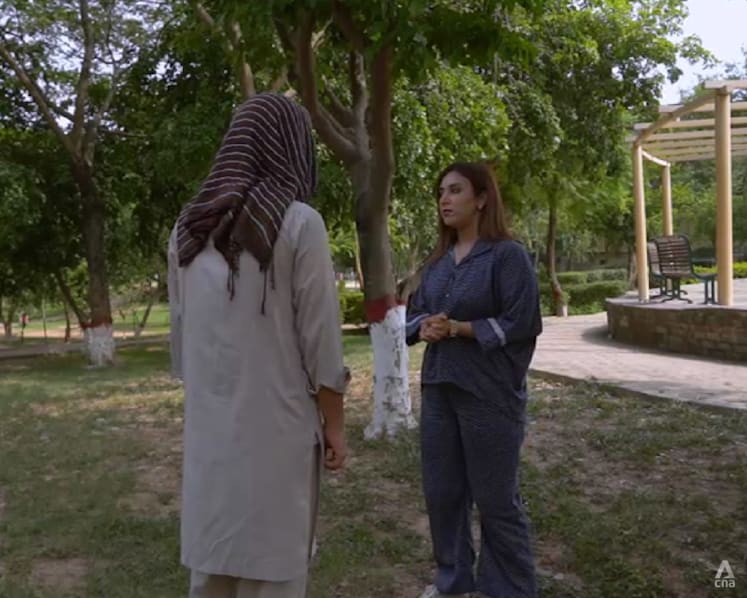
Afghan national Shayaan Khan (left) speaking to CNA's Hira Mustafa (right). A renewed crackdown on undocumented Afghan migrants has forced him into hiding and facing deportation. (Image: CNA)

This audio is generated by an AI tool.
ISLAMABAD: Afghan national Shayaan Khan has never set foot in Afghanistan.
His father was among millions of Afghans who fled to neighbouring Pakistan during the Soviet-Afghan war, which began with the Soviet invasion in 1979.
Born and raised in Pakistan, the 25-year-old has spent his entire life there.
Now, a renewed crackdown on undocumented Afghan migrants has left Shayaan stripped of his legal status, forcing him into hiding and facing deportation to a country he barely knows.
“We have nothing in Afghanistan. We were born and raised here. If we go back, we'll have to start from scratch,” he said.
Shayaan lives on the outskirts of Islamabad with his Pakistani wife and their young son.
Fear of the authorities has caused him to sell his business and keep a low profile, even taking on work as a daily wage labourer despite holding a university degree.
He said ever since the repatriation campaign, police have been arresting Afghan nationals at markets.
“We keep ourselves hidden from the authorities while working informally because we have families to feed,” he said.





CAUGHT BETWEEN TWO COUNTRIES
Shayaan is among thousands of cross-border Pashtun families who have found themselves caught in the worsening ties between Pakistan and Afghanistan.
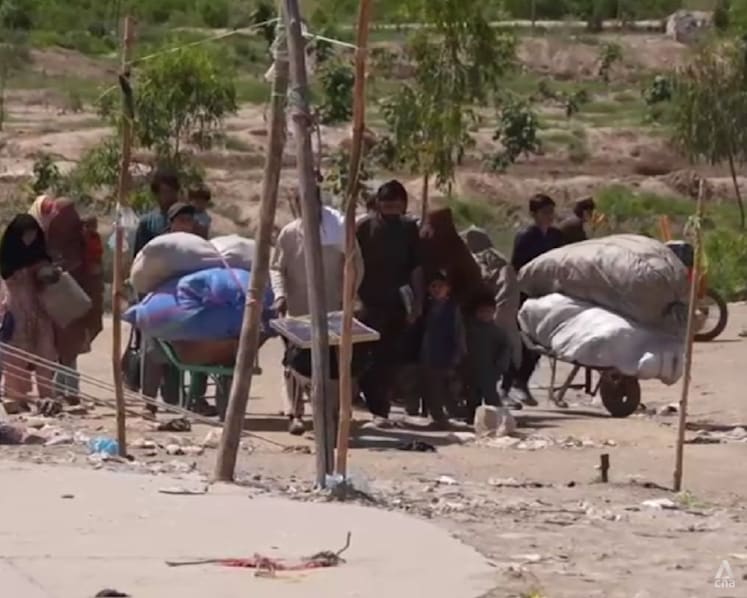
Pakistani authorities have intensified deportations under the Illegal Foreigners' Repatriation Plan first announced in 2023, targeting undocumented and illegal Afghan nationals.
In the latest wave of forced deportations, Pakistan’s Interior Ministry ordered law enforcement agencies to step up arrests of undocumented Afghan migrants from July 10.
United Nations data showed 6,195 Afghans returned from Pakistan from Jul 5 to 11 alone, up by around a third from the previous week.
According to the International Organization for Migration, more than 2.5 million Afghans have returned to Afghanistan since the repatriation campaign began in 2023.
Pakistan remains home to more than a million Afghans, according to the UN.
Some cross-border families in Pakistan have turned to legal recourse in hopes of remaining together, though experts say success has been limited.
"Although courts in Pakistan do accept these petitions, so far we have seen that they just adjourn the hearings without giving a clear-cut verdict,” said Aatif Afzal, project director for Society for Human Rights and Prisoners Aid (SHARP).
The lack of a definitive court ruling has left his clients without “legal relief”, and continued uncertainty over their future in Pakistan.
SECURITY CONCERNS
Islamabad has defended the deportations, citing immigration laws and national security concerns.
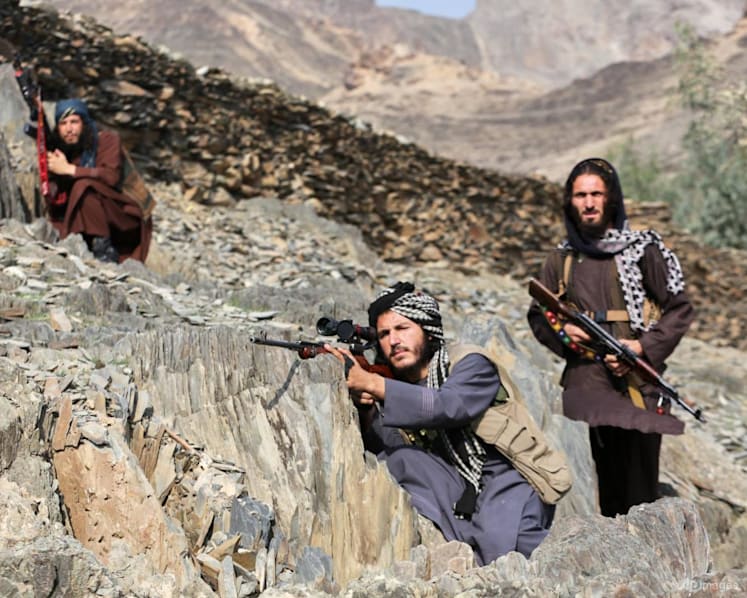
Pakistani authorities have accused Afghanistan's Taliban-led government of failing to stop militant groups such as Tehreek-e-Taliban Pakistan (TTP) from launching attacks from Afghan territory – allegations Kabul rejects.
Relations between the two neighbours have deteriorated sharply in recent months, amid the deportation drive and cross-border tensions.
In June, Pakistan ordered airstrikes on what it described as militant hideouts in Afghanistan following an attack on Pakistani security forces in Peshawar. The clashes injured dozens on both sides of the border, further straining bilateral ties.
But analysts warn that the mass deportation of Afghan nationals who have long settled in Pakistan could prove counterproductive for Islamabad in the long term, as it leaves returnees vulnerable to recruitment by militant groups.
“When they go back to Afghanistan, they're also considered as outsiders,” said Amina Khan, director of the Centre for Afghanistan, Middle East and Africa at the Institute of Strategic Studies Islamabad.
“There are no job opportunities, no social welfare (for them). Naturally, you're going to see these individuals being the perfect fodder for … terrorist entities.”
Khan says terrorist groups such as TTP and Al-Qaeda could exploit that vulnerability by offering financial incentives.

A HUMANITARIAN AND ECONOMIC COST
The tensions between Pakistan and Afghanistan have also taken an economic toll.
Trade has remained largely suspended since border clashes and reciprocal restrictions disrupted cross-border commerce in October last year.
The prolonged disruption has left businesses facing heavy losses and stranded shipments, with Afghanistan increasingly relying on alternative trade routes through Iran and Central Asia.
Analysts have urged renewed dialogue between Islamabad and Kabul, saying lasting peace will be essential to prevent further economic damage and ease the humanitarian consequences of the dispute.




