Infernos devastate forests as Europe's temperatures rise again
Fires have devastated more than 42,000 acres of land - an area more than twice the size of Manhattan - across Portugal, Spain, France and Greece, with temperatures predicted to reach 40°C in places.
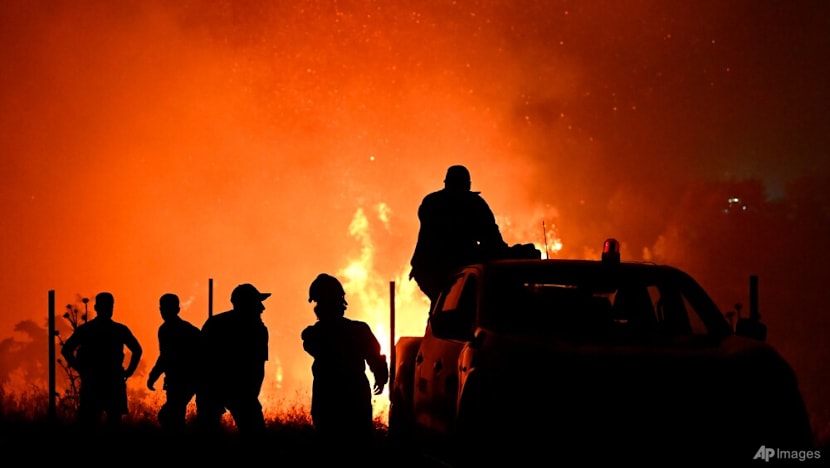
Firefighters and others are silhouetted in front of a wildfire on the outskirts of the northern city of Thessaloniki, Greece, Saturday, July 4, 2026. (Photo: AP/Giannis Papanikos)
BARCELONA: Wildfires raged across southern Europe on Sunday (Jul 5), forcing thousands of people to evacuate their homes and prompting Tour de France officials to ban spectators from a stage of the race.
Hundreds of firefighters are battling blazes that have devastated more than 19,000ha of land - an area more than twice the size of Manhattan - across Portugal, Spain, France and Greece.
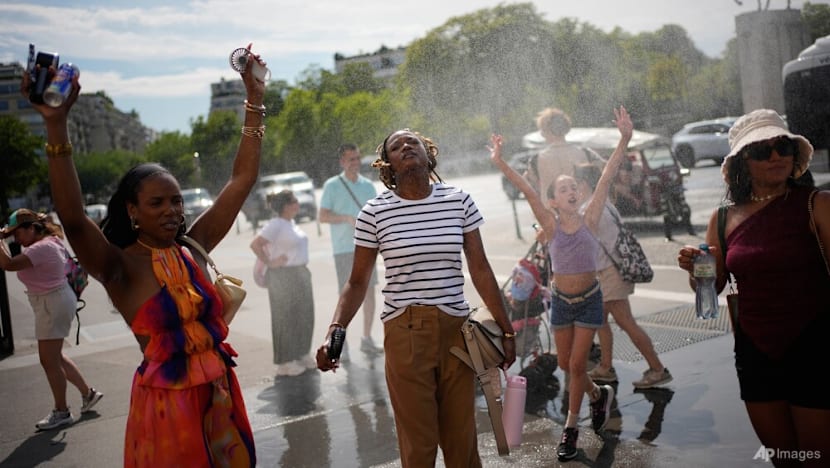
And temperatures are on the rise again, predicted to reach 40°C in parts of a region still suffering the aftermath of last week's record-breaking heatwave.
"The fire came within 300m of the houses. We were taken aback by how fast it spread, it was staggering - bordering on panic," said Patrice, a 53-year-old resident of the village of Trevillach, who did not wish to give his surname.





"We started seeing smoke around 10.30pm, then it kept coming closer and closer. Someone from the town hall knocked on our door around 1am to tell us to leave," said Charlotte Pignol, 30, who was evacuated from her home in the area overnight.
The blazes come shortly after a heatwave in June, one of Europe's worst, during which thousands of excess deaths were registered and which would have been "virtually impossible" without climate change, the World Weather Attribution group of scientists said.
With the mercury set to rise again in the coming days, authorities expressed alarm that the annual summer wildfire season had started a month early.
"Climate change is here, we are living the consequences, and it is only the start of July," said French fire service Colonel Eric Belgioino as he appealed to people near the Pyrenees inferno to take precautions to avoid starting fires.
"The season is going to be long for the soldiers fighting fires. You have to help us," he pleaded.
TOUR DE FRANCE
In France, officials announced that Monday's third stage of the Tour de France cycling race through the Pyrenees would take place without spectators who normally line the routes of the storied competition.
The stage, which sees cyclists ride from Spain into France and on French territory, "will be limited to the passage of the riders only and the vehicles essential to organising the race", the regional prefect Pierre Regnault de la Mothe told reporters.
"The public is asked not to go near the route or to the finish area," he said.
"In other words, and I regret having to say this, it will be, in France at least, a stage of the Tour de France without spectators."
A cloud of smoke hung over the town of Ille-sur-Tet, where residents described the nauseating smell of burning.
POISONOUS CLOUD
In Greece, flames set off by a forest fire tore through two factories in Thessaloniki in the north of the country, forcing authorities to evacuate the surrounding area and to warn households to keep their windows closed.
A fire near the northeastern Costa Brava coast of Spain burned more than 2,200ha in two days, and firefighters said their efforts would be "complicated" by rising temperatures and the many "smoking hotspots" within the fire's perimeter.
Another 300 French firefighters battled another fire in a mountainous district of the southeastern Drome department.
In Portugal, emergency services said they had controlled "80 per cent" of a wildfire that has devastated some 13,000ha of forest and scrub land in the north of the country.
Elsewhere, major fires also destroyed hundreds of hectares of forest, vineyards and scrub land on the Croatian island of Hvar and at Tale in Albania, authorities said.
Regions across Portugal, Spain and southern France have stepped up heat alerts for the coming days.
On Monday, the latest heatwave was expected to move north, with forecasters saying it could last until next weekend.
Following a two-week surge in temperatures in June, France said there had been more than 2,000 extra deaths than usual in just one week, while Spain and Belgium each reported more than 1,000.