







Netanyahu rejects Gaza plan, in new break from Trump
After more than a week of gradually escalating criticism of the US-led Gaza peace plan, Israeli Prime Minister Benjamin Netanyahu explicitly opposed it in the face of pushback from his right-wing base.
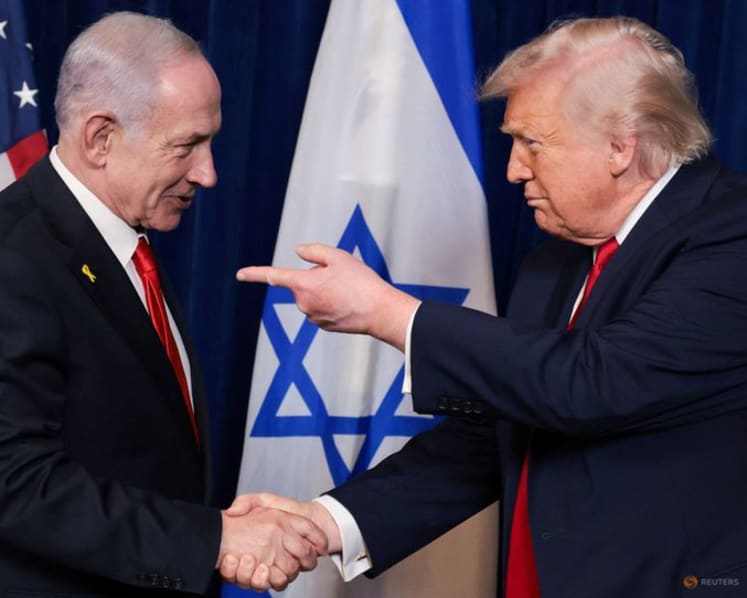
US President Donald Trump points his finger towards Israeli Prime Minister Benjamin Netanyahu as they shake hands during a press conference after meeting at Trump’s Mar-a-Lago club in Palm Beach, Florida, US, on Dec 29, 2025. (File photo: Reuters/Jonathan Ernst)
JERUSALEM: Israeli Prime Minister Benjamin Netanyahu on Sunday (Aug 9) rejected a United States-led Gaza plan endorsed by Hamas, putting distance between himself and President Donald Trump as he tries to shore up his base ahead of close elections.
After more than a week of gradually escalating criticism of the plan, and despite receiving assurances that Israel would not need to start withdrawing in Gaza immediately, Netanyahu explicitly opposed the deal following pushback from his right-wing allies.
"Israel rejects the 15-point document," Netanyahu said, referring to the plan Hamas agreed to in late July.
The Israeli military "will not carry out any withdrawal until Hamas is genuinely disarmed, and will continue to thwart threats against our forces and our citizens", he told a cabinet meeting.
Netanyahu described Trump, who had hailed the Gaza deal as a milestone for peace, as "our greatest friend in the White House" - but quickly made clear he was willing to challenge him, saying Israel was raising its objections with the United States.
"They have ideas; some of them are acceptable to us and some are not, and we know how to stand our ground on these matters," he said.
Netanyahu, Israel's longest-serving leader, is running even or trailing in some polls ahead of Oct 27 elections, the country's first since the devastating Oct 7, 2023, attack by Hamas that sparked the Gaza war.
Polls show that the Gaza plan is unpopular with Netanyahu's right-wing base, and far-right members of his cabinet have urged him to kill it.

'ONLY WAY FORWARD'
The head of Trump's body implementing the plan, dubbed the Board of Peace, defended the plan as a way to prevent a repeat of Oct 7.
"The option we are offering today is the only way forward that ensures this tragedy does not happen again," Nickolay Mladenov, the board's high representative for Gaza, told Israel's Channel 12 television.
He said he hoped for a "positive outcome" from follow-up discussions with Israel, and characterised the latest stage of the deal as a commitment involving the United States, Hamas and the Board of Peace - notably leaving out Israel.
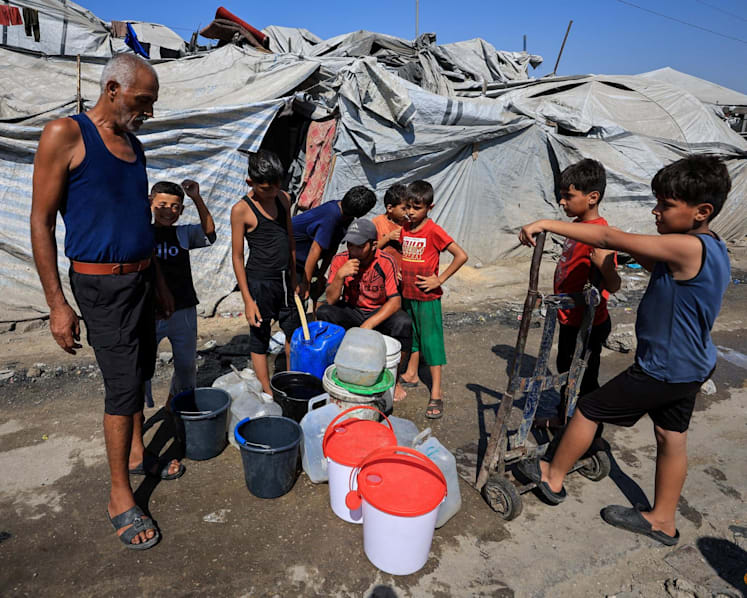
Mladenov again promised that Israel would not face any obligations until Hamas gave up all its weapons, down to Kalashnikov rifles - but said Israel would eventually need to pull out.
Hamas, which publicly backed the plan days after selecting a new leader, Khalil al-Hayya, called on Washington to push Netanyahu.
"We expect the mediators and the American guarantor to pressure Netanyahu and his government to adhere to the roadmap, and not obstruct the process for internal political and electoral reasons," Bassem Naim, a member of Hamas's political bureau, told AFP.
Hamas in a statement said it was still committed to the plan.
FRICTION WITH TRUMP
Netanyahu until recently campaigned on the strength of his relationship with Trump, who has taken unprecedented steps to back Israel, including moving the US embassy to Jerusalem.
Trump joined Netanyahu in late February in launching a war against Iran, but the two diverged when Trump sought a ceasefire and subsequent settlement to the conflict as it sapped his popularity and sent oil prices soaring.
Netanyahu told his cabinet that "with an agreement or without an agreement, as long as I am prime minister, Iran will not have nuclear weapons", a goal he has long alleged Tehran is pursuing.
Netanyahu last week also ordered fresh strikes on Lebanon in response to what Israel called a ceasefire violation by Iran-backed Hezbollah, just as Israel and Lebanon were holding US-mediated talks.
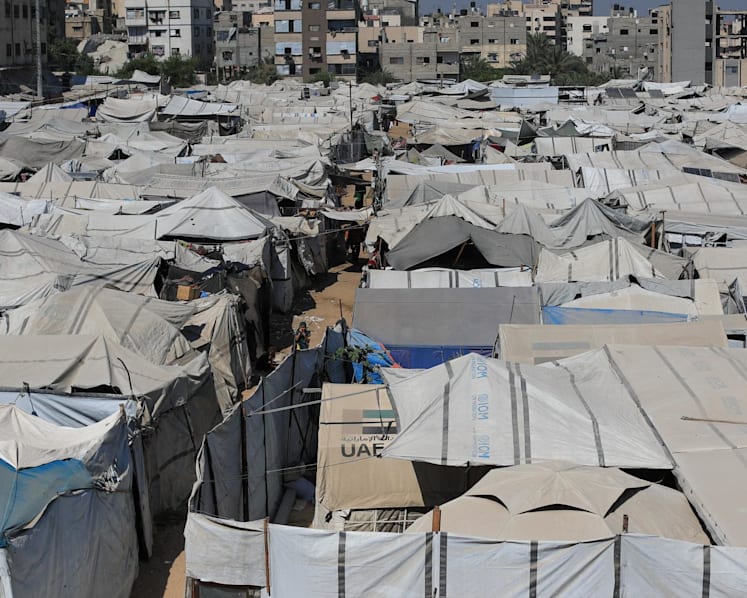
The Gaza plan was the latest stage in a US-brokered ceasefire announced in October that has reduced, but not ended, Israeli operations there.
Despite Netanyahu's stance, Israel appears to have decreased operations in Gaza since the deal was announced, without halting them completely.
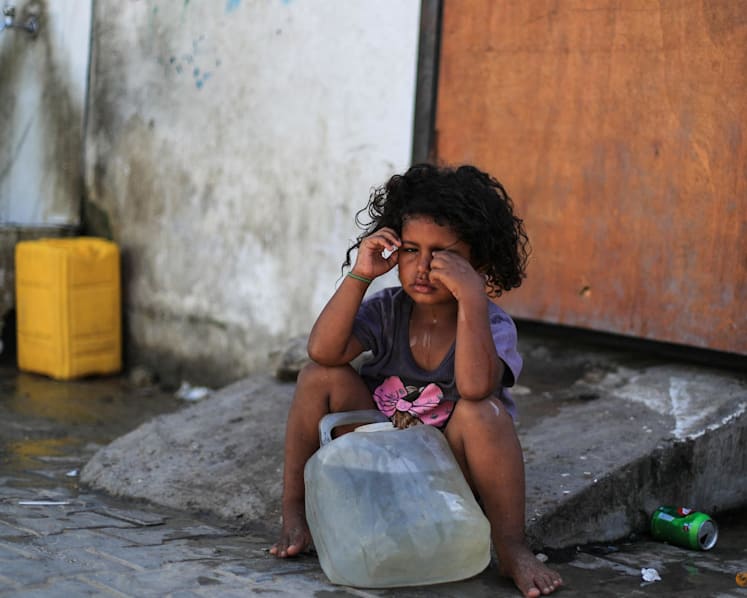
Israeli gunfire on Sunday injured several people, including a child who was taken to hospital in Khan Yunis, civil defence spokesman Mahmoud Bassal told AFP.
Israeli operations in Gaza have killed 1,258 Palestinians since the ceasefire, according to the territory's health ministry, which operates under Hamas authority and whose figures are considered reliable by the United Nations.
The Israeli army has reported five deaths in its ranks during the same period.
NETANYAHU MAY BE BETTING US WILL BUCKLE: ANALYST
Stephen Zunes, professor of politics at the University of San Francisco, said Netanyahu may be calculating that Washington will again shift its position to accommodate Israeli concerns.
Speaking to CNA’s Asia First, Zunes pointed to previous negotiations in which he said the US had modified proposals following Israeli objections.
“I think what he's hoping is that the United States once again will buckle,” he said.
At the same time, Zunes said Trump could ultimately put pressure on Netanyahu because the US president wants to demonstrate that his diplomatic efforts have produced results.
“Trump really wants a victory here. He wants to show something good has come of his efforts,” he said.
Zunes also said Netanyahu could turn international opposition to his position to his advantage at home, portraying himself to Israeli voters as standing firm against outside pressure.
“My guess is that he'll actually use his intransigence to his favour in Israeli domestic politics, saying the whole international community, even the Board of Peace that Trump handpicked, is pushing against me, and I'm rejecting it,” he said.
Zunes added that he was pessimistic about the prospects for the peace plan.
“Unfortunately, I really do not have a lot of hope that this peace plan is going to move forward, at least anytime soon.”




