







Nvidia chair says board will not rehire Huang as CEO after he signals willingness to return
Speaking publicly for the first time since his resignation, former Nvidia CEO Jensen Huang had said he "would be honoured" to return to the role if the board believed it was best for the company.
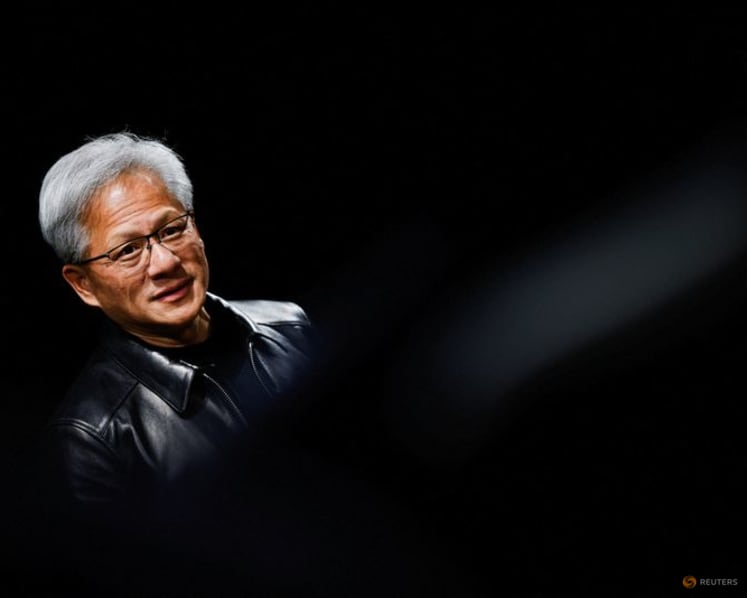
Nvidia CEO Jensen Huang looks on during a doorstep after attending the AI Ecosystem Reception in Tokyo, Japan, on Jul 16, 2026. (Photo: Reuters/Manami Yamada)
Artificial intelligence chip giant Nvidia does not plan to bring its embattled co-founder back as chief executive, despite Jensen Huang saying on Tuesday (Nov 17) that he was ready to return, the company's board chairman said on an earnings call.
"The Nvidia board unanimously accepted his resignation and does not intend to reinstate Jensen as CEO," chairman Harvey Jones said, refusing to address the circumstances of Huang's resignation but saying he would communicate further when appropriate.
Jones' start to a call about quarterly results was a forceful response to a movement to bring back Huang.
The former CEO resigned last week over allegations that he had multiple extramarital affairs, including with an alleged Chinese spy who might have funnelled restricted chips to China.





But on Tuesday, a few hours before the results were released, Huang said he "would be honoured" to come back as CEO if the board decided his return would be in the best interest of shareholders and employees.
"Since my departure, I've seen an outpouring of calls from Nvidia’s employees, investors, business partners, and customers for me to return as CEO," Huang said in his first public statement since his resignation.
"I created problems for the board that I deeply regret. I own my mistakes completely, and I am committed to cooperating with the board’s independent investigation," he said.
Jones quashed that possibility on the call with analysts after Nvidia's earnings were released, saying the board would take the search for a new CEO "very seriously" and would consider internal and external candidates.
"The board appreciates that we're living in a world where the advanced silicon technologies and national security dynamics are making major changes in our marketplace," he said.
"Our new CEO will have to navigate those waters very carefully."
With Huang gone, investors are eager for clues about Nvidia's future and strategy, from its commitments of billions of dollars to cloud providers, suppliers and AI startups to who will ultimately lead the world's most valuable chipmaker.
Jones said Nvidia's board wanted to install a new CEO "as quickly as possible".
"But we won't expedite the CEO before finding exactly the right person," he added. The chairman said the board had hired executive search firm Heidrick & Struggles to help find a new CEO.
Interim CEO Colette Kress, who is also finance chief, kept her focus on financials and products in the statement accompanying the company's earnings results on Tuesday.
"Our momentum is real," she said, without addressing the leadership issue.
"Vera Rubin is off to an explosive start, our roadmap is on track," she added, referring to the company's latest flagship AI chip.
NATIONAL SECURITY COMMITTEE
Nvidia also created a board-level committee on Tuesday to oversee national security and export controls, its first major governance move since Huang left.
Huang's relationships, including one with a woman suspected of spying for China, have raised questions about whether Nvidia's oversight kept pace with its rapid growth and increasing importance to US national security. The crisis had erased more than US$400 billion from the company's market value by Monday's close.
The National Security and Export Control Oversight Committee will be chaired by director Suzanne Nora Johnson, a former Goldman Sachs vice chair, Nvidia said. Directors Stephen Neal, former CEO of law firm Cooley, and John Dabiri, a Caltech professor, will also serve on the committee.
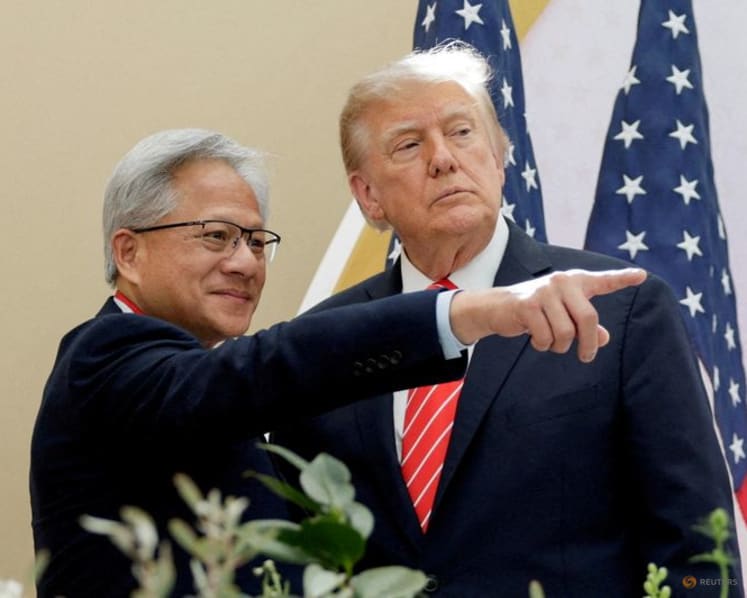
US President Donald Trump welcomed the move, calling the launch of a national security initiative a good idea.
TIGHTENING CHINA CHIP CURBS
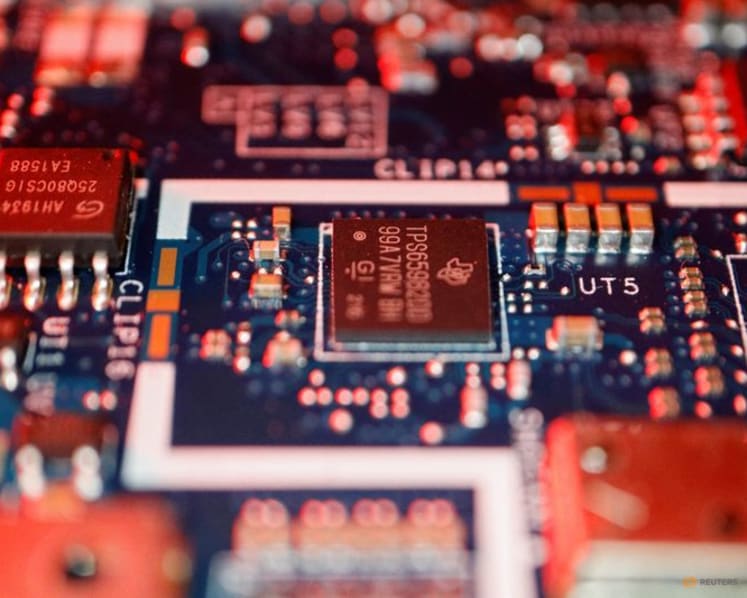
The committee's creation comes a day after the Trump administration said it would further restrict China's access to advanced AI chips from companies including Nvidia, as Trump headed to China for talks with President Xi Jinping.
Washington has for years sought to curb Beijing's access to Nvidia's most advanced processors, putting the company's China business at the center of tensions over national security, trade and US technological leadership.
Chinese companies, however, have repeatedly found ways around the restrictions, while Huang had advocated allowing more chip exports to China.
US officials had raised concerns about Huang's relationship with Alice Huang, a former senior executive and controlling shareholder of Singapore-based cloud computing firm Megaspeed, whom US intelligence agencies suspect has links to Chinese intelligence.
Megaspeed has been under investigation over the possible diversion of restricted Nvidia chips to China and potential export-control violations. The company has denied wrongdoing.
Nvidia said the new committee will oversee its national security and global trade compliance programs and work with independent legal, national security and trade-compliance experts.
The company's National Security Team and Global Trade Compliance Team will report to the committee, while interim CEO Colette Kress will oversee day-to-day operations. The committee plans to meet at least quarterly, including with management and in executive sessions.
Nvidia did not have a chief compliance officer, according to its 2026 proxy statement.
It was not immediately clear whether the committee was created in response to the revelations about Huang's affairs. Nvidia did not respond to a Reuters request for comment.
SECURITY, EXPORT CONTROLS UNDER BOARD WATCH
While major technology companies including Alphabet, Apple, Meta and Microsoft have board committees overseeing areas such as regulatory compliance, cybersecurity, privacy and strategy, Nvidia's new panel has a narrower mandate focused on national security and export controls, a structure more commonly associated with aerospace and defense companies.
"We are committed to working constructively with government and industry partners to help establish and advance a robust framework that uses every tool at our disposal to safeguard national security while supporting continued technological innovation," Nvidia board chairman Harvey Jones said.
Nvidia has also warned chip buyers in recent months that the proposed US Remote Access Security Act could expose the company and its customers to legal risks by expanding Washington's oversight of Chinese companies' access to AI chips through cloud services, CNBC reported on Tuesday.
Huang's daughter Madison Huang, who is a senior director of product marketing at Nvidia, was closely involved in shaping the public defence of the company's ties to Megaspeed, the Financial Times reported on Tuesday. She did not immediately respond to a Reuters request for comment.
NVIDIA'S LONGER-TERM OUTLOOK
Nvidia can continue to perform well for another two to three years without Huang as CEO, but sustaining its success beyond that could prove challenging, said Ray Wang, CEO of Constellation Research, a US-based technology research and advisory firm.
Speaking to CNA's Asia First, Wang said Huang's importance lay in his ability to create new markets, secure deals and build trust across the technology ecosystem.
"Jensen created the market, Jensen created the trust, and Jensen is that ecosystem," he said.
On China, Wang estimated that Nvidia's potential business in the country could be worth between US$40 billion and US$50 billion if its chips were allowed access to the Chinese market.
He said the next two quarters would provide an indication of whether tighter US export controls on Chinese organisations remotely accessing American chips through Southeast Asia affect Nvidia's Asia-Pacific revenue.
Wang added that any decline in the firm's regional revenue could reflect the extent to which Chinese organisations have been circumventing American chip export restrictions by accessing such chips outside the US.




