







New Zealand confirms first H5N1 bird flu case in native bird
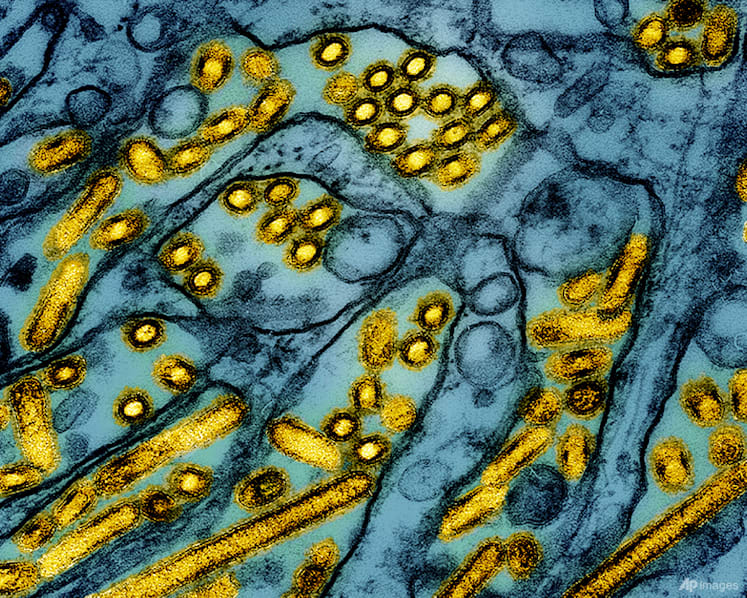
A colourised electron microscope image released by the National Institute of Allergy and Infectious Diseases on Mar 26, 2024 shows avian influenza A H5N1 virus particles (yellow), grown in Madin-Darby Canine Kidney (MDCK) epithelial cells (blue). (Image: AP/CDC/NIAID)
New Zealand detected on Friday (Jul 17) the first infection of a native bird by the deadly H5N1 bird flu, days after confirming a migratory seabird had tested positive in the country's first recorded case of the disease.
A swamp harrier hawk, known locally as a kahu and found in the North Island's Wairarapa region, had been infected with the virus, Biosecurity Minister Andrew Hoggard said in a statement.
New Zealand reported its first confirmed detection on Wednesday, in a brown skua found near Wellington.
"While it's disappointing to find a native bird with H5 bird flu, it’s not unexpected following the confirmation earlier this week of our first case," Hoggard said.





"This hawk can go out to the coast - especially in winter to hunt. Hawks can get bird flu by hunting, eating, or scavenging infected birds."
There had been no detection of bird flu in poultry, he said.
Health officials have started a vaccination programme for 300 core breeding birds from five of the country's most endangered species, including flightless takahe and kakapo.
Earlier this month, Australia reported its first case of the disease in a local seabird. All previous cases had involved migratory birds.




