Rising use of unapproved peptides prompts health warnings in Australia and beyond
Peptides are often marketed for weight loss, muscle gain and anti-ageing – but experts have warned of potential public health risks and the undermining of legitimate medical research.
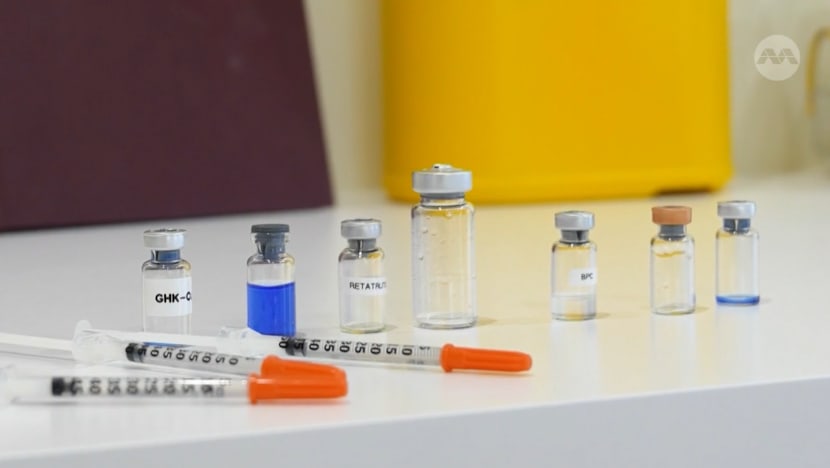
Samples of peptides.

This audio is generated by an AI tool.


SYDNEY: For Karla Commens, getting hold of peptides did not require a prescription or a visit to a clinic.
Days after a simple online search, she was collecting a parcel from her mailbox. Inside were unapproved peptides that she now keeps in her fridge.
The demand for these bioactive molecules is booming worldwide, fuelled by social media trends promoting them for wellness, anti-ageing and muscle growth.
From Australia to the United States, the United Kingdom and parts of Asia, including Singapore, unregulated products are spreading rapidly online– often faster than authorities can control them.
Commens, who lives in Sydney, is one of a growing number of consumers turning to the “grey market” to get her fix.
"Four years ago, at minimum you would pay about A$250 (US$180) or up to A$300. Nowadays, you jump online and there's so many other options to buy peptides and you can find them for A$60,” she told CNA.
The current price is a fraction of what peptides cost when she first started using them in 2021, when they were largely confined to niche fitness and anti-ageing circles.
"I think at the core of it, the reason why I've tried peptides is because I want to be my healthiest self,” Commens added.
Another consumer, who asked to remain anonymous, told CNA he had purchased a batch of peptides through an unverified website without a prescription.
While they were marketed for weight loss and anti-ageing, there was no reliable way to confirm their contents, ingredients or safety.





WHAT ARE PEPTIDES?
Peptides are small fragments of protein that act as messengers in the body, telling cells when to repair, grow or regulate functions like energy and hormones.
Medically, certain peptides are used as prescription drugs to treat conditions such as diabetes and obesity.
Some, like insulin as well as weight-loss drug Ozempic, are legally prescribed and widely used in medicine.
But the surge in demand revolves around unapproved versions sold online, often marketed for weight loss, muscle gain and anti-ageing – trends amplified across social media platforms.
Some fitness enthusiasts have experimented with them to enhance training, speed up recovery or even improve longevity.
Australia’s regulator, the Therapeutic Goods Administration (TGA), says imports of unapproved peptides are on the rise. It has issued warnings about potential public health risks, with reported side effects including severe allergic reactions, infections and inflammation requiring hospitalisation.
INDUSTRY NEEDS MORE KNOWLEDGE
Professor Richard Payne from the ARC Centre of Excellence for Innovations in Peptide and Protein Science, an Australian research centre, said the social media craze risks undermining legitimate medical research.
"I worry a little that peptides have got this almost bad name about them that they're now sold on the internet for building muscle,” said Payne, who has spent his career engineering peptides as potential therapeutics.
"There is some really brilliant science happening at the moment in peptide drug discovery. We have more than 80 FDA-approved peptide drugs, and I see that number increasing substantially over the next decade,” he added, referring to the United States’ Food and Drug Administration – one of the world’s leading drug regulators.
But as more peptide-based treatments move closer to regulatory approval, experts say the industry also needs to be better equipped and professionally prepared to advise consumers.
Some clinicians are stepping in to offer medically supervised alternatives.
Sydney-based longevity doctor Taylor Kline has launched a legal peptide business, aiming to provide patients with structured and evidence-based care.
"I’ve felt quite a personal responsibility to provide people with as much of an educated and medically sound opinion on that space,” she said.
“We consider your medical background or surgical background, medications that you take, the goals that you have. And it's extensive, you get your pathology done. You go on to a very closely monitored programme through a doctor.
“I think that more education across the board would be really beneficial,” she added.
The Royal Australian College of General Practitioners is now looking into the issue, as more patients ask about peptide treatments.
Dr Beng Eu, a general practitioner and co-director of Prahran Market Clinic in Melbourne, said interest is rising among patients, but knowledge gaps remain.
"Speaking as a GP with an interest in this area … I have limited knowledge of peptides because there’s so many different peptides. I do think that GPs will need to update their knowledge about peptides in the future,” he pointed out.
For now, demand for peptides is outpacing both the science and safeguards designed to protect patients – raising questions about whether regulation, education and safer access can keep up.